11
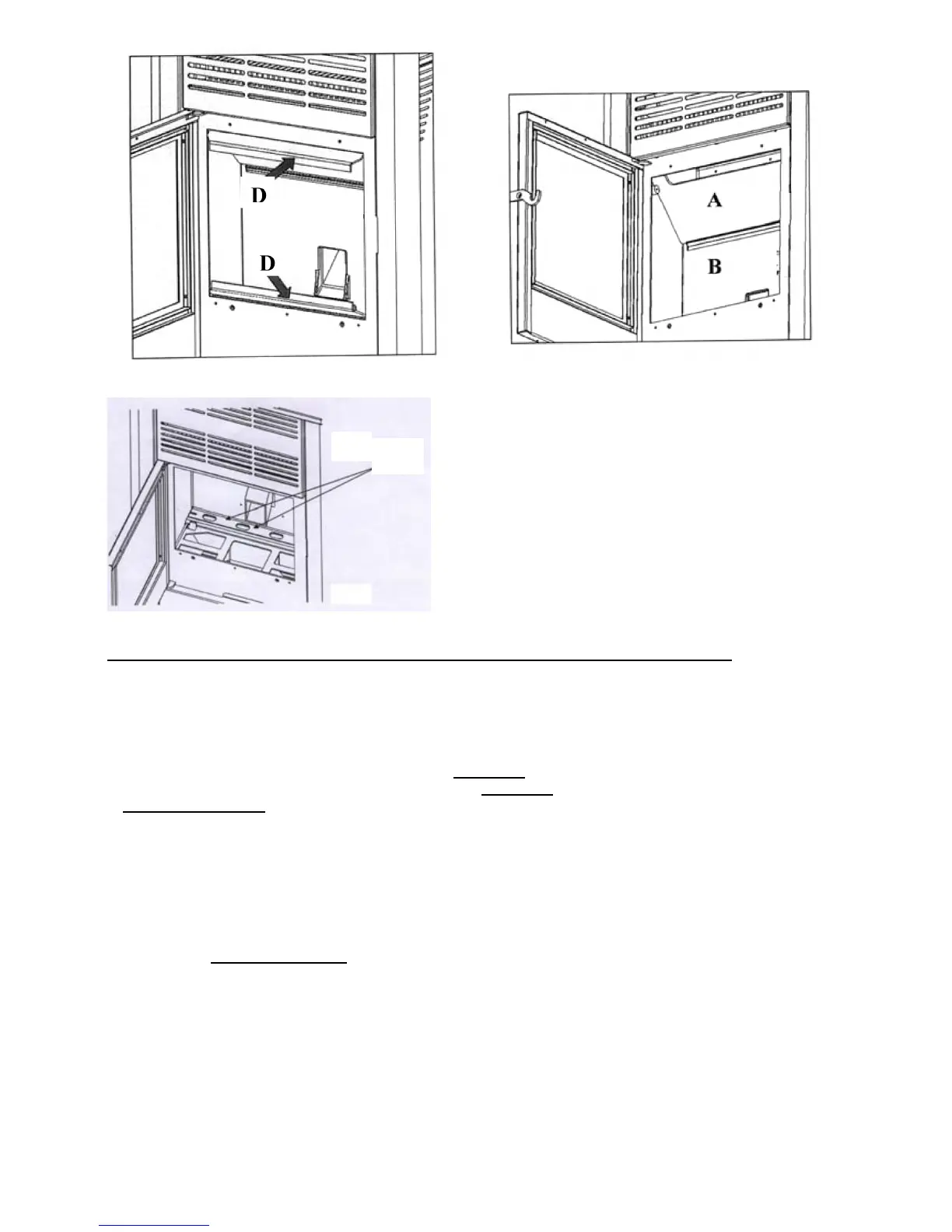
Figure 11 Figure 12
Figure 13
6.1 ROUTINE CLEANING and MAINTENANCE PERFORMED BY THE USER OF THE STOVE
The use of a drum-shaped vacuum cleaner can facilitate the stove cleaning. The vacuum cleaner must have a filter
which stops the vacuumed dust to go back into the room where the stove is located.
Before you start any routine maintenance, including cleaning, you should take the following safety measures:
− Shut off power to the stove before you start any works,
− Before you start any works, ensure that the stove and ash are cool,
− Vacuum the ash from the combustion chamber every day,
− Carefully clean the firebox with the vacuum cleaner every day (after every use and when the stove is cool),
− Once in two weeks pull out the upper steel or cast iron plate from the chamber (Figure 12 A) by lifting it,
straightening it, lowering it at the height of the chamber opening and by turning it so that one of its ends comes out of
the chamber vertically, and then remove the upper plate completely from the chamber and put it by the side of the
stove, on the floor. After that, lift up the cast plate in the chamber maximally (Figure 12 B) and vacuum the back part of
the chamber behind plate B. You can also perform this cleaning by removing the upper sheet metal deflector in order
to clean the glass (Figure 11 D). This sheet metal is fixed with bolts as it is shown in Figure 11 (D). Then pull out the
upper steel or cast iron plate (Figure 12 A) and turn and pull out the lower, back cast iron plate (Figure 12 B). Clean the
parts, shown in Figure 13. However, we do not recommend this latter manner of cleaning because it may soon cause
damages to the threads of the special nuts on the deflector.
IMPORTANT NOTE:
- When placing back the cast protective plate B, ensure that the lower part of the plate is placed behind two
boundary teeth located on both left and right sides of the chamber, below. The plate must not be placed in
front of the boundary teeth. It is obligatory to check up the transition from the input pipe of the screw casing
through which pellets pass and drop into the combustion chamber, and from cast protective plate B. The
transition from the lower part of their joint must be even, without any teeth, so that pellets may drop easily
without any retention or accumulation in the input tube where they could easily begin to burn. If the protective
plate is placed improperly, pellets in the pellet warehouse may take fire which may have immeasurable
consequences.
- The stove manufacturer shall not be liable for any improper placement of protective plate B and
consequences that may arise from it.
- When placing upper plate A, turn the rectangular opening upwards, as shown in Figure 12A.


 To Next Page