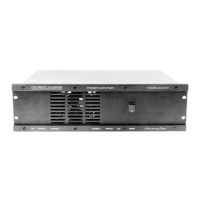
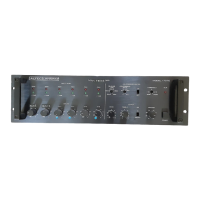
EasyManua.ls Logo

Altec Lansing 1707C - User Manual

Altec Lansing 1707C
27 pages
Print Icon
To Next Page IconTo Next Page
Loading...
LANSING:'
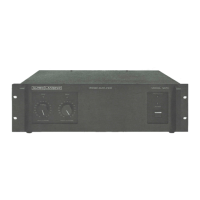
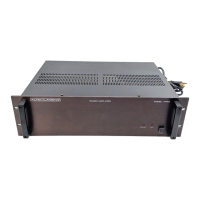
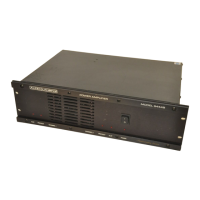
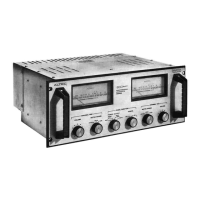
1707C/1715C
Six
Channel
Mainframe
Mixer/Power
Amplifier
KEY
FEATURES
*
Six
ports
for
inputs
or
outputs
*
Offers
systemwide
remote
muting
*
Built-in
compressor/limiter
KEY
SYSTEM
SPECIFICATIONS
(Ref.
1
kHz)
+1
dB,
20
Hz
-
20
kHz
(1
watt
output)
+1
dB,
20
Hz
-
20
kHz
(0.775
Vrms
output,
600
Q
load)
Frequency
Response:
Direct
Output:
Preamp
Output:
Total
Harmonic
Distortion
(THD):
Direct
Output:
(Ref
1
kHz)
<0.05%,
20
Hz
-
20
kHz
(rated
output
power,
30
kHz
low-pass
filter)
<0.05%,
20
Hz
-
20
kHz
(0.775
Vrms
output,
600
Q
load,
EQ
flat,
compressor/-
limiter
off,
30
kHz
low-pass
filter)
Preamp
Output:
Signal-to-Noise
Ratio:
Direct
Output:
(master
at
maximum)
Preamp
Output:
>80
dB
below
rated
output
power,
A-weighted
>75
dB
below
0.775
Vrms
output,
A-weighted,
EQ
off,
compressor/limiter
off
DESCRIPTION
The
Altec
Lansing
1707C/1715C
Mixer/Power
Amplifier
is
a
six
channel
user-configurable
main-
frame
amplifier.
By
selecting
from
the
large
array
of
system
component
options,
the
1707C/1715C
can
become
a
six-in/one-out
microphone
mixer/amp-
lifier
or
a
one-in/six-out
distribution
preamplifier.
The
basic
mainframe
combines
a
fully
protect-
ed
75-watt
(for
the
1707C)
or
150-watt
(for
the
1715C)
power
amplifier
with
six
ports
which
can
be
input
or
output.
Multiple
1707C/1715C
main-
frames
can
be
linked
together
for
situations
where
more
then
six
input/output
ports
are
required.
Built-in
features
include
a
trap-door
on
the
top
panel
for
easy
access
into
the
unit,
compressor/-
limiter,
low
and
high
frequency
shelving
equalizers,
muting,
remote
volume
control
capability,
and
a
tone
generator
which
produces
four
different
sounds.
Input
Modules:
The
Altec
Lansing
1780A/-
1780AT
Input
module
and
the
1781A/1781AT
Programmable
Input
module
accept
either
mic
or
line
level
signals
through
a
wide
variety
of
connec-
tor
interfaces.
Output
Modules:
The
Altec
Lansing
1783
Line
Output
module
allows
the
user
to
interface
with
other
professional
equipment.
The
Altec
Lansing
model
1707C/1715C
mix-
er/power
amplifier
systems
respond
to
most
design
tasks
with
the
ease
and
versatility
of
systems
costing
much
more.
Às
a
result,
it
is
the
choice
for
use
in
professional
installations
requiring
high
quality,
flexibility
in
design,
and
low
cost.

Other manuals for Altec Lansing 1707C

Question and Answer IconNeed help?

Do you have a question about the Altec Lansing 1707C and is the answer not in the manual?

Summary

System Specifications

Frequency Response

Specifications for frequency response of direct and preamp outputs.

Total Harmonic Distortion (THD)

Specifications for THD of direct and preamp outputs.

Signal-to-Noise Ratio

Specifications for signal-to-noise ratio of direct and preamp outputs.

Detailed System Specifications

Power Output and Bandwidth

Continuous average, midband output power, and frequency bandwidth.

Distortion and Damping Factor

Intermodulation distortion and damping factor specifications.

Output Levels and Transformer Specs

Rated output levels for direct, preamp, and transformer outputs.

Equalization, Compressor;Limiter, and Tone Generator

Details on EQ, compressor/limiter functions, and tone generator features.

Power, Consumption, and Environmental Specs

Power requirements, consumption, temperature, dimensions, and weight.

System Block Diagram and Design Specs

Architects and Engineers Specification

Technical specifications for system design and installation.

Mainframe Overview and Specs

Specifications

Detailed technical specifications for the mainframe.

Mainframe Technical Details

Compressor;Limiter Details

Details on compressor/limiter threshold, ratio, and release time.

Electrical Connections and Power

Module Installation and Mounting

Mainframe Configuration

Signal Routing and Connectivity

Front Panel Controls and Setup

Mixer;Power Amplifier Operation

Operating the 1707 C;1715 C Mixer;Power Amplifiers

Procedure for setting levels, filters, and compressor/limiter.

Service Instructions

Caution on Servicing

Warning regarding hazardous voltages and user-serviceable parts.

Service, Parts, and Support

Power Amplifier Bias Adjustment

Procedure for adjusting amplifier bias current.

Power Amplifier DC Offset Adjustment

Procedure for adjusting amplifier DC offset.

Schematic Diagram

Schematic

The main schematic diagram of the mixer/power amplifier.

Summary

System Specifications

Frequency Response

Specifications for frequency response of direct and preamp outputs.

Total Harmonic Distortion (THD)

Specifications for THD of direct and preamp outputs.

Signal-to-Noise Ratio

Specifications for signal-to-noise ratio of direct and preamp outputs.

Detailed System Specifications

Power Output and Bandwidth

Continuous average, midband output power, and frequency bandwidth.

Distortion and Damping Factor

Intermodulation distortion and damping factor specifications.

Output Levels and Transformer Specs

Rated output levels for direct, preamp, and transformer outputs.

Equalization, Compressor;Limiter, and Tone Generator

Details on EQ, compressor/limiter functions, and tone generator features.

Power, Consumption, and Environmental Specs

Power requirements, consumption, temperature, dimensions, and weight.

System Block Diagram and Design Specs

Architects and Engineers Specification

Technical specifications for system design and installation.

Mainframe Overview and Specs

Specifications

Detailed technical specifications for the mainframe.

Mainframe Technical Details

Compressor;Limiter Details

Details on compressor/limiter threshold, ratio, and release time.

Electrical Connections and Power

Module Installation and Mounting

Mainframe Configuration

Signal Routing and Connectivity

Front Panel Controls and Setup

Mixer;Power Amplifier Operation

Operating the 1707 C;1715 C Mixer;Power Amplifiers

Procedure for setting levels, filters, and compressor/limiter.

Service Instructions

Caution on Servicing

Warning regarding hazardous voltages and user-serviceable parts.

Service, Parts, and Support

Power Amplifier Bias Adjustment

Procedure for adjusting amplifier bias current.

Power Amplifier DC Offset Adjustment

Procedure for adjusting amplifier DC offset.

Schematic Diagram

Schematic

The main schematic diagram of the mixer/power amplifier.

Overview

The Altec Lansing 1707C/1715C is a six-channel mainframe mixer/power amplifier designed for professional audio installations. This versatile unit can be configured as a six-in/one-out microphone mixer/amplifier or a one-in/six-out distribution preamplifier, adapting to various design tasks with ease and flexibility. Multiple 1707C/1715C mainframes can be linked together to accommodate systems requiring more than six input/output ports.

Function Description:

The core of the 1707C/1715C is a fully protected power amplifier, delivering 75 watts for the 1707C model and 150 watts for the 1715C model. It features six configurable ports that can function as either inputs or outputs. The mainframe integrates a compressor/limiter, low and high-frequency shelving equalizers, muting capabilities, remote volume control, and a built-in tone generator that produces four distinct sounds (buzzer, siren, single-tone chime, and repeating tone chime).

The signal path for each input module is routed to front-panel nominal/peak LED indicators and input channel level controls. The dual LED displays (green for nominal, red for peak) are pre-fader, monitoring the output level from the corresponding input module. The nominal (green) LED illuminates within an approximate 10 dB window, aiding in proper gain adjustment. The summing amplifier combines signals from the six input channels, tone generator output, and the link input. This summed signal drives the link output, and then passes through the EQ and compressor/limiter sections before reaching the preamplifier output and finally the main amplifier section.

The main amplifier section is equipped with comprehensive protection systems, safeguarding against short circuits, over voltage, thermal issues, spurious oscillatory waveforms, low AC line conditions, output DC detection, subsonic signals, and turn-on/turn-off transients. A signal overload circuit monitors the output stage, illuminating a front-panel CLIP LED indicator when high output signal levels may cause clipping.

Important Technical Specifications:

Frequency Response:

  • Direct Output: ±1 dB, 20 Hz - 20 kHz (1 watt output)
  • Preamp Output: ±1 dB, 20 Hz - 20 kHz (0.775 Vrms output, 600 Ω load)

Total Harmonic Distortion (THD) (Ref 1 kHz):

  • Direct Output: <0.05%, 20 Hz - 20 kHz (rated output power, 30 kHz low-pass filter)
  • Preamp Output: <0.05%, 20 Hz - 20 kHz (0.775 Vrms output, 600 Ω load, EQ flat, compressor/limiter off, 30 kHz low-pass filter)

Signal-to-Noise Ratio (A-weighted):

  • Direct Output (master at maximum): >80 dB below rated output power
  • Preamp Output: >75 dB below 0.775 Vrms output, EQ off, compressor/limiter off

Continuous Average Power:

  • 1707C: 75 watts
  • 1715C: 150 watts

Maximum Midband Output Power (Ref. 1 kHz at 1% THD):

  • 1707C: 100 watts
  • 1715C: 175 watts

Power Bandwidth (Ref. 1 kHz at rated output power):

  • Direct Output: >20 Hz - 20 kHz
  • Transformer Output: >50 Hz - 15 kHz

Damping Factor (Direct Output): >40, 20 Hz - 1 kHz

Rated Output Level (Ref. 1 kHz, unbalanced):

  • 1707C: 24.5 Vrms/8 Ω load, 24.5 Vrms/4 Ω load
  • 1715C: 24.5 Vrms/8 Ω load, 24.5 Vrms/4 Ω load
  • Preamp Output: 0 dBm, 600 Ω min. load (balanced)

Equalization (Shelving type):

  • Bass: ±12 dB at 100 Hz
  • Treble: ±12 dB at 10 kHz

Compressor/Limiter:

  • Threshold: -20 dB to +20 dB (continuously variable, Ref. 100 mVrms on Link input)
  • Compression Ratio: 1:1 to ∞:1 (continuously variable)
  • Release Time: 50 msec to 5 sec (continuously variable)

Power Requirements:

  • AC Mains: 100/120/200/220/240 VAC, 50/60 Hz
  • Battery: ±48 VDC bipolar (1707C: 1.5 amps maximum, 1715C: 3.0 amps maximum)

Dimensions:

  • Width: 19 inches (48.3 cm)
  • Height: 5½ inches (13.3 cm)
  • Depth: 13 inches (33.0 cm)

Net Weight:

  • 1707C: 25 lbs. (11.4 kg)
  • 1715C: 32 lbs. (14.5 kg)

Usage Features:

  • Configurable Ports: Six ports can be configured as inputs or outputs using various plug-in modules.
  • Input Modules: The 1780A/1780AT Mic/Line Input modules and 1781A/1781AT Programmable Input modules accept mic or line level signals through diverse connector interfaces. The 1781A/1781AT modules offer electronically balanced inputs, adjustable gain, high and low pass filters, RFI protection, 48V phantom power, two levels of muting, and remote volume control.
  • Output Modules: The 1783 Line Output module allows interfacing with other professional equipment.
  • Linking Capability: Multiple mainframes can be dynamically linked using the LINK IN/LINK OUT phono connectors, expanding the system to control up to twelve input channels or more.
  • External Signal Processing: PREAMP OUT and AMP IN phono connectors allow for the insertion of external equalizers or other signal processing devices.
  • Auxiliary Output: The AUX OUT phono connector can drive a second amplifier or a tape recorder.
  • Battery Backup: The system can be powered from a battery input connector for auxiliary operation or standby switchover, requiring two ±48V DC battery power sources.
  • Remote Muting and Tone Generation: A seven-lug screw terminal connector provides access for external switches to operate the system's mute and tone generator.
  • Rack Mountable: The unit can be shelf or rack mounted, with provisions for airflow and temperature management.

Maintenance Features:

  • Easy Access: A trap-door on the top panel provides easy access to the internal components for maintenance.
  • Voltage Selection: The power transformer's primary line voltage can be re-strapped for 100, 200, 220, or 240 Vac operation, with clear instructions and fuse selection charts provided.
  • Fuse Protection: Output and AC line fuses protect against excessive current, with specific replacement guidelines.
  • Power Amplifier Bias and DC Offset Adjustment: Detailed procedures are provided for adjusting the power amplifier bias and DC offset using a DC voltmeter, ensuring optimal performance. These adjustments require accessing internal trimpots (SVR101 and SVR102).
  • Parts Ordering: A comprehensive parts list is included, with instructions for ordering replacement components by designator and part number.
  • Factory Service and Technical Assistance: Contact information for Altec Lansing Customer Service/Repair and Technical Assistance is provided for factory service and applications support. Users are warned that unauthorized repairs will void the warranty.

Altec Lansing 1707C Specifications

General IconGeneral
BrandAltec Lansing
Model1707C
CategoryAmplifier
LanguageEnglish

Related product manuals