Operating Instructions
With digital reverberation one can simulate mathematically any real environment
and also any 'old fashioned' artificial reverberant character such as 'plates', or
'springs'. Digital reverberation techniques are the first to offer such sophistication.
The RMX 16 digital reverberation system employs sophisticated micro-programmed
parallel processing of 16 bit data offering an 18kHz bandwidth; 90dB dynamic
range and 0.03% distortion in delay mode; independent control of each program's
fundamental reverberant parameters; alphanumeric program descriptions for ease
of use and 'at a glance' understanding of how the RMX 16 is currently programmed
as all data, including the variables (pre-delay, decay time, high frequency decay
profile and low frequency decay profile), are continuously displayed on the reverb
front panel.
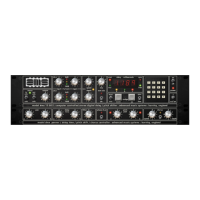
The RMX 16 is designed to be simple to operate with nine factory programs
simulating different reverberant environments with the ability to control all
parameters.
A calculator styled keypad is provided for entry of user definable variables. Note,
the 'C' and 'D' buttons on the keypad have no function.
Both input and output levels are adjustable to accommodate sources and
destinations sending or requiring non-standard signal levels. Overflow indication on
digital processing is provided as well as the standard 'traffic signal' LEDs enabling
fine adjustment of input level for optimum signal to noise performance.
When changing basic reverberation programs, the output is muted so that 'memory
flush-out' is not output to the audio chain. A useful feature incorporated into the
RMX 16 reverberation system is the use of 'Nudge Buttons'. These buttons
increment or decrement data for all selectable functions.
RMX-16 Digital Reverberation System - 8 - Issue 1



 To Next Page