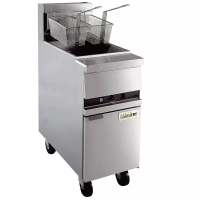
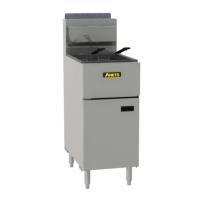
SLG I&O Series
6
2.2 Gas Connection
Your appliance will give you peak performance when the gas supply line is of sufficient size to provide the
correct gas flow. The gas inlet of the appliance is located in the back of the appliance on the lower RIGHT
hand
side for the SLG100 and lower LEFT hand side for SLG40 about 21 cm from the floor The gas line must be
installed in accordance with the requirements of AS 5601 or local codes, by a qualified professional. Gas line
sizing requirements can be determined by a qualified installation professional, your local gas company or by the
Technical Regulator. The gas line needs to be large enough to supply the necessary amount of fuel to all
appliances without losing pressure to any appliance. A properly sized and installed gas line will deliver a
minimum supply pressure of 7.0 ± 2.0 inches w.c. (1.75 ± 0.5 kPa) for natural gas and 12.0 ± 2.0 inches (3.0 ±
0.5 kPa) for propane to all appliances connected to the supply line, operating simultaneously at full demand.
Each appliance is equipped to operate on one certain fuel type. The type of fuel with which the appliance is
intended to operate is stamped on the data plate, which is attached to the inside of the door.
Warning
NEVER supply the appliance with a gas other than the one that is indicated on the data
plate. Using the incorrect gas type will cause improper operation and could result in
serious injury or death. If you need to convert the appliance to another type of fuel,
contact the dealer you purchased it from.
Notice
NEVER use an adaptor to make a smaller gas supply line fit the appliance connection.
This may not allow proper gas flow for optimum burner operation, resulting in poor
performance and improper operation.
2.3 Quick Disconnect Gas Connection
Gas appliances equipped with casters must be installed in compliance with the applicable clauses of The
Standard for Gas Installations, AS 5601(latest edition). This connection should include a quick disconnect
device that complies with the Standard for Limited Flexibility Connectors, AS4631 (latest edition). When
installing a quick disconnect you must also install adequate means for limiting the movement of the appliance
without depending on the connector and quick-disconnect device or its associated piping to limit the movement
of the appliance. The restraining device should be attached to the appliance on the back panel.
2.4 Fuel Supply Line Leak and Pressure Testing
The fuel supply system must be tested before the appliance is used. If the fuel line is going to be tested at a
pressure greater than ½ PISG (3.45 kPa), insure that that appliance is disconnected from the fuel line. If the fuel
line is to be tested at a pressure equal to or less than ½ PSIG (3.45 kPa), the appliance can be connected
during the test, but the unit’s gas valve must be shut. Test all gas line connections for leaks with a solution of
soap and water when pressure is applied.
2.5 Ventilation and Fire Safety Systems
Your new appliance must have proper ventilation to function safely and properly. Exhaust gas temperatures can
reach as high as 1100 °F (593 °C). Therefore, it is very important to install a fire safety system. Your ventilation
system should be designed to allow for easy cleaning. Frequent cleaning and proper maintenance of the
ventilation system and the appliance will reduce the chances of fire.
It is essential that the appliance be operated only when adequate ventilation is provided. Your ventilation hood
should be properly maintained. A qualified installation professional should ensure that the hood is operating
properly in conjunction with the appliance. Inadequate ventilation may not properly evacuate appliance all
emissions. Excessive or unbalanced ventilation may cause drafts, which could interfere with proper operation of
the pilot and burners. Leave at least 18 inches (45.7 cm) of open space between the flue of the appliance and
the intake of the exhaust hood.


 To Next Page