EasyManua.ls Logo

AOR AR2000 - General Receiver Overview; Receiver Features and Performance; Frequency Coverage and Receiving Modes; Memory and Search Bank Capacity

AOR AR2000
15 pages
Print Icon
To Next Page IconTo Next Page
To Previous Page IconTo Previous Page
Loading...
AR2000
Operating
manual
Page
1
This
manual
is
protected
by
copyright
AOR
Litd1991.
No
information
contained
in
this
manual
may
be
copied
or
transferred
by
any
means
without
the
prior
written
consent
of
AOR
Ltd.
Every
effort
has
been
made
to
make
this
manual
correct
and
up
to
date.
Due
to
continuous
development
of
the
receiver
and
by
error
or
omissions
anomalies
may
be
found
and
this
is
acknowledged.
Most
apparent
faults
are
due
to
accidental
miss-operation
of
the
receiver,
carefully
read
all
of
the
manual
before
deciding
to
return
the
set
for
repair.
AOR
Ltd.,
2-6-4
Misuji,
Taito-Ku,
Tokyo
111.
Japan.
Tel:
03-3865-1681
Fax:
03-3865-1697
General
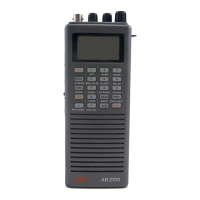
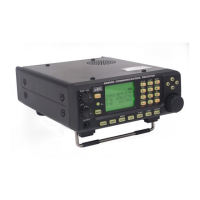
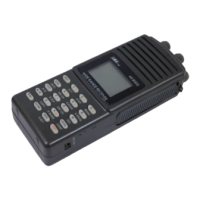
This
AOR
handheld
wide
band
scanning
receiver
is
renowned
for
it's
high
standards
of
performance
and
range
of
facilities
which
other
manufacturers
try
to
imitate.
Although
offering
a
long
list
of
facilities
and
operating
modes,
the
receiver
remains
reasonably
easy
to
operate.
The
display
often
provides
‘prompts’
for
selected
operations
such
as
a
flashing
“CH”
to
invite
you
to
key
in
a
new
memory
channel
number.
The
receiver
has
an
exceptionally
wide
frequency
coverage
from
500KHz
to1300MHz
(1.3GHz!!!).
The
modes
available
are
AM,
FM
(narrow)
and
FM
(wide).
All
available
modes
may
be
selected
at
any
frequency
within
the
receiver's
coverage.
Although
carefully
designed,
this
receiver
(like
ali
receivers)
suffers
from
a
degree
of
internal
noises
known
as
spurii.
They
are
a
product
of
the
receiver's
circuitry
and
do
not
represent
a
fault.
All
information
such
as
frequency,
mode,
channel,
etcetera
is
presented
in
an
easy
to
see
Liquid
Crystal
Display
(LCD).
For
night
time
use
there
ts
a
lamp
with
a
timeout
of
about
6
seconds
to
prevent
undue
battery
drain.
The
aerial
connection
is
of
the
standard
BNC
type
allowing
straight
forward
connection
to
almost
any
VHF
/
UHF
aerial.
There
is
also
a
10dB
attenuator
on
the
top
panel
to
increase
versatility.
There
is
a
massive
EEPROM
storage
(no
batteries
required)
of
1OOO
memories
held
as
10
banks
of
100
also
there
are
10
additional
programmabie
search
banks.
Each
memory
will
store
frequency
and
mode,
the
search
bands
will
also
store
the
increment.
Memories
and
search
bands
may
be
‘locked
out’
for
the
days
when
you
don’t
want
to
listen
to
something
you
have
previously
programmed.
In
search
mode,
you
may
lock
out
upto
1000
continuously
occupied
frequencies
(100
in
each
of
the
10
search
bands)
so
that
the
frequency
is
skipped
when
next
scanned.
Although
the
search
bands
are
pre-programmed
at
the
factory,
they
may
be
easily
re-programmed
from
the
keypad
by
the
user.
©1991
AOR
Ltd.

Related product manuals