Need help?
Do you have a question about the AOR AR5001D and is the answer not in the manual?
Guidelines for proper handling, cleaning, and operation to ensure receiver longevity.
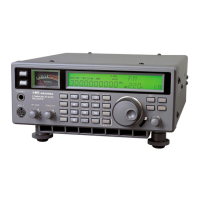
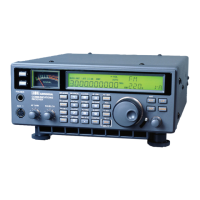
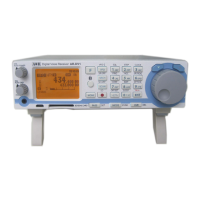
Details the layout and function of all controls and indicators on the front panel.
Describes the various connectors and switches located on the rear panel of the receiver.
Steps to prepare the AR5001D for its first use, including connections.
Instructions for connecting the antenna to the appropriate ports.
Guidance on connecting the DC power supply to the receiver.
Procedure for powering on the AR5001D for initial operation.
Explains the five VFOs and how to select them for tuning.
Methods for entering and tuning to specific frequencies using the keypad or dials.
Explanation of different receive modes and their applications.
Understanding and selecting IF bandwidth for optimal reception.
Configuring the Automatic Gain Control settings for signal strength management.
Adjusting the attenuator or RF amplifier to prevent overloading.
Utilizing the spectrum display to visualize signal activity.
Steps to turn on and view the spectrum display.
Monitoring multiple frequencies simultaneously.
Receiving two frequencies simultaneously with an offset.
Receiving two signals on different bands simultaneously.
Operations related to using the SD card for storage.
Retrieving stored data from the SD card.
Saving data from the receiver to the SD card.
Recording received audio onto the SD card.
Playing back recorded audio files from the SD card.
Saving current VFO settings into memory.
Recalling stored frequencies and settings from memory.
Removing individual memory channels.
Erasing all channels within a specific memory bank.
Initiating the memory scanning process.
Skipping unwanted channels during scan.
Searching between two VFO frequencies.
Searching using pre-programmed frequency limits.
Setting up frequency limits and modes for search banks.
Skipping specific frequencies during search.
High-speed search function.
Writing receiver data to the SD card.
Reading receiver data from the SD card.
Resetting the receiver to factory default settings.
Decoding scrambled analog voice transmissions.
Using CTCSS for selective squelch.
Using DCS for digital coded squelch.
Managing VFO frequencies and transfers.
Applying audio filters to shape the sound.
Setting up the alarm function.
Activating the programmed alarm.
Setting the automatic power-off timer.
Monitoring specific channels while scanning or searching.
Connecting the receiver to a PC via USB.
 General
| Antenna Impedance | 50 ohms |
|---|---|
| Mode | AM, FM, CW |
| Sensitivity | 0.5 μV |
| Selectivity | 6 kHz |
| IF Bandwidth | 6 kHz |
| Antenna Input | BNC |
| IF Rejection | > 70 dB |
| Image Rejection | > 70 dB |

 To Next Page