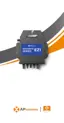
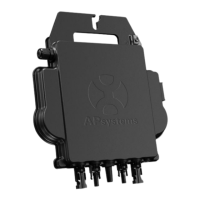
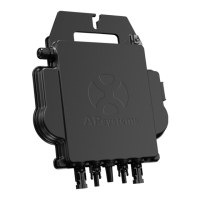
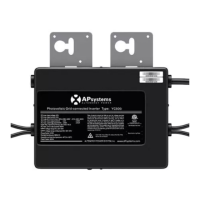
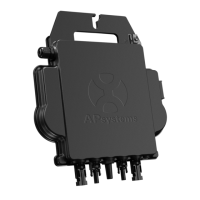
APsystems Microinverter EZ1 series User manual
2. APsystems Microinverter System Introduction
This integrated system improves safety; maximizes solar energy harvest; increases system reliability, and simplifies
solar system design, installation, maintenance, and management.
Safety with APsystems Microinverters
In a typical string inverter installation, PV modules are connected in series. The voltage adds-up to reach high voltage
value (from 600Vdc up to 1000Vdc) at the end of the PV string. This extreme high DC voltage brings a risk of
electrical shocks or electrical arcs which could cause fire.
When using an APsystems microinverter, PV modules are connected in parallel. Voltage at the back of each PV
module never exceeds PV modules Voc, which is lower than 60Vdc for most of PV modules used with APsystems
microinverters. This low voltage is considered “safe to touch” by fire departments and negates the risk of electrical
shock, electrical arcs and fire hazards.
APsystems Microinverters maximize PV energy production
Each PV module has individual Maximum Peak Power Tracking (MPPT) control, which ensures that the maximum
power is produced to the utility grid regardless of the performance of the other PV modules in the array. When PV
modules in the array are affected by shade, dust, different orientation, or any situation in which one module
underperforms compared with the other units, the APsystems Microinverter ensures top performance from the array
by maximizing the performance of each module individually within the array.
More reliable than centralized or string inverters
The distributed APsystems Microinverter system ensures that no single point of system failure exists across the PV
system. APsystems Microinverters are designed to operate at full power at ambient outdoor temperatures of up to
65 deg C (or 149 F). The inverter case is designed for outdoor installation and complies with the IP67 environmental
enclosure rating.
Simple to install
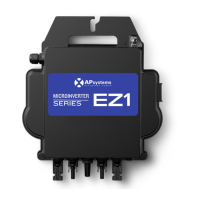
EZ1 series micorinverters have 2 input channels with independent MPPT and high input current and output power to
adapt to today’s larger power module. Users could directly connect to the Wi-Fi version of EZ1 with their cell phones
through Bluetooth and get the real-time data of the solar systems. Besides direct connection, Wi-Fi version of EZ1
could also connect to a router through Wi-Fi and send data to cloud servers for remote monitoring.
Through an AC extension cable provided by APsystems, EZ1 could be plugged into a socket and start output energy,
truly easy and convenient grid connection


 To Next Page