20
Customer Care Center
1-800-898-1879
www.askousa.com
Rinse aid
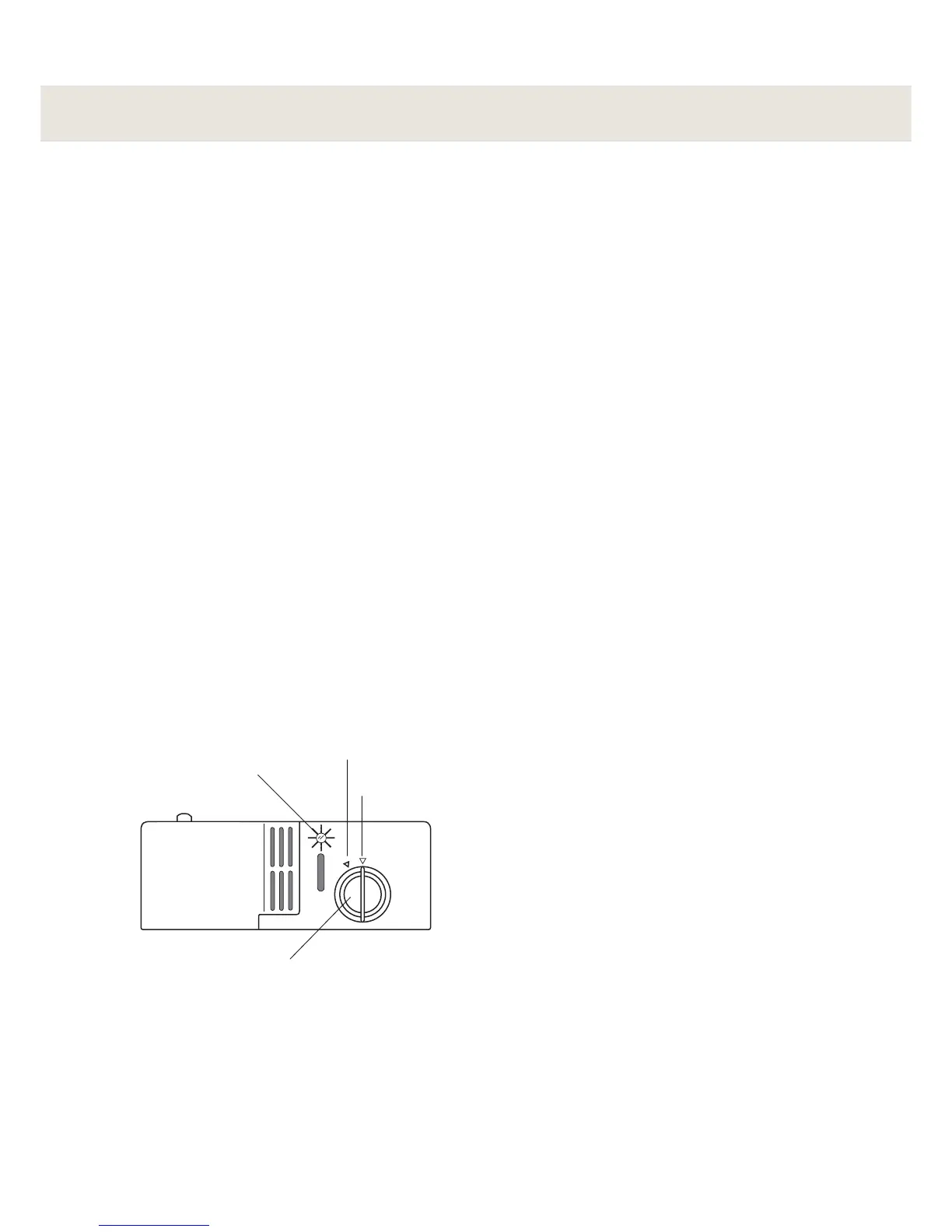
Open
Closed
Refill indicator
Cover for rinse aid
Open by turning and lifting the cover!
Adding rinse aid
In some cases, drying can be made more ef-
ficient by using rinse aid.
To fill with rinse aid:
1. Turn and lift up the cover of the rinse aid
compartment to the right of the dispenser.
This is where you top up and set the amount
of rinse aid to be dispensed in each wash.
2. Carefully pour in rinse aid up to the dos-
age setting knob.
Alter dosage if required. Do not forget to
close the cover.
Machines with refill indicator
There is a refill indicator in the middle of the
dispenser (see illustration). If the refill indi-
cator is totally black, there is sufficient rinse
aid. However, if the indicator has a more
transparent appearance, you need to fill up
with rinse aid (see above).
Select dosage
The dispenser is usually set at 1= soft water.
However, depending on the water hardness,
you may need to change the dosage.
Open the rinse aid cover. Here you will find
the dispenser’s adjustment dial. Settings 1-6:
the harder the water, the higher the dosage.
When the water hardness exceeds 3 grains,
you should use rinse aid with citric acid (acid
rinse aid).
Too much rinse aid can lead to the build-
up of foam. If your water is particularly soft,
you can dilute the rinse aid (1 part rinse aid,
1 part water).
Too much rinse aid can cause streaks on
the dishes, while too little can result in water
stains.


 To Next Page