EasyManua.ls Logo

AVM FRITZ! - User Manual

AVM FRITZ!
16 pages
Print Icon
To Next Page IconTo Next Page
Loading...
Poor voice quality when conducting calls
When conducting calls, one of the following issues either occasionally occurs or always occurs:
When conducting calls, you experience disturbances such as echo, dropouts, delays or background noise.
A loud and annoying hiss is heard when conducting calls.
The voice of one or both parties sounds distorted or "choppy".
Simply proceed as described below. After each measure, check whether the problem is solved.
1 Installing the latest software for your telephone
1. Install the latest software on the telephone.
2 Disabling HD telephony on your ISDN line
The following steps are only necessary if you are using the FRITZ!Box on an ISDN line and you cannot
understand the other party when they speak (very distorted, extremely noisy, robotic voice, or static and
crackling can be heard).
1. Enter #962*2* on your telephone and press the call key (pick up the handset).
2. Hang up again after about 3 seconds.
Note:You can reenable HD telephony by entering #962*1*.
3 Restarting the FRITZ!Box
1. Click "System" in the FRITZ!Box user interface.
2. Click "Backup" or "Reset" in the "System" menu.
3. Click on the "Restart" tab (if available).
4. Click the "Restart" button.
4 Reducing the call volume on the telephone
1. Reduce the call volume on the telephone: Press the "down arrow" or "telephone book" icon on the
control ring while speaking on the telephone.
5 Registering cordless telephones with the FRITZ!Box
1. Register all cordless telephones with the base station of the FRITZ!Box and switch off any other base
stations.
Question and Answer IconNeed help?

Do you have a question about the AVM FRITZ! and is the answer not in the manual?

Summary

Installing the Latest Software for Your Telephone

Registering Cordless Telephones with the FRITZ!Box

Register Cordless Telephones

Guide to registering cordless phones with the FRITZ!Box base station.

Configuring the FRITZ!Box for Internet Telephony

Set Line Speed

Configure internet connection speeds for optimal telephony performance.

Set Up Prioritization Rule for Internet Telephony

Create rules to prioritize internet telephony traffic for better quality.

Registering Telephones Using the FRITZ!Box Wizard

Use FRITZ!Box Wizard to Register Telephone

Register a telephone using the FRITZ!Box's guided setup wizard.

Registering Telephones Using the Telephones Menu

Use Telephone Menu to Register Telephone

Register a telephone by navigating through its own menu system.

Cannot Make Outgoing Calls Over the Internet

Entering Location Information

Enter Location Information

Configure country and area codes for correct call routing.

Deleting Carrier Prefixes

Delete Carrier Prefixes

Remove global and additional provider prefixes from call handling settings.

Reconfiguring Telephone Numbers

Reconfigure Telephone Numbers

Update and re-setup telephone numbers with the internet telephony provider.

FRITZ!Fon Does Not Ring

Disable Do Not Disturb, Call Blocks, and Call Through

Disable Do Not Disturb, call blocking, and call forwarding settings.

Maintain Permanent Internet Connection

Ensure the internet connection remains active for incoming calls.

Checking Your Numbers

Check Your Numbers

Verify internet telephony numbers with your provider.

Call Volume of FRITZ!Fon Too Low

Install Latest Software

Install the latest software on the telephone.

Overview

This document provides comprehensive instructions for troubleshooting and configuring a FRITZ!Fon device, particularly in conjunction with a FRITZ!Box. It addresses common issues such as poor voice quality, problems with incoming and outgoing calls, battery life, and various customization options.

Function Description

The FRITZ!Fon is a cordless telephone designed to work seamlessly with a FRITZ!Box, acting as its base station. It supports internet telephony (VoIP) and offers a range of features to enhance communication quality and user experience. The device allows users to make and receive calls, manage telephone numbers, configure ring tones, and utilize quick-dial functions. It integrates with the FRITZ!Box's telephone book and can be registered with up to four base stations.

Important Technical Specifications

While specific technical specifications like frequency bands or power output are not explicitly detailed, the document implies several key technical aspects:

  • DECT-GAP Profile Support: The FRITZ!Fon and its base station (FRITZ!Box) must support the DECT-GAP profile, which is a common standard for cordless telephones, ensuring compatibility and functionality.
  • HD Telephony: The device supports HD telephony, which can be enabled or disabled. Disabling it is a troubleshooting step for distorted or noisy voice quality, particularly on ISDN lines.
  • Internet Telephony (VoIP): The FRITZ!Fon is designed for VoIP calls, leveraging the FRITZ!Box's internet connection. This requires proper configuration of internet connection settings, including upstream and downstream speeds, and prioritization rules for real-time applications like internet telephony.
  • Rechargeable Battery: The FRITZ!Fon operates on a rechargeable battery. The document highlights that even a fully charged battery may only last for a maximum of one day (standby time), indicating a relatively short battery life that necessitates frequent charging.
  • Software Updates: The device's functionality and performance are dependent on its software. Users are instructed to install the "latest software" for the telephone to resolve various issues.
  • FRITZ!Box Integration: The FRITZ!Fon is deeply integrated with the FRITZ!Box user interface for most configurations, including registration, telephone number assignment, ring tone settings, and call handling features.

Usage Features

The FRITZ!Fon offers a variety of usage features, both for basic communication and advanced customization:

  • Call Management:
    • Making and Receiving Calls: Core functionality, with troubleshooting steps for issues like no ringing or inability to make outgoing calls.
    • Call Volume Adjustment: Users can reduce or increase the call volume during a conversation using the control ring or through the telephone's menu settings.
    • Caller ID Blocking (CLIR): The ability to block the telephone number from being displayed to the recipient, either for a specific call or permanently.
    • Call Blocks and Diversions: The FRITZ!Box allows for configuring call blocks and call diversions, which can affect how the FRITZ!Fon rings.
    • Call Through: A feature that can be enabled or disabled in the FRITZ!Box settings.
  • Telephone Number Assignment:
    • Users can assign specific telephone numbers for outgoing and incoming calls, especially useful for those with multiple numbers.
    • The FRITZ!Fon can react to incoming calls to desired numbers, or to all numbers.
  • Quick-Dial Keys:
    • Keys 0-9 have quick-dial assignments:
      • 0: Calls up the "Internet Services" menu.
      • 1: Selects the answering machine.
      • 2-9: Quick-dial numbers from the FRITZ!Box telephone book (02-09).
      • *: Enables/disables Do Not Disturb.
      • #: Enables/disables keylock.
    • A red LED indicates incoming calls even when Do Not Disturb is enabled.
  • Ring Tone Configuration:
    • Default Ring Tone: Users can select a default ring tone.
    • Special Ring Tones: Different ring tones can be configured for:
      • Incoming calls from specific numbers.
      • Specific telephone book entries.
      • Important persons from the FRITZ!Box telephone book.
      • Internal calls.
      • Alarms (can even use internet radio stations).
    • Ringer Volume: Adjustable, with an option for increasing ring volume.
  • Do Not Disturb Function: Can be enabled/disabled on the telephone itself or through FRITZ!Box settings.
  • Keylock: Can be enabled/disabled using the # key.
  • Display Settings: Includes a "Hibernation" mode with an option to turn off the display.
  • Answering Machine: The device integrates with the FRITZ!Box's answering machine, with a flashing symbol indicating messages.

Maintenance Features

The document outlines several maintenance and troubleshooting steps to ensure optimal performance of the FRITZ!Fon:
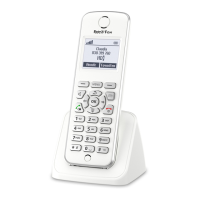
  • Software Installation: Regularly installing the "latest software" on the telephone is a primary maintenance step for resolving various issues.
  • Battery Charging and Replacement:
    • Charging: The rechargeable battery requires at least 6 hours in the charging cradle for a full charge.
    • Replacement: If battery issues persist, replacing the rechargeable battery with a genuine replacement from an electronics retailer is recommended. Using aftermarket batteries is cautioned against.
  • Restarting the Telephone: Switching the telephone off and on again is a simple troubleshooting step for temporary issues.
  • Restarting the FRITZ!Box: Restarting the FRITZ!Box is a common troubleshooting step for various connectivity and voice quality problems.
  • Restoring Factory Settings:
    • FRITZ!Fon: The telephone can be restored to its factory settings via its menu.
    • FRITZ!Box: While not explicitly stated for the FRITZ!Box itself, the document mentions "Backup" or "Reset" options in the FRITZ!Box system menu, implying a way to manage its configuration.
  • Re-registering the Telephone: If issues persist, deleting the telephone from the FRITZ!Box and then re-registering it is a recommended step. This can be done via the FRITZ!Box wizard or the telephone's menu.
  • Configuring Internet Connection Settings: For VoIP calls, maintaining a permanent internet connection and correctly setting upstream/downstream speeds in the FRITZ!Box are crucial.
  • Prioritization Rules: Setting up prioritization rules for internet telephony in the FRITZ!Box ensures voice data is prioritized over other internet traffic.
  • Managing Other Applications: Adjusting settings for file sharing software or online games (e.g., reducing simultaneous connections or throughput) can prevent interference with voice quality.
  • Location Information: Ensuring correct country and area codes are entered in the FRITZ!Box is important for proper call routing.
  • Deleting Carrier Prefixes: Removing "Global Provider Prefix" and "Additional Provider Prefixes" in the FRITZ!Box settings can resolve call issues.
  • Disabling DECT Eco: If the telephone does not ring due to DECT connection disturbances, disabling "DECT Eco" in the FRITZ!Box can help. Repositioning the telephone may also be necessary.
  • Contacting Provider: If issues like "Not Acceptable Here (488)" errors persist, contacting the internet telephony provider to check the telephone number and account information is advised. This is particularly relevant after porting numbers.

AVM FRITZ! Specifications

General IconGeneral
BrandAVM
ModelFRITZ!
CategoryTelephone
LanguageEnglish

Related product manuals