• Vent system must terminate to the outside (roof or side
wall).
• DO NOT terminate the vent system in an attic or other
enclosed area.
• DO NOT use 4” (10.2 cm) laundry-type wall caps.
• Use metal/aluminum vent only. Rigid or flexible metal /
aluminum vent duct is recommended.
• DO NOT use plastic vent.
• Always keep the duct clean to ensure proper airflow.
• Measure and estimate the following figures before
installation:
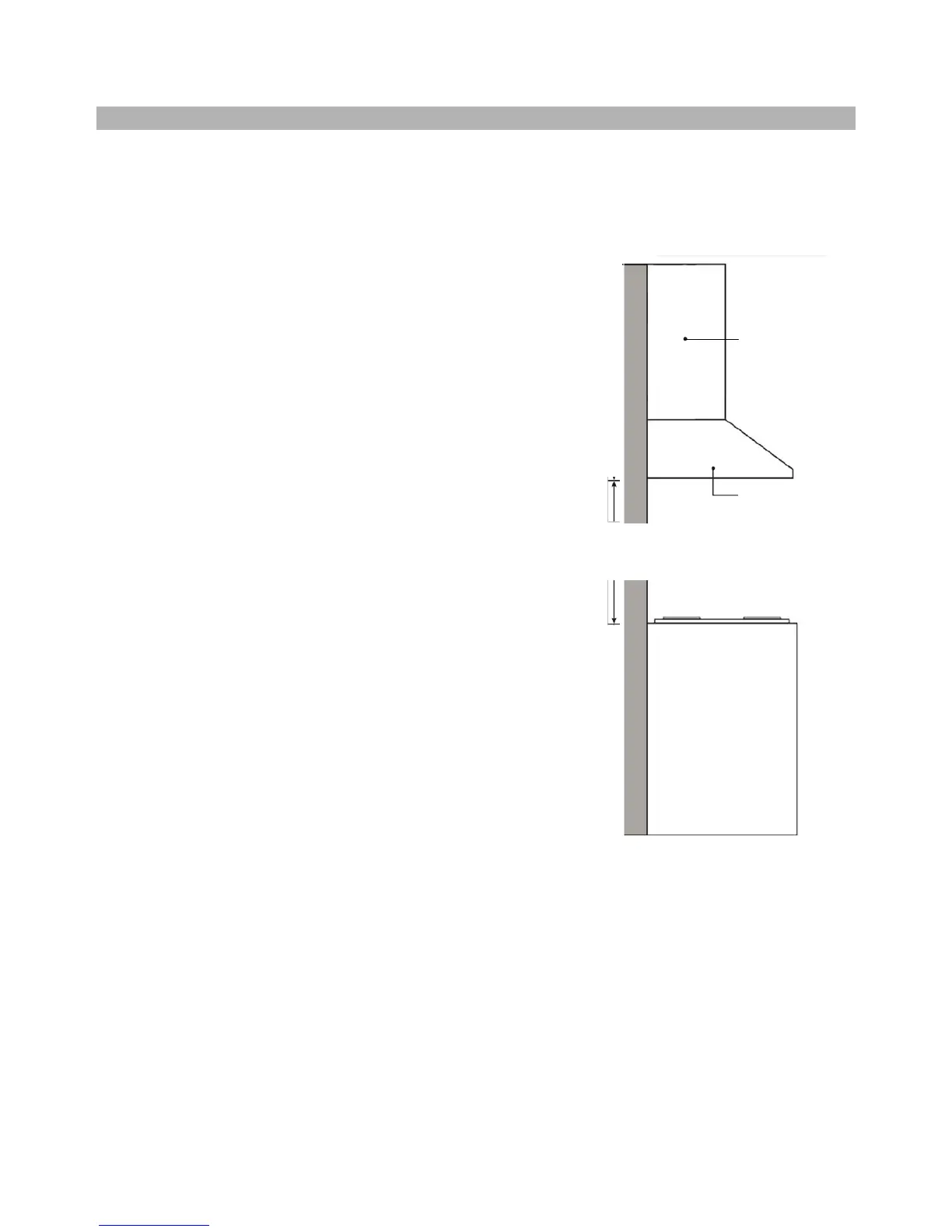
1. Distance between the countertop/stove to the bottom of
the range hood. Recommend 27” to 30” for ideal
performance, minimum 24” (inches) for safety
concern.
2. Height of hood and duct.
For the most efficient & quiet operation:
• A distance of 27” to 30” is recommended between stove
top and the bottom of range hood.
• The vent duct isn’t included. It is recommended that the
range hood be vented vertically through the roof through
6” (15.24 cm) or bigger round metal/aluminum vent work,
such as 6 in. x 8 ft. semi-rigid aluminum flexible duct.
• The size of the vent should be uniform.
• Use no more than three 90° elbows.
• Make sure there is a minimum of 24” (61 cm) of straight
vent between the elbows if more than one elbow is used.
• DO NOT install two elbows together.
• The length of vent system and number of elbows should be
kept to a minimum to pro-vide efficient performance.
• The vent system should have a damper. The damper can be
installed in the duct near to the roof or wall cap. Not
recommend to use damper on top of the range hood,
because the damper has big noise.
• Use silver tape or duct tape to seal all joints in the vent
system.
• Use caulking silicone to seal exterior wall or roof opening
around the cap.
.


 To Next Page