AWS Snowball User Guide
Return the Appliance
Return the Appliance
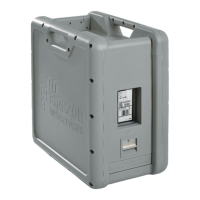
The prepaid shipping label on the E Ink display contains the correct address to return the Snowball.
For information on how to return your Snowball, see Shipping Carriers (p. 74). The Snowball will be
delivered to an AWS sorting facility and forwarded to the AWS data center. The carrier will automatically
report back a tracking number for your job to the AWS Snowball Management Console. You can access
that tracking number, and also a link to the tracking website, by viewing the job's status details in the
console, or by making calls to the job management API.
Important
Unless personally instructed otherwise by AWS, never affix a separate shipping label to the
Snowball. Always use the shipping label that is displayed on the Snowball's E Ink display.
Additionally, you can track the status changes of your job through the AWS Snowball Management
Console, by Amazon SNS notifications if you selected that option during job creation, or by making calls
to the job management API. For more information on this API, see AWS Snowball API Reference. The
final status values include when the Snowball has been received by AWS, when data import begins, and
when the import job is completed.
Next: Monitor the Import Status (p. 24)
Monitor the Import Status
You can track the status of your job at any time through the AWS Snowball Management Console or
by making calls to the job management API. For more information this API, see AWS Snowball API
Reference. Whenever the Snowball is in transit, you can get detailed shipping status information from
the tracking website using the tracking number you obtained when your region's carrier received the
Snowball.
To monitor the status of your import job in the console, sign in to the AWS Snowball Management
Console. Choose the job you want to track from the table, or search for it by your chosen parameters in
the search bar above the table. Once you select the job, detailed information appears for that job within
the table, including a bar that shows real-time status of your job.
Once your package arrives at AWS and the Snowball is delivered to processing, your job status changes
from In transit to AWS to At AWS. On average, it takes a day for your data import into Amazon S3 to
begin. When it does, the status of your job changes to Importing. From this point on, it takes an average
of two business days for your import to reach Completed status.
Now your first data import job into Amazon S3 using Snowball is complete. You can get a report about
the data transfer from the console. To access this report from the console, select the job from the
table, and expand it to reveal the job's detailed information. Choose Get report to download your job
completion report as a PDF file. For more information, see Getting Your Job Completion Report and Logs
in the Console (p. 42).
Next: Where Do I Go from Here? (p. 32)
Exporting Data from Amazon S3 with Snowball
The AWS Snowball Management Console is where you'll create and manage jobs to export data from
Amazon S3. The process for export data from Amazon S3 with Snowball has the following steps.
Topics
• Create an Export Job (p. 25)
• Receive the AWS Snowball Appliance (p. 26)
24


 To Next Page