1. Make sure you have read and fully understood
the general instructions and safety precautions
that are printed in the preceding pages of this
manual.
2. Before connecting the machine to the supply;
check the tool for obvious signs of damage, paying
particular attention to the plug and the power
cable. Rectify or have rectified any damage you
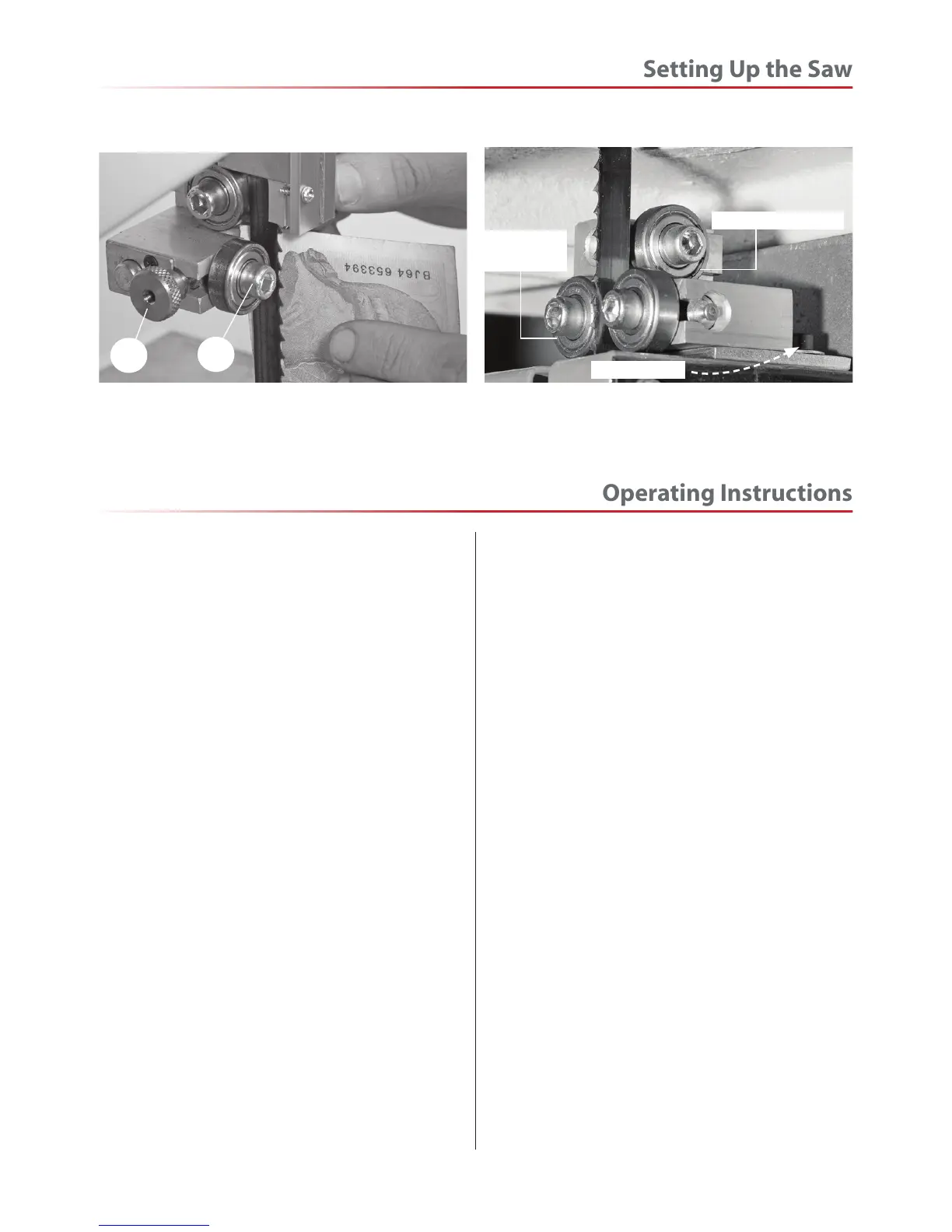
discover. Check that the blade you are using is the
correct one for the job in hand. Change the blade if
necessary. Check the blade is not damaged; is clean,
sharp, tracks properly and is correctly tensioned.
3. Set the upper blade guide to approximately
12mm (1/2”) above the height of the work piece.
4. Check especially on site, that there are no foreign
objects e.g. old nails, screws, small stones etc
embedded in the material you are about to cut.
5. Check that all accessories, tools etc., that have been
used to set the machine up, are removed and set
carefully aside or stowed away correctly.
6. Ensure the machine is switched off. Plug the power
cable into a correctly rated switched socket outlet.
If extension leads are being used, check these for
damage, do not use if damaged; if you are working
outside, check that any extension cables in use are
rated for outside work. Switch on. Allow the saw to
run up to speed.
7. Make sure that the material you are about to cut
is within the machine is capacity, and the cut you are
about to make is within the blade’s capabilities, e.g.
don’t try and cut a 1” radius curve using a 5/8” blade.
8. Make sure the blade is not in contact with the
material when you start the saw. Start the cutting
operation. Do not try to cut too quickly; the correct
cutting speed, if one could be so precise, would never
see the blade pushed back against the thrust be aring,
the saw would cut and clear the saw line at the rate
the work piece was fed into it. If you notice that you
require more and more pressure to effect the cut,
and the blade is in continual contact with the thrust
bearing, the chances are the blade is becoming blunt.
Check and change if necessary.
Do not let go of the workpiece, if you have to change
your grip, make sure one hand is holding the material
at all times.
9. If you are cutting long pieces of material think
about sawing cutouts (i.e. a saw cut from the edge
of the material to the saw line) along the saw line
so that you can discard the offcuts as you progress
down the saw line.
10. Observe the old woodworkers’ adage of never
allowing your hand/fingers within one hand breadth
of the blade.
Continues Over...




 To Next Page