Need help?
Do you have a question about the B&G H5000 and is the answer not in the manual?
Provides context and assumptions for using the operation manual.
Lists the main hardware units that constitute the H5000 system.
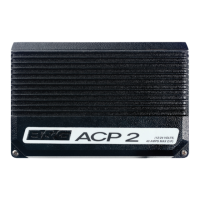
Describes the core processing unit responsible for data calculation and distribution.
Explains the browser-based interface for system configuration and diagnostics.
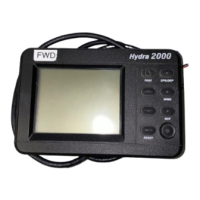
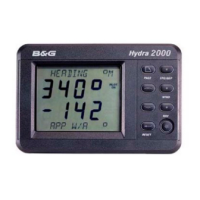
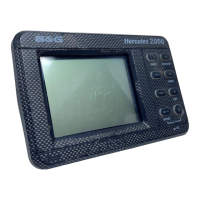
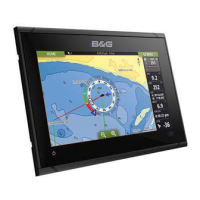
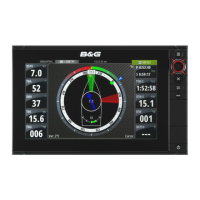
Details the 5-inch color display unit for showing sailing data.
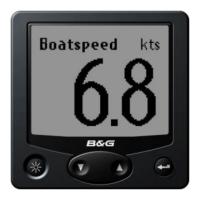
Describes the 7-segment display optimized for essential race data.
Introduces lightweight, single-line displays using HV technology for high contrast.
Explains analog indicators and modules interfacing sensors with the CPU.
Details Barometric & temperature and 3D Motion sensor modules.
Describes the network audible alarm unit.
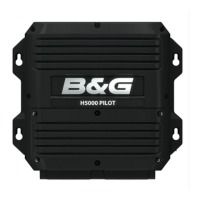
Explains the unit linking the instrument system to the pilot drive system.
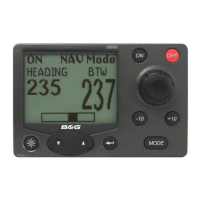
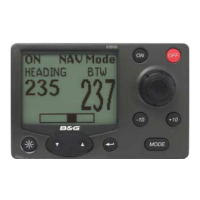
Details the dedicated controller for autopilot functions, setup, and commissioning.
Illustrates typical H5000 system configurations (Hydra, Hercules, Performance).
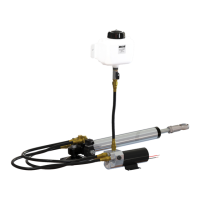
Outlines the essential components for an H5000 autopilot system.
Describes a simplified system configuration without a central processor unit.
Explains basic operation, page navigation, and display settings.
Details default pages like Sail Steer, Target Wind Angle, Speed/Depth, Wind Plot.
Details the display and setup for race start lines.
Covers transitioning, replacing, enabling/disabling, and editing data pages.
Covers navigation of Page and Settings menus.
Details countdown, elapsed time, and start/stop functions for races.
Explains the function triggered in emergency situations.
Describes configuring compatible HV displays.
Covers enabling, setting, indicating, and clearing system alarms.
Explains adjusting sensor data update rates for smoothness.
Details recording distance and time for trips and total log.
Covers basic operation, display info, and editing for the Race display.
Covers lighting zones, backlighting, and remote display configuration.
Covers alarms, diagnostics, version, checksum, resets, and segment tests.
Describes the display information and the function of each key on the controller.
Guides on engaging, disengaging, and navigating autopilot modes.
Details procedures for tacking and gybing in Wind and Auto modes.
Explains how to set the depth offset for accurate readings.
Covers calibrating boat speed for hull shape and paddlewheel.
Details calibrating boat speed using a known distance.
Covers configuring multiple sensor sources for automatic switching.
Explains offset calibration for masthead unit alignment.
Details applying motion correction and using TWA/TWS correction tables.
Details the Auto Cal process for compass deviation and offset.
Covers how the system handles magnetic variation.
Explains managing polar tables, corrections, and sources through an MFD.
Covers network sources, auto-selection, and manual source selection.
Displays CPU info, IP address, and explains group parameter control.
Covers setting display units, decimal places, and language.
Covers preferred time format, date, local offset, and restoring defaults.
Explains simulator mode and performing a full system reset.
Shows device information and software version.
Guides on selecting sources for autopilot data (auto and manual).
Covers rudder drive setup, voltage, feedback, and calibration procedures.
Details dockside setup steps like boat length and rudder calibration.
Covers performing the sea trial and automatic tuning process.
Explains adjusting rudder gain, counter rudder, and response modes.
Covers enabling sailing features, wind modes, and gust response.
Details TWS response, tack time/angle, and heel compensation settings.
Covers auto response modes and recovery mode settings.
Covers TWA/TWS limits and selecting the speed source.
Guides on display settings, alarm buzzer, language, and light adjustments.
Explains how to connect and access the webserver via Ethernet or Wi-Fi.
Outlines the structure and options available within the webserver interface.
Guides on purchasing and installing software upgrades via the webserver.
Explains how to access help files related to the webserver features.
Details Depth calibration and analog channel calibration procedures.
Explains apparent, true, and ground wind angle and speed variables.
Covers boat speed, SOG, course, and dead reckoning variables.
Details rudder angle, heading, heel angle, keel angle, and trim variables.
Explains cross track error, layline distance, and waypoint navigation data.
Details tide set/rate and timer functions.
Explains VMG, VMG to waypoint, and VMG performance variables.
Provides example data for True Wind Angle and Speed versus VMG.
Covers cleaning, checking keys, connectors, and housings.
Provides instructions for storing the masthead unit during winter.
 General
| Connectivity | Ethernet, NMEA 2000 |
|---|---|
| Operating Temperature | -15°C to 55°C |
| Power Consumption | 10W |
| Weight | Varies by module |
| Memory | Varies by module |

 To Next Page