EasyManua.ls Logo

Beckett NX - User Manual

Beckett NX
24 pages
Print Icon
To Next Page IconTo Next Page
Loading...
RESIDENTIAL BURNERS
Potential for Fire, Smoke and Asphyxiation Hazards
To the Homeowner or Equipment Owner:
Please read and carefully follow all instructions
provided in this manual regarding your
responsibilities in caring for your heating
equipment.
Contact a professional, quali ed service agency for
installation, start-up or service work.
Save this manual for future reference.
y
y
y
Incorrect installation, adjustment, or misuse of this burner could result in death, severe
personal injury, or substantial property damage.
To the Professional, Quali ed Installer or Service Agency:
Please read and carefully follow all instructions provided
in this manual before installing, starting, or servicing this
burner or heating system.
The Installation must be made in accordance with all state
and local codes having jurisdiction.
y
y

Other manuals for Beckett NX

Question and Answer IconNeed help?

Do you have a question about the Beckett NX and is the answer not in the manual?

Summary

General Information

Owners Responsibility

Highlights responsibilities for proper installation, adjustment, and use of the burner.

General Specifications

Performance Limits Warning

Warns against operating the burner beyond specified limits and advises consulting service.

Installation Site Preparation

Professional Service Mandate

Emphasizes the need for qualified technicians for installation and adjustment.

Chimney Hazard Warning

Highlights hazards associated with improper chimney/vent system installation.

Combustion Air Supply

Air Supply Requirements

Stresses the importance of sufficient air supply for burner performance and safety.

Outside Air Kit Instructions

Warning about strict adherence to outside air kit installation instructions.

Fuel Line Setup and Safety

Oil Leak and Fire Hazard

Warns about oil leaks and fire hazards during fuel line installation.

Burner Wiring

Electrical Shock Hazard

Warns about severe injury or death from electrical shock during wiring.

Wiring Diagrams

Fire and Burn Hazard Warning

Warns of severe hazards if high limit protection fails and causes a runaway condition.

Burner Control Sequences

Burner Control Reset & Status

Burner Start-up and Combustion Setup

Initial Start-up Settings

Guides on initial burner start-up and setting adjustments.

Start-up Hazard Warning

Warns about hazards from improper pump priming during start-up.

NX Air Tube & Head Settings

Setting Combustion

Regular Maintenance

Technician Maintenance Tasks

Outlines annual maintenance tasks to be performed by a qualified technician.

Annual Service Necessity

Emphasizes the necessity of annual professional servicing for safety and reliability.

Nozzle Service and Installation

Head;Air Tube Assembly Details

Electrode Adjustment

Steps to check and adjust electrode tip gap and spacing for proper ignition.

Head Alignment & Cad Cell Sighting

How to align the retention head and cad cell for correct flame detection.

Calibration and Blower Maintenance

Summary

General Information

Owners Responsibility

Highlights responsibilities for proper installation, adjustment, and use of the burner.

General Specifications

Performance Limits Warning

Warns against operating the burner beyond specified limits and advises consulting service.

Installation Site Preparation

Professional Service Mandate

Emphasizes the need for qualified technicians for installation and adjustment.

Chimney Hazard Warning

Highlights hazards associated with improper chimney/vent system installation.

Combustion Air Supply

Air Supply Requirements

Stresses the importance of sufficient air supply for burner performance and safety.

Outside Air Kit Instructions

Warning about strict adherence to outside air kit installation instructions.

Fuel Line Setup and Safety

Oil Leak and Fire Hazard

Warns about oil leaks and fire hazards during fuel line installation.

Burner Wiring

Electrical Shock Hazard

Warns about severe injury or death from electrical shock during wiring.

Wiring Diagrams

Fire and Burn Hazard Warning

Warns of severe hazards if high limit protection fails and causes a runaway condition.

Burner Control Sequences

Burner Control Reset & Status

Burner Start-up and Combustion Setup

Initial Start-up Settings

Guides on initial burner start-up and setting adjustments.

Start-up Hazard Warning

Warns about hazards from improper pump priming during start-up.

NX Air Tube & Head Settings

Setting Combustion

Regular Maintenance

Technician Maintenance Tasks

Outlines annual maintenance tasks to be performed by a qualified technician.

Annual Service Necessity

Emphasizes the necessity of annual professional servicing for safety and reliability.

Nozzle Service and Installation

Head;Air Tube Assembly Details

Electrode Adjustment

Steps to check and adjust electrode tip gap and spacing for proper ignition.

Head Alignment & Cad Cell Sighting

How to align the retention head and cad cell for correct flame detection.

Calibration and Blower Maintenance

Overview

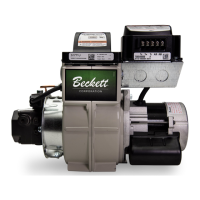
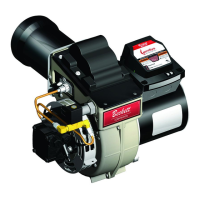
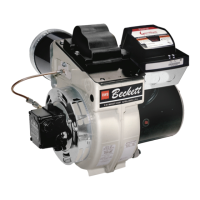
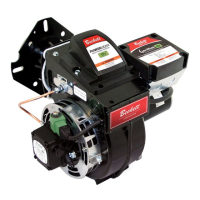
The Beckett NX Oil Burner is a residential heating component designed for efficient and reliable operation within oil heating systems. Its primary function is to atomize and ignite fuel oil, creating a flame that heats a boiler or furnace, thereby providing warmth to a home. The burner is engineered for professional installation and maintenance, ensuring optimal performance and safety.

Function Description

The NX Oil Burner operates by drawing fuel oil from a tank, pressurizing it through a fuel pump, and then atomizing it through a nozzle into a fine mist. Simultaneously, a blower wheel supplies combustion air, which mixes with the atomized oil. An electronic igniter then sparks, igniting the mixture to produce a stable flame within the combustion chamber of the heating appliance. The burner's control system, such as the GeniSys 7505 or Honeywell R7184 primary control, manages the sequence of operation, including standby, valve-on delay, trial for ignition, ignition carryover, and run cycles. These controls incorporate safety features like lockout mechanisms to prevent unsafe operation in case of ignition failure or flame loss. Some models also include a pump prime mode, which allows technicians to prime the fuel pump without needing to bypass safety interlocks. The burner is designed to work with various air tube and head combinations, allowing for adaptation to different firing rates and appliance requirements.

Usage Features

The Beckett NX Oil Burner is integrated into a complete oil heating system, and its usage is primarily managed by the homeowner through a thermostat or temperature controller. When there is a call for heat, the burner initiates its sequence of operation to produce a flame.

For homeowners, the key usage features revolve around ensuring the system's proper function and safety:

  • Daily Checks: Homeowners are advised to daily check the room where the burner/appliance is installed. This includes ensuring air ventilation openings are clean and unobstructed, nothing blocks burner inlet air openings, no combustible materials are stored near the appliance, and there are no signs of oil or water leaks.
  • Weekly Checks: Weekly, homeowners should check the oil tank level, keeping it full, especially in summer, to prevent moisture condensation.
  • Professional Service: The manual strongly recommends annual inspection and service by a qualified service agency. If the burner appears to be operating improperly at any time, immediate contact with a qualified service agency is crucial.
  • Safety Warnings: The manual emphasizes critical safety warnings, including never storing or using flammable liquids near the burner, not attempting to burn garbage or unspecified fuels, and not restricting air inlet openings. These warnings are crucial for preventing fire, carbon monoxide poisoning, soot, or explosion hazards.
  • Frozen Plumbing and Water Damage Hazard: For unattended residences in cold weather, the manual warns about potential frozen plumbing and water damage due to burner lockout, system failures, or power outages. It advises preventive actions like installing a security system that senses low temperature and initiates effective action.

Maintenance Features

Maintenance of the Beckett NX Oil Burner is primarily intended for professional, qualified service technicians due to the technical nature of the adjustments and the need for specialized combustion test instruments. Regular maintenance is crucial for ensuring the burner's efficiency, safety, and longevity.

Key maintenance features and tasks include:

  • Annual Professional Service: A qualified service technician should service the burner annually. More frequent service intervals may be necessary in dusty or adverse environments.
  • Fuel System Maintenance:
    • Replacing the oil supply line filter cartridge to prevent contamination of the fuel pump and nozzle.
    • Inspecting the oil supply system for leaks, water, sludge, and restrictions.
    • Removing and cleaning the pump strainer if applicable.
    • Replacing the used nozzle with a new one that conforms to appliance manufacturer specifications.
  • Ignition System Maintenance:
    • Cleaning and inspecting electrodes for damage (cracks, chips, rounded tips) and replacing them if necessary.
    • Checking electrode tip settings and adjusting them as per specifications.
    • Inspecting igniter spring contacts.
  • Combustion Air and Head Assembly Maintenance:
    • Cleaning the blower wheel, air inlet, air guide, retention head, throttle cup, and throttle ring of any lint or foreign material.
    • Cleaning accumulated soot or oil stains from the throttle cup sight windows using a clean soft cloth and degreaser. It is critical not to puncture, scratch, or remove these windows, as this can impair burner performance and lead to safety hazards.
    • Checking retention head alignment and cad cell sighting to ensure the cad cell can properly detect the flame.
    • Checking and adjusting "Zero" calibration of the head/air adjustment mechanism.
    • Ensuring the Low Firing Rate Baffle (if required) is in place.
  • Electrical and Control System Checks:
    • Checking motor current to ensure it does not exceed the nameplate rating.
    • Checking all wiring for secure connections and insulation breaks.
    • Checking pump pressure and cutoff function.
    • Checking primary control safety lockout timing.
    • Checking ignition system for proper operation.
  • Vent System and Appliance Cleaning:
    • Inspecting and clearing the vent system and chimney of soot accumulation or other restrictions.
    • Cleaning the appliance thoroughly according to the manufacturer's recommendations.
  • Combustion Testing and Adjustment:
    • Performing combustion tests with specialized instruments to set the stack or over-fire draft, adjust head/air for optimal CO2/O2 levels, and recheck smoke levels to ensure zero smoke. This provides a margin of reserve air for variable conditions.
  • Record Keeping: It is good practice to keep a record of the service performed and the combustion test results for future reference.

The manual provides detailed instructions for tasks like removing the nozzle line for service, nozzle installation, electrode adjustment, and blower wheel replacement, all emphasizing careful handling and adherence to specific settings to prevent impaired combustion, oil leakage, and safety hazards.

Beckett NX Specifications

General IconGeneral
Fuel TypeOil
Motor Speed3450 RPM
Frequency60 Hz
Motor TypePSC
Voltage120V

Related product manuals