10
When cutting a limb that is under tension be alert for spring back. When the tension
in the wood fibers is released the spring loaded limb may strike the operator and/or
throw the chainsaw out of control.
Use extreme caution when cutting brush and saplings. The slender material may
catch the saw chain and be whipped toward you or pull you o balance.
Carry the chainsaw by the front handle with the chainsaw switched o and away
from your body. When transporting or storing the chainsaw, always fit the guide
bar cover. Proper handling of the chainsaw will reduce the likelihood of accidental
contact with the moving saw chain.
Follow instructions for lubricating, chain tensioning and changing the bar and chain.
Improperly tensioned or lubricated chain may either break or increase the chance
for kickback.
Cut wood only. Do not use chainsaw for purposes not intended. For example:
do not use chainsaw for cutting metal, plastic, masonry or non-wood building
materials. Use of the chainsaw for operations dierent than intended could result
in a hazardous situation.
Do not attempt to fell a tree until you have an understanding of the risks and how
to avoid them. Serious injury could occur to the operator or bystanders while
felling a tree.
CAUSES AND OPERATOR PREVENTION OF KICKBACK
Kickback may occur when the nose or tip of the guide bar touches an object, or
when the wood closes in and pinches the saw chain in the cut.
Tip contact in some cases may cause a sudden reverse reaction, kicking the
guide bar up and back towards the operator.
Pinching the saw chain along the top of the guide bar may push the guide bar
rapidly back towards the operator.
Either of these reactions may cause you to lose control of the saw, which could
result in serious personal injury. Do not rely exclusively upon the safety devices
built into your saw. As a chainsaw user, you should take several steps to keep
your cutting jobs free from accident or injury.
Kickback is the result of chainsaw misuse and/or incorrect operating procedures
or conditions and can be avoided by taking proper precautions as given below:
• Maintain a firm grip, with thumbs and fingers encircling the chainsaw handles,
with both hands on the saw and position your body and arm to allow you to resist
kickback forces. Kickback forces can be controlled by the operator, if proper
precautions are taken. Do not let go of the chainsaw.
• Do not overreach and do not cut above shoulder height. This helps prevent
unintended tip contact and enables better control of the chainsaw in
unexpected situations.
• Only use replacement guide bars and saw chains specified by the manufacturer.
Incorrect replacement guide bars and saw chains may cause chain breakage
and/or kickback.
• Follow the manufacturer’s sharpening and maintenance instructions for the saw
chain. Decreasing the depth gauge height can lead to increased kickback.
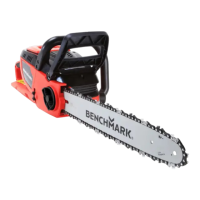
60V 16-INCH CORDLESS CHAINSAW
52 40-050


 To Next Page