07/ 2018
BENNING ST 725
29
- If R
PE
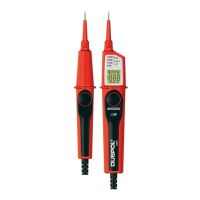
ishigherthantheadmissiblelimitingvalue(≤0.3Ωuptoalengthof5m)butlower
than 1 Ω, the measured value will bedisplayedwithouta rating, the “tAble” symbol will
appear on the display and the test procedure will be stopped. The responsible testing staff
determines by means of the limiting value table (see section 7.10 or the table on the rear
of the BENNING ST 725) and by means of the line length of the test object whether the
displayed measured value is acceptable or not.
Press the -key
2
to give the measured value a positive rating and a will be displayed
next to the R
PE
symbol. The test procedure will be continued.
Press the
-key
3
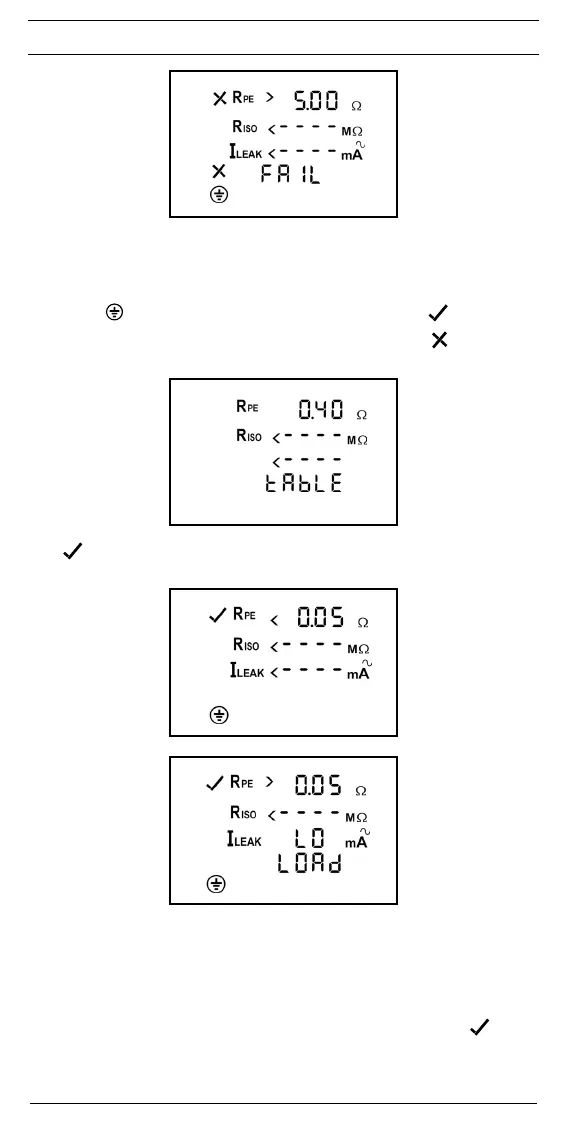
to give the measured value a negative rating and a
will be displayed
next to the R
PE
symbol. "FAIL" appears on the display to confirm that the measurement has
been stopped.
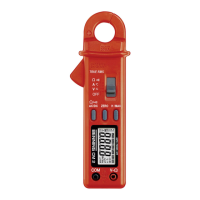
- If R
PE
is lower than the admissible limiting value, the measured value of R
PE
is shown and
a appears next to the R
PE
symbol. Now, the R
PE
measurement is carried out again with
reversed polarity and the highest measured value of both measurements will be displayed.
After the R
PE
test has been passed, the test of the insulating resistance is started.
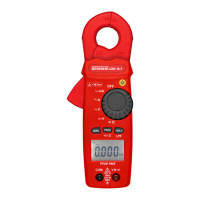
- If "Lo LOAD" is shown on the display, please check whether the test object is switched on.
- Press the key
2
to continue the testing procedure in case of the load being too low (R
L-N
>
6kΩ).
- If "HIGH LOAD“ is shown on the display, this indicates an excessive load (R
L-N
<<14Ω,
I
LAST
(I
LOAD
) > 16 A) of the test object. There might be danger of a short-circuit or of an earth
fault. Check whether there is a short-circuit between the external conductor (L) and neutral
conductor (N) of the test object.
- If there is no short-circuit, you can continue with the testing procedure by pressing the key
2
.
- If the insulating resistance R
ISO
is higher than the admissible limiting value, a appears
next to the R
ISO
symbol.



 To Next Page