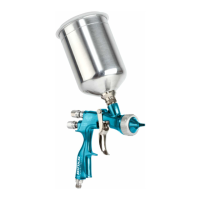
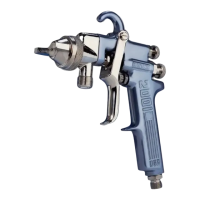
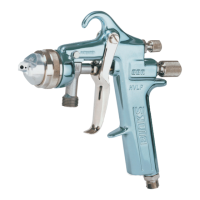
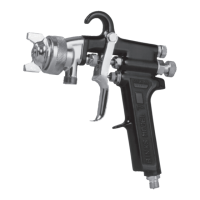
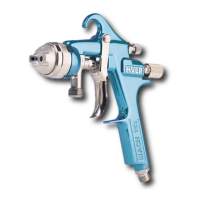
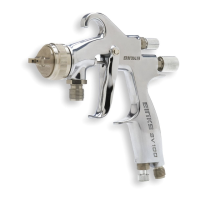
The Binks Trophy AA 4400 is an air-assist airless spray gun designed for applying solvent and water-based materials. It is available in both HVLP (High Volume Low Pressure) and LVMP (Low Volume Medium Pressure) configurations, with options for flat tip and twist tip versions. This spray gun is engineered to produce an exceptionally fine and even spray pattern, resulting in a high-quality finish with reduced overspray and VOC emissions.
Function Description
The primary function of the Trophy AA 4400 is to atomize paint or other materials as they pass through a carbide tip. A secondary atomization is provided by the air cap, which utilizes a separate air supply to the gun. The pattern size can be controlled using a spreader valve. This dual atomization and shaping process ensures a superior finish, making it suitable for products requiring an exceptionally fine appearance.
The gun operates by combining high-pressure fluid delivery with atomizing air. The fluid is forced through a small orifice in the tip, creating a high-velocity stream. Simultaneously, compressed air is introduced around this fluid stream, further breaking it into a fine mist. This air-assist technology allows for better control over the spray pattern and improved transfer efficiency compared to traditional airless systems.
Important Technical Specifications
- Maximum Fluid Pressure: 303 bar [4,400 psi]
- Maximum Air Inlet Pressure: 7 bar [105 psi]
- Gun Body Material: Forged Aluminum
- Fluid Path Material: Stainless Steel
- Fluid Seat Material: Tungsten Carbide
- Fluid Inlet Connection: 1/4" NPS (m)
- Air Inlet Connection: 1/4" BSP / NPS (m)
- Maximum Air Inlet Pressure for HVLP Air Caps: 1.4-1.8 bar [20-26 psi]
- Maximum Air Inlet Pressure for LVMP Air Caps: 2.0-2.3 bar [29-33 psi]
Usage Features
The Trophy AA 4400 is designed for ease of use and optimal performance. Before operation, users must read and understand the safety, operation, and maintenance information provided in the manual. All personnel must be trained in its operation.
Setup and Adjustment:
- Connect the high-pressure fluid hose to the gun inlet and tighten securely.
- Connect your air hose to the gun air connection and tighten securely.
- Slowly increase air to the pump to obtain a fluid pressure at the gun's lower end of the pressure range. The typical starting fluid pressure is 70 bar [1000 psi]. Actual starting pressure may be higher or lower depending on the type of material sprayed, and the spray gun itself.
- Using the control knob of the gun air regulator, adjust the air pressure at 0 bar [0 psi].
- To test the spraying pattern, spray a sample piece of wood or cardboard with a fast pass about 30cm [1 ft] away from the surface. This allows for determining the uniformity of the particle size and spraying pattern.
- If the spraying pattern develops tails or is not uniform, gradually increase the air pressure as necessary to develop a uniform spray pattern.
- If the pattern is still unacceptable, gradually increase the fluid pump air pressure in 0.7 bar [10 psi] increments using the fluid pump air regulator control knob.
- Once the quality of spray is acceptable, begin spraying. If the spraying rate is too slow, keep up with the production line speed, or if the quantity of material sprayed is inadequate for acceptable coverage, repeat steps 2-7 until desired pattern and material quantity is achieved.
Spray Pattern Adjustment:
- Turn the spreader valve knob indicated below counter-clockwise to decrease the pattern size; clockwise to increase pattern size.
- For HVLP spray, spray pattern adjustment requires 1 bar [14 psi] maximum of air inlet pressure.
- For LVMP spray, spray pattern adjustment requires approximately 2.0-2.3 bar [29-33 psi] of air inlet pressure. Higher fluid pressures will require a higher air inlet pressure to accommodate pattern adjustment.
Fluid Hoses:
Air-assist airless spray guns operate at fluid pressures higher than operating pressures of air spray guns. As a result, when operating an air-assist airless spray gun, it is critical to select the appropriate fluid hose that is rated for the pressure range at which the airless gun is operated.
Maintenance Features
Proper maintenance is crucial for the longevity and optimal performance of the Trophy AA 4400. Maintenance includes three key areas: fluid tip wear and replacement, lubrication, and cleaning of the gun.
Fluid Tip Wear and Replacement:
Operating the gun with a worn fluid tip will increase material usage and hazardous air pollutants. For example, an increase in tip diameter from 0.4 to 0.5mm can result in up to a 100% increase in material consumption and cost. A maintenance schedule for fluid tip inspection and replacement should be established to prevent waste.
Lubrication:
Proper lubrication is essential for optimum spray gun performance and allows the equipment to operate easily and correctly. The spray gun should be lubricated after each cleaning. Key lubrication points include the fluid needle packing and trigger pivot point.
Cleaning the Gun:
The cleaning procedure involves several steps to ensure the gun remains in good working order:
- Turn off the air supply to the gun.
- Turn off the air supply to the pump and relieve fluid pressure (e.g., by opening the bypass valve).
- Place the material suction tube into a solvent container. If the pump is immersed in material, remove it and immerse it in a solvent container.
- Engage the gun trigger safety switch into the locked position (move down).
- Remove the fluid or twist tip and place it in a closed solvent container.
- Adjust the pump air supply regulator to its lowest level (turning knob counter-clockwise).
- Release the gun trigger safety switch into the unlocked position (move up).
- Turn on the air supply to the pump and close the bypass valve.
- Slowly adjust the pump air supply regulator until the pump begins to cycle (turning knob clockwise).
- Trigger the gun into a closed earth-grounded container until the fluid runs clear.
- Wipe the exterior surface of the gun with a rag dampened with solvent. Only approved cleaning solvents should be used.
Troubleshooting:
The manual provides extensive troubleshooting guides for common issues such as fluid leaks, no fluid output, and various spray pattern defects (heavy top/bottom, right/left side, heavy center, split, excessive bounce-back, runs/sags, thin/sandy finish). Each problem is accompanied by its probable cause and recommended correction, ranging from cleaning and replacing parts to adjusting pressures and material consistency.
Safety Warnings:
The manual emphasizes safety with WARNING, CAUTION, and NOTE indicators. Key warnings include:
- Read the Manual: Understand all safety, operation, and maintenance information.
- Operator Training: All personnel must be trained.
- Equipment Misuse Hazard: Misuse can cause rupture, malfunction, or unexpected starts.
- Lock Out / Tag-Out: De-energize and lock out all power sources before maintenance.
- Pressure Relief Procedure: Always follow pressure relief procedures.
- Projectile Hazard: Venting liquids/gases or flying debris can cause injury.
- Pinch Point Hazard: Moving parts can crush and cut.
- Static Charge: Improper grounding can cause fire, explosion, or electric shock.
- Wear Respirator: Toxic fumes can cause serious injury or death.
- Toxic Fluid & Fumes: Hazardous fluids can cause serious injury if splashed, inhaled, injected, or swallowed.
- Fire and Explosion Hazard: Improper grounding, poor ventilation, open flame, or sparks can cause fire or explosion.
- Medical Alert: High-pressure liquid injection injuries are serious and require immediate medical attention.
- Prop 65 Warning: Product contains chemicals known to cause cancer and birth defects.
The Binks Trophy AA 4400 is a robust and reliable spray gun, designed for professional use where high-quality finishes and efficient material application are paramount. Adherence to the manual's instructions for operation, maintenance, and safety will ensure optimal performance and user safety.

 Need help?
 General

 To Next Page