Systolic Diastolic Comment
Below 120
Less than
80
This range is considered “Normal” and ideal.
120 - 139 80 – 89
This range is considered “Pre-hypertension”: Discuss with your health care professional.
Lifestyle modifications maybe required to avoid advancing into Hypertension.
140 – 159 90 - 99
This is in the hypertension range. Discuss with your health care professional.
Medication(s) and lifestyle modifications are typical treatments.
160 and
higher
100 +
Discuss with your medical professional, medication(s) and lifestyle modifications
are necessary to control your hypertension.
Adopted From: Understanding and Managing your blood pressure; Hypertension Canada.
Note: A diagnosis of high blood pressure must be confirmed with a medical professional. A doctor should
evaluate any unusual blood pressure readings. Additionally, lower targets may be appropriate for some
populations such as African-Americans, the elderly, or patients with underlying issues such as diabetes
mellitus or chronic kidney disease.
Important for Canadians:
* Hypertension measured at home ≥ 135/85
* Hypertension measured at a physician’s office ≥ 140/90
* Hypertension measured at a physician’s office for a diabetic patient ≥ 130/80
For further information, see our website www.biosmedical.com.
1.5 Common Blood Pressure Questions and Answers
a) Why is my blood pressure reading always different?
Your blood pressure changes constantly. It is quite normal for blood pressure to fluctuate significantly (50 mmHg to 60
mmHg) throughout the day. Blood pressure is normally lowest at night, but increases during waking hours when the
stress and activities of everyday life are highest.
b) Why is the doctor’s reading different from the reading taken at home?
Your blood pressure can vary due to the environment (temperature, nervous condition). When measuring blood
pressure at the doctor’s office, it is possible for blood pressure to increase due to anxiety and tension, this is known as
“White Coat Hypertension”.
c) Why should I monitor blood pressure at home?
One or two readings will not provide a true indication of your normal blood pressure. It is important to take regular,
daily measurements and to keep records over a period of time. This information can be used to assist your physician in
diagnosing and preventing potential health problems.
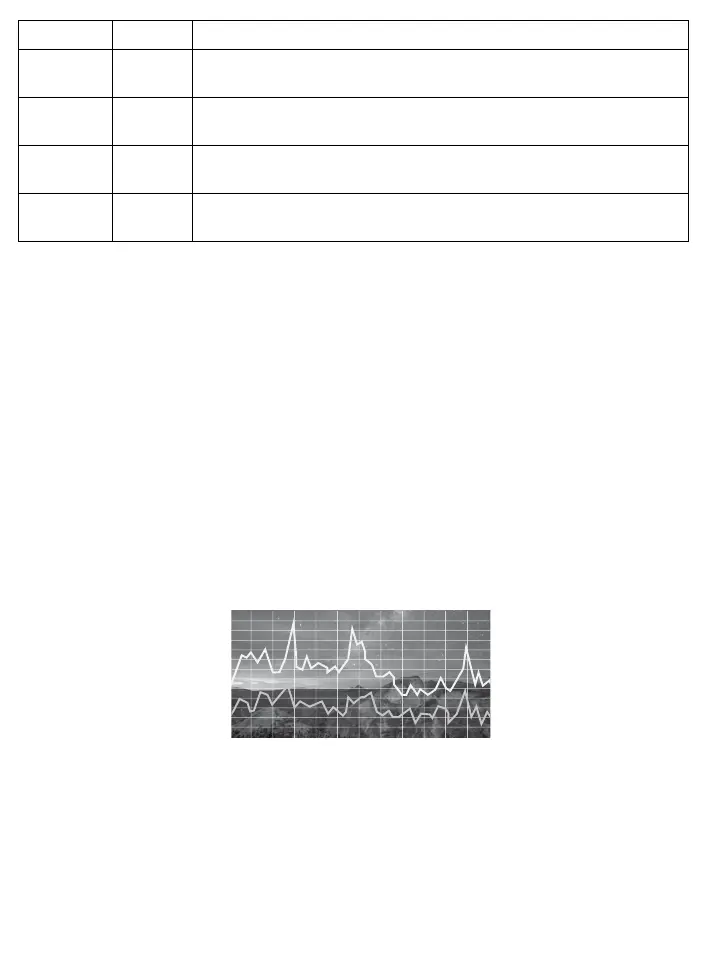
mmHg
AM Time PM
40
50
60
70
80
90
100
110
120
130
140
150
160
170
8.00 10.00 12.00
Typical 24 - Hours Rhythm
14.00 16.00 18.00 20.00 22.00 24.00 2.00 4.00 6.00 8.00
systolic blood pressure
diastolic blood pressure


 To Next Page