Need help?
Do you have a question about the Biotage Isolera One and is the answer not in the manual?
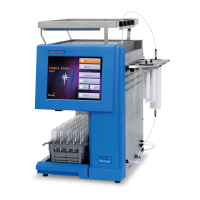
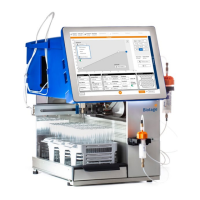
Provides an overview of the Isolera system's basic components and configurations.
Details the core components of the Isolera system, including display, collector, and pump.
Compares the four available Isolera system platforms: Prime, One, Four, and LS.
Lists the automated functions the Isolera system can perform for purification processes.
Explains the different software modes (Chemistry, Data Administration, System) and their features.
Details the functions available within the Data Administration mode, organized by tabs.
Outlines the settings and maintenance tasks controllable via the System mode.
Explains the Chemistry mode interface and functionalities for setting up and running purifications.
Covers creating, opening, and editing purification methods within the Chemistry mode.
Describes how to view and monitor a purification's progress in the Status tab.
Explains how to search, view, and manage purification results and reports.
Lists the technical specifications for the Isolera system.
Details power, certification, dimensions, environmental, and interface specifications.
Outlines performance specifications for cartridge positions, solvents, fraction collector, and detectors.
Step-by-step guide on how to access the Data Administration mode.
Instructions for managing cartridge types, adding, editing, or deleting them.
Covers managing purification methods: export, import, delete, and set defaults.
Process for managing collection rack types, including adding and editing.
Covers exporting, deleting, and cleaning up result records from the database.
Instructions for managing solvent lists, including adding, editing, or deleting.
Covers managing user accounts: adding, editing, and deleting.
Step-by-step guide on how to access the System mode.
Instructions for configuring internal, external, and leak detectors.
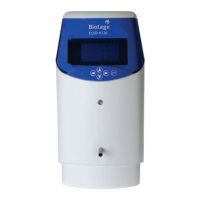
Guide on connecting and enabling an external detector, like ELSD-1080.
Steps for setting up network connectivity for reports and remote access.
Configuration options for printing, saving, and sending reports.
Adjustments for system behavior during operation, like alarms and allocation.
Procedures for system upkeep, calibration, and troubleshooting.
Step-by-step instructions for safely starting up the Isolera system.
Procedure for performing an orderly system shutdown to prevent data corruption.
Overview of creating, opening, and modifying purification methods.
Guides on creating new methods or opening existing ones for purification setup.
Steps to prepare the system and execute a purification run.
Actions required before starting a purification, like loading samples and cartridges.
Detailed steps for initiating and managing a purification run.
How to monitor purification progress and control various aspects during a run.
Using the Status tab to view gradient, chromatogram, and spectrum data.
Procedures for pausing, ending, or aborting an ongoing purification.
Steps for unloading cartridges and racks after a purification is finished.
How to search, view, and manage stored purification results.
How to view, print, and save purification reports to external media or network.
Procedures for managing solvent and waste reservoirs.
Steps to prime solvent inlets and the system for purification.
Safety precautions and procedures for handling system leaks.
Steps to shut down the system if a leak is detected.
Troubleshooting guide for issues related to the fraction collector.
Troubleshooting guide for issues related to the system's pump.
Troubleshooting guide for issues with the internal detector.
Troubleshooting guide for issues encountered with gradient formation.
Reference to troubleshooting steps for leaks.
Troubleshooting guide for overpressure conditions in the system.
Provides contact information and required details for technical support.
 General
| Detection Method | UV/VIS |
|---|---|
| Number of Solvents | 4 |
| Display | Touchscreen |
| Maximum Pressure | 20 MPa (200 bar) |
| Gradient Profiles | Linear, step, or custom |
| Fraction Collection | Yes |
| Sample Loading | Manual or automated |
| Power Requirements | 100-240 V, 50/60 Hz |


 To Next Page