15
3.4 FIREPLACE INSTALLATION
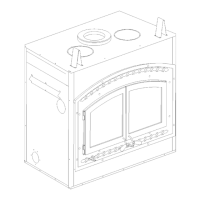
3.4.1 Locating The BIS TRADITION
The best location to install your fireplace is determined by considering the location of
windows, doors, and the traffic flow in the room where the fireplace is located, allowing
space in front of the unit for the hearth extension and the mantel, and taking into
consideration the location of the hot air ducts (optional), outside air kit and chimney. If
possible, you should choose a location where the chimney will pass through the house
without cutting floor or roof joists (see fireplace dimensions on page 13).
Usually, no additional floor support is needed for the fireplace. The adequacy of the floor
can be checked by first estimating the weight of the fireplace system. Weights are given in
the appendix. Next, measure the area occupied by the fireplace. Note the floor construction
and consult your local building code to determine if additional support is needed.
The BIS TRADITION may be installed directly on the floor or on a raised base and a
minimum of 6'8" measured from the base of the appliance to the ceiling is required.
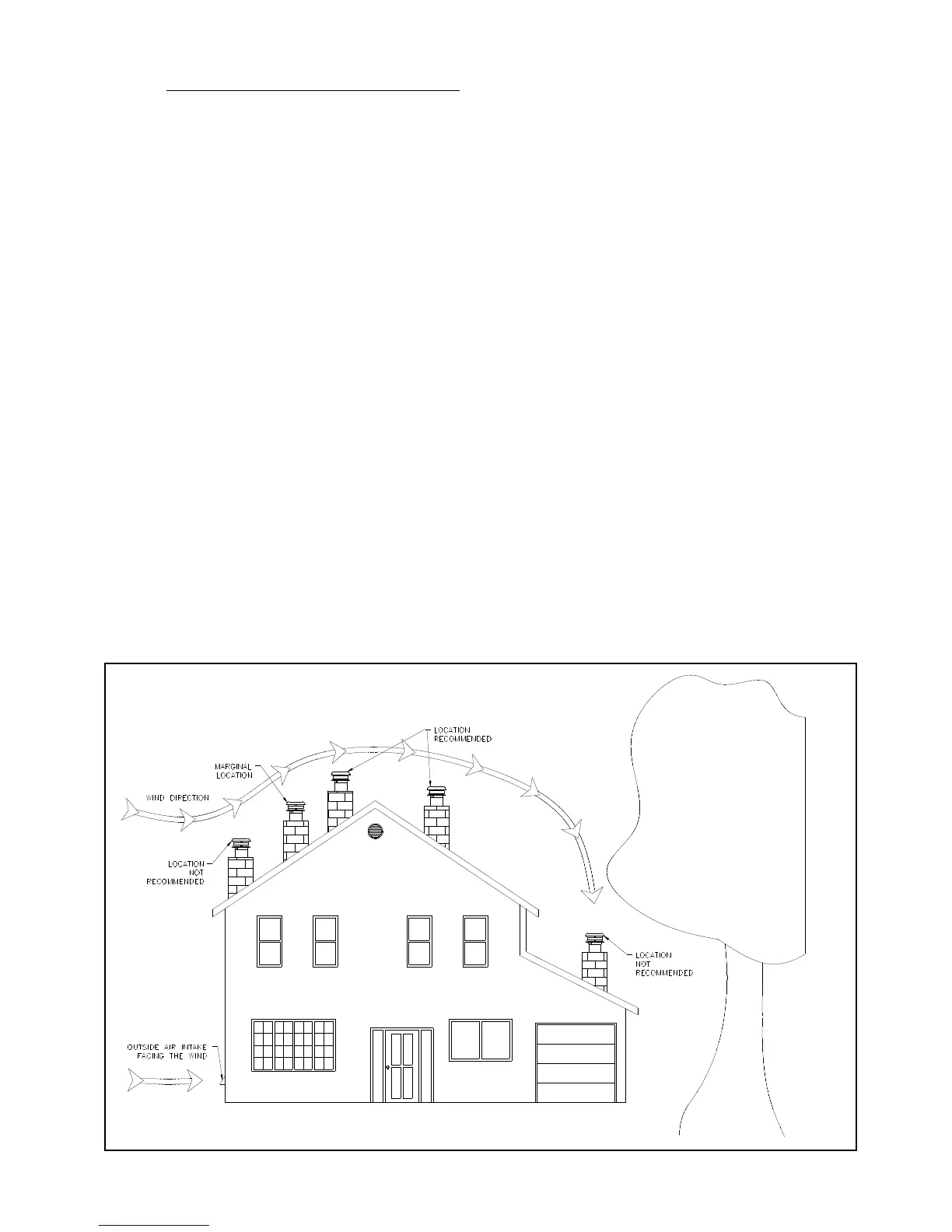
When selecting the location, the chimney outlet position and the direction of the wind are
important factor affecting the chimney performance. To allow a maximum draft and to
reduce wind turbulence, the chimney must:
• Penetrate the highest part of the roof.
• Be installed as far as possible of roof offsets, trees or any other obstructions that may cause
wind turbulence and back drafts in the chimney.
• The least amount of offsets (elbows) possible.


 To Next Page