26
4. THE CHIMNEY
4.1 CHIMNEY INSTALLATION NOTES
1. If possible, install an interior chimney as it will provide better performance. In areas
with continuous temperatures below 18°C (0°F), the use of an exterior chimney
increases the likelihood of operating problems such as low draft, high rate of creosoting,
and poor start-up characteristics. Exterior chimneys are also prone to down-drafting and
flow reversal. Installations which are located on lower floors in the house, such as in a
basement, in combination with an outside chimney, are especially prone to flow reversal.
2. The Security fireplace model BIS TRADITION is listed only with Security Chimneys
International Ltd 7" dia. chimney systems model Secure Temp
S2100+
/ Nova Temp
HT6000
/
Secure Temp
GX
(U.S only) or ACBI.
3. A chimney venting a fireplace shall not vent any other appliance.
4. The minimum chimney height is 12 ft. (3.7 m) excluding the fireplace.
5. All chimney installations must include at least one support in order to be able to take
any lateral load. The maximum chimney length that can be supported by the fireplace is
9 ft. (2.75 m) for Secure Temp
S2100+
/ Nova Temp
HT6000+
/ Secure Temp
GX
and 26 ft.
(8m) for ACBI chimney. In altitude, add 18" (450 mm) to the chimney for every 2000
feet (600 m) above sea level.
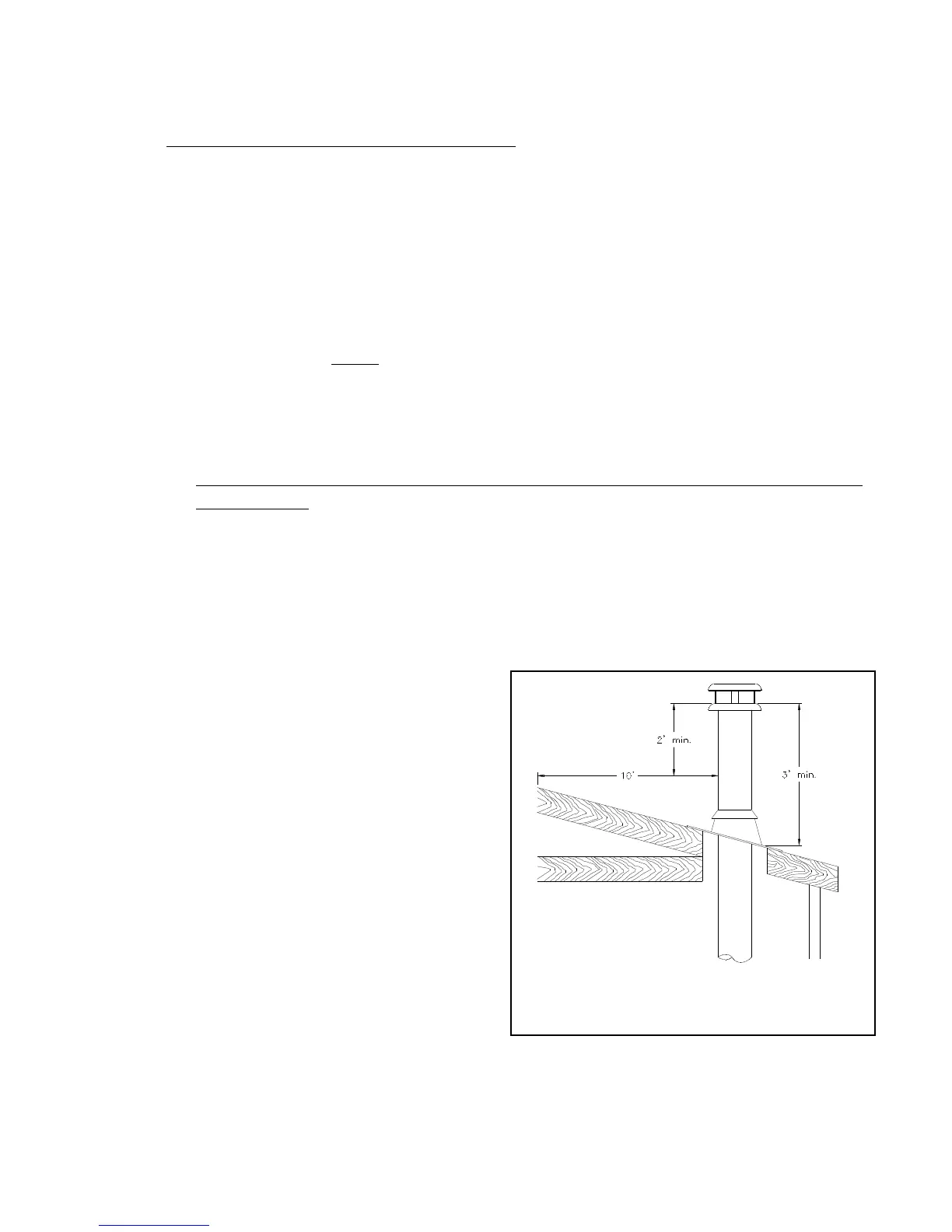
6. The chimney must extend at least 3 ft. (915 mm) above its point of contact with the roof
and at least 2 ft. (610 mm) higher than any wall, roof or building within 10 ft. (3m) of it
(Figure 26).
7. If the chimney extends higher than 5 ft.
(1500 mm) above its point of contact
with the roof, it must be secured using
a roof brace.
8. A rain cap must be installed on top of
the chimney. Failure to install a rain
cap may cause corrosion problems.
9. Cut and frame square holes in all floors,
ceilings, and roof that the chimney will
go through to provide a 2" (50 mm)
clearance between the chimney and any
combustible materials. Do not fill this
2" space with insulation or any other
combustible material.
10. Portions of the chimney which may
extend through accessible spaces must
be enclosed to avoid contact with
combustible materials or damage the
chimney.


 To Next Page