5
3.2.4 Primary Air and Air Boost Controls
There is no flue damper in the BIS ULTIMA™ fireplace. As is common with air tight
stoves, the combustion air control sets the flow of air entering the firebox. This allows for a
more precise control of the fire. The combustion air control is located below the door on the
left side. The main source of air (primary air) entering the firebox can be diminished by
moving the air combustion control from left to right. The primary air is fully opened when
the air control is completely moved to the left. The air control device can also be used to add
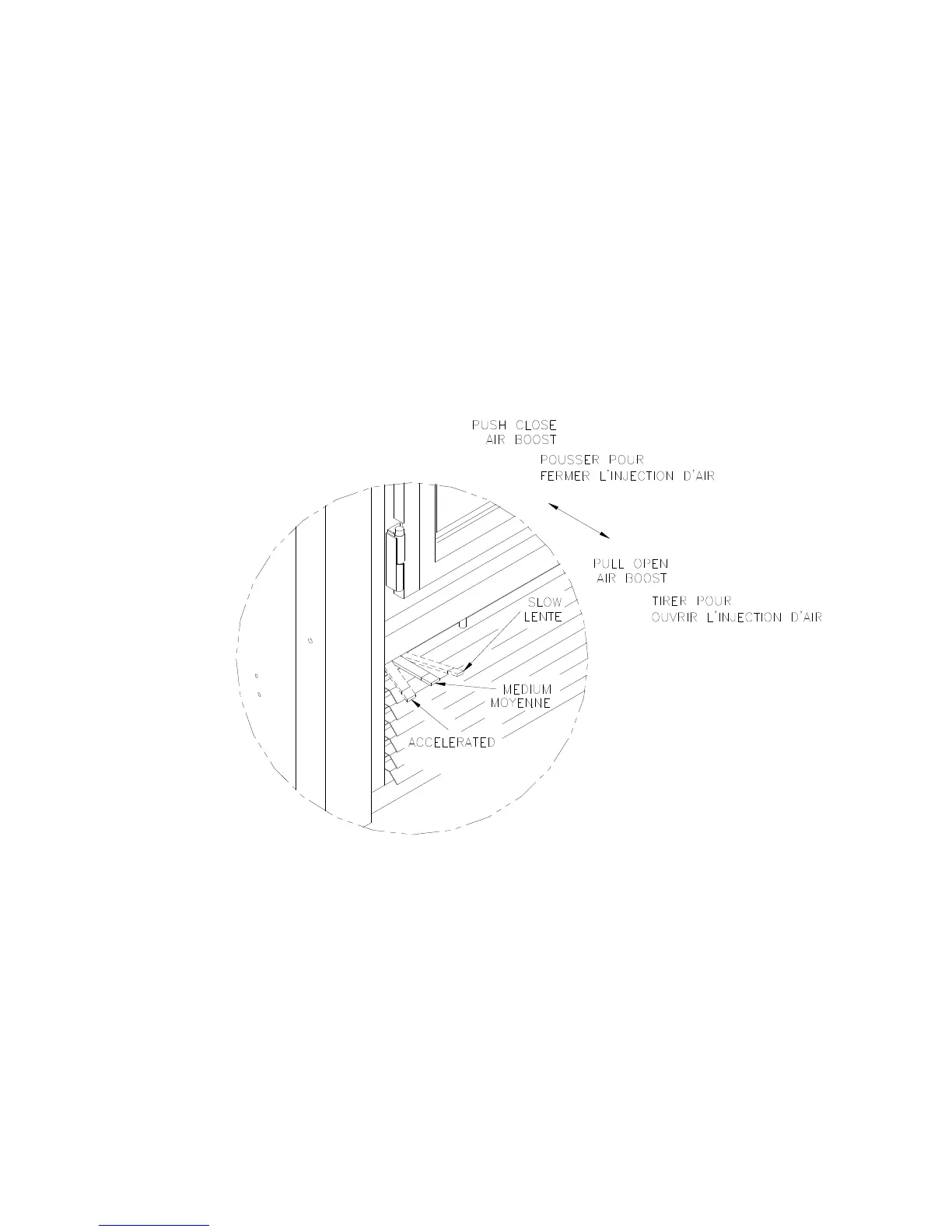
an extra boost of air especially during fire start up and reloading of the unit. Pulling the air
combustion control will induce an air boost at the base of the fire allowing an easier fire start
up. When the fire is well established, the control can be pushed forward to shut down the air
boost allowing for a longer burn time. The combustion air control should be in the closed
position (primary air and air boost) when the fireplace is not in use. This will minimize air
leakage up the chimney. The combustion air control should be opened before opening the
door to minimize the possibility of back draft coming into the room.
ACCÉLÉRÉE
Figure 1
3.2.5 Accelerated Combustion
The maximum heat output for the BIS ULTIMA fireplace is achieved by burning with the
door closed and the combustion air opened and pulled back. By this method, the BIS
ULTIMA fireplace can produce up to 55,000 BTU of heat per hour. However, it will be
necessary to reload with wood every one or two hours. This is the least efficient method of
burning the BIS ULTIMA fireplace.
Use caution when firing with the combustion air control wide open. Only burn cordwood in
this manner. Small dry pieces of softwood and construction scraps will burn very intensely
using this method and may damage the firebox.


 To Next Page