11
Setting Control Cage
Setting the correct blast pattern is essential before an even, clean profile can be
achieved when shot blasting with a BlastPro Manufacturing machine. An uneven blast
pattern can leave shadows on either side of the floor surface and can cause premature
wear to the internal components. The importance of setting the proper blast pattern
cannot be overstressed.
There are four major factors that can affect the blast pattern. They are:
1. Wheel Rotation - The blast wheel must be rotating in the proper direction indicated
on the housing that surrounds the blast wheel. Most BlastPro Manufacturing
machines rotate in a clockwise direction when looking at the machine from the
operator’s position.
2. Worn Wheel Kits - Wheel kit components such as blades, impellers and control
cages vary in different machines but perform similar functions. These kits must be
periodically replaced to ensure that they produce the proper blast pattern and to
eliminate excessive wear, which can cause internal component damage.
3. Abrasive Size - The size of the abrasive will affect the blast pattern. Different sized
abrasives have different masses that will alter the “hot spot” setting. See Figure B.
page 22.
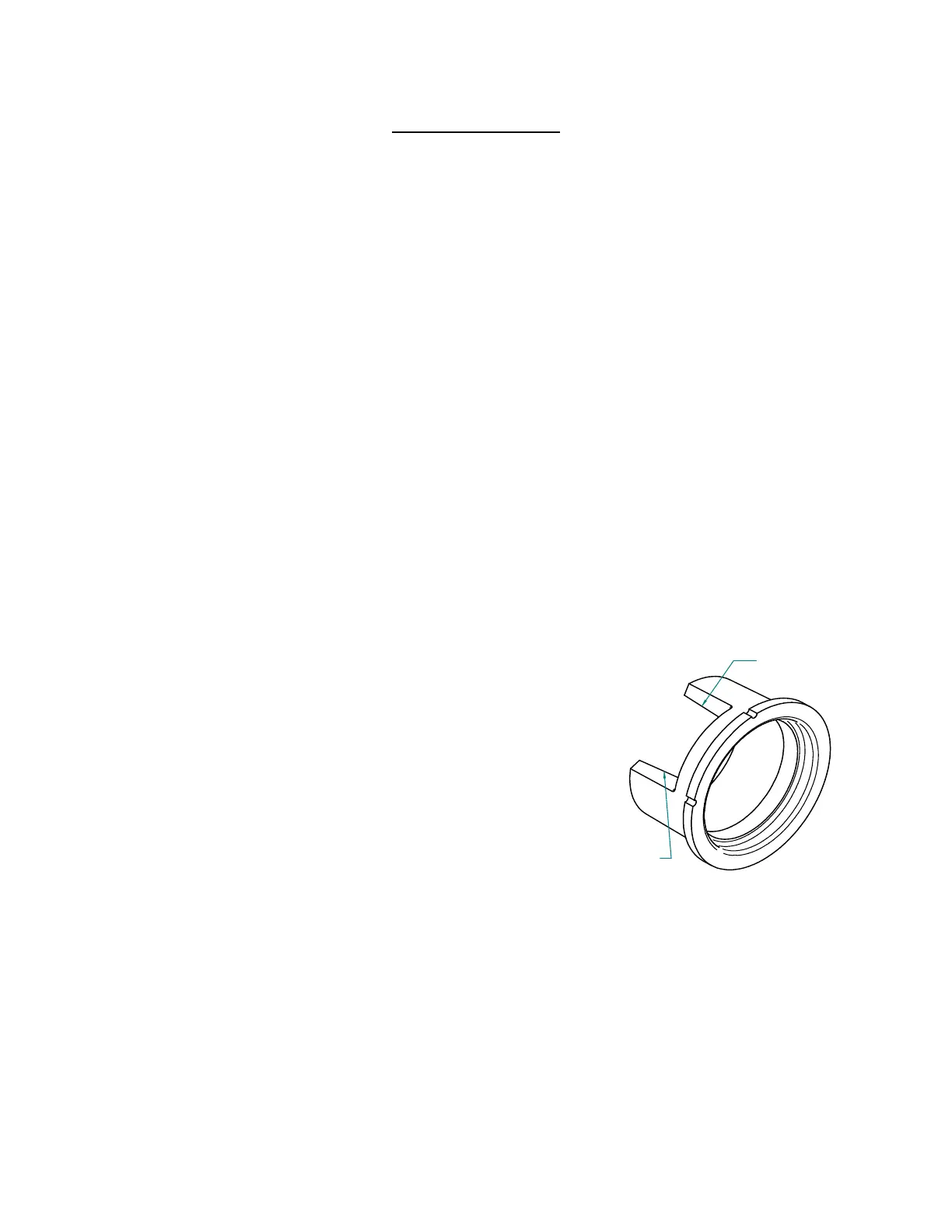
4. Control Cage Setting -The setting of the control cage
is the most critical factor in determining where the
blast pattern is directed. Ideally, the blast pattern is
centered so that the area being cleaned receives
a consistent, even distribution of high velocity
abrasive. Altering the setting of the control cage can
move the blast pattern to the left or right depending on
which direction the control cage is moved. Moving the
control cage too far in either direction will direct the
abrasive blast pattern to the side of the machine and
cause premature wear to the internal components.
The exact positioning of the control cage is done by
trial and error.
LEADING
EDGE
TRAILING
EDGE
CONTROL
CAGE
WINDOW
CONTROL
CAGE


 To Next Page