6
Fire extinguishers are nearby. Also, take note of the location and the contact information
of fire departments close to the work site.
Belt guards are in working order and are present on the machine where needed at all
times.
All glass and equipment, including vehicles, are protected from steel shot. This can be
done by loosely hanging a sheet of visqueen or other protective material in front of the
glass or equipment in a curtain-like fashion. The importance of protecting glass and
equipment from steel shot cannot be overemphasized.
All floors drains have been plugged or covered so as to prevent steel shot from falling
into the drains.
This equipment is only being used for commercial purposes. This equipment is only to
be operated by professional, trained, and competent operators.
The operator is aware of his surroundings and will use common sense. THE
OPERATOR IS NOT TO OPERATE THE EQUIPMENT IF HE IS TIRED,
DISTRACTED, OR UNDER THE INFLUENCE OF DRUGS, ALCOHOL, OR
MEDICATIONS THAT DECREASE AWARENESS!
Safety — Start Up
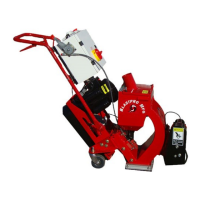
After performing the site assessment safety procedures listed above, bring the BP-10 SUPER and
the dust collector to the work area and perform the following procedures:
Verify that personnel are competent and that they have read and understood the safety
information in this manual. Staff must also be familiar with how to operate the machine
and with all of its components. Make certain that all personnel follow all safety
instructions and programs required by their company and by the worksite.
Make certain that all belt guards are in working order and are present on the machine
where needed.
Verify that all of the machine’s parts are assembled safely and correctly.
Note: It is recommended to have original spare parts and wear parts on hand. It is
imperative that the machine receive special attention and regular maintenance in
order to function properly and to operate safely.
Inspect all electrical cords on the BP-10 SUPER for damage, tears, or other signs of wear.
If electrical cords are damaged, then do not attempt to perform blasting operations until
cords have been repaired or replaced.
Inspect the exhaust hose for damage. If exhaust hose is damaged, then do not perform
blasting operations until the hose has been repaired or replaced.
Inspect the dust collector. Verify that the dust bin is empty, filters are clean and clear of
debris, and motors and fans are in working order.
Note: The dust bin must be emptied whenever it becomes full. Failure to empty the
dust bin could result in serious damage to the machine and/or serious injury to the
operator.
Inspect the duct hose leading from the BP-10 SUPER to the dust collector. Make sure
hose is free of debris, hose is not cracked, and holes do not exist. If necessary, replace
hose.


 To Next Page