17 Operation and Adjustment Manual
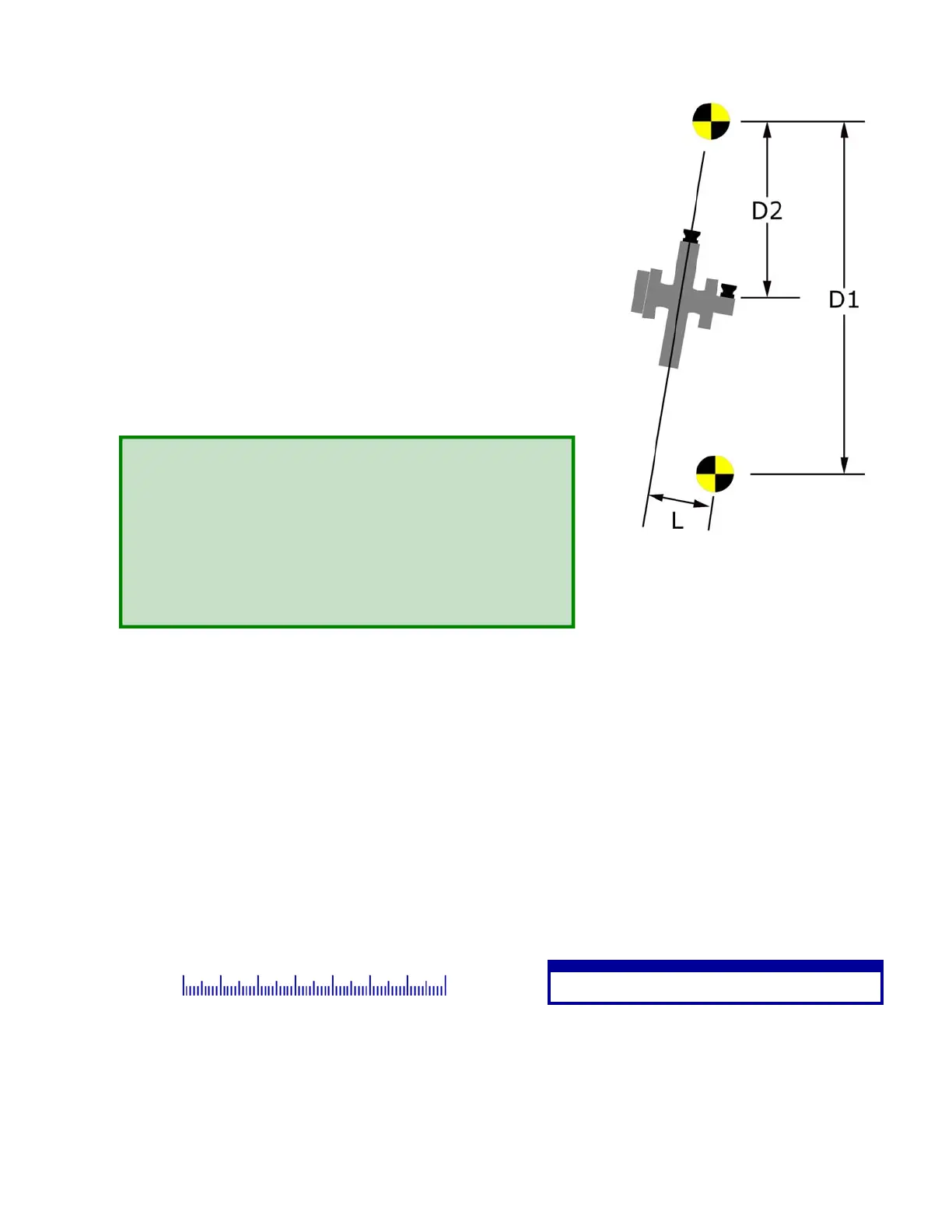
D2=Distancefromfartargettotransit
L=Observeddistancefromlineofsighttoneartar‐
get
Theamountofmovementwilldependupon
whetherthetransitislocatedbetweenthetargetsoris
notlocatedbetweenthetargets.Let’stakealookat
thesetwocases.
NotethatifthetransitisNOTlocatedbetweenthetar‐
gets(Figure3.1),youwillshiftthetransit“past”the
imageoftheneartarget,becausetheratioD2/D1
willalwaysbelargerthan1.“L”istheobserveddis‐
tancetotheneartarget,andashiftofgreater than
“L”willappeartomoveyoutotheothersideofthe
neartarget.Whenyouhavemadetherequiredshift
usingacrossslide,proceedtostep6.
Ontheotherhand,ifthetransitISlocatedbetweenthetar‐
gets(Figure3.2),youwillnotshiftthetransitevenasfar
astheneartarget,becausetheratioD2/D1willalwaysbe
lessthan1.Again,“L”istheobservedoffsetdistance
fromtheneartarget,andashiftoflessthan“L”willnot
evenmoveyourlineofsightasfarastheneartarget.
Whenyouhavemadetherequiredshift,proceedtostep
6.
6. Nowsimplyrepeatsteps4and5untilthetransit’sreticle
remainscenteredoneachtargetasthetelescopeisrotated
fromonetargettotheother,andnomoreadjustmentis
required.Whenthisisaccomplished,thetransitis
“buckedin”tothelinedefinedbythosetargets.
Youprobablyalreadyunderstandautoreflectionintuitively,evenif
youdon’tyetknowhowtodoitwithatransit.Imagineyourself
lookinginamirror,exceptthatyoucloseoneeye.Ifyoulookwith
onlytheone
eyeatthereflectionofyourshoes,orsomethinginthe
background,oryourelbow,youmaynoticethatyourlineofvision
Note:Whenthetransitisinbetweenthetargets,
andjustaboutequidistantfromboth,youcansim‐
plypickoneofthetargetsasthe“far”target.Then
usetherulesaswellasthedefinitionsofD1andD2
tocalculatetheshiftrequiredtobuckthetransitin
tobothtargets.Aslongasyouareconsistentwith
yourarbitrarydefinitionsof“near”and“far”,you
willbesuccessful.
Figure3.2
Autoreflection


 To Next Page