Model 771, 75, and 76-RH190 Transits 26
youcan“lookdownthebarrel”ofthereferenceinstru‐
ment,andtrytofinditsreticleimage.Whenyoufindit,
thisisthefartarget.Makeangularadjustmentstothe
workingtransitasneededtoaligntheworkinginstru‐
ment’sreticletothereferencetransit’sreticleimage.
5. Centertransitonthe“near”target.Focusthetelescope
toviewthereferenceinstrument’sobjectiveendface.
Thisistheneartarget.Makelateraladjustmentswitha
crossslideorprecisionliftasneededtocenterthereticle
(approximately)ontheobjectivelensofthereferencein‐
strument.
6. Repeatsteps4and5untilbucked‐in.
Collimationcanbetakenonestepfurtherifnecessary—thetwo
collimatedtelescopesmaybeadjustedsothattheirlinesofsightare
collinearaswell.Picturetwocollimatedtelescopes,pointingateach
other.Asweʹvediscussed,ifyoulookintoeithertelescope,you
shouldseetworeticleimages,ifbothtelescopesarebacklit.One
reticleisinthetelescopeyouʹrelookinginto,andtheotherisinthe
fartelescope.Ifcollimated,thereticlesofthetwoinstrumentswill
appeartobeinperfectregister,oneovertheother.
However,ifyouweretofocusbothtelescopesonatargetplane
(suchasapieceofpaper)heldupabouthalfwaybetweenthein‐
struments,thereticleswouldnolongerbesuperimposedunless
youwereincrediblylucky.Aswe’vesaid,whentwotelescopesare
“collimated”,thelinesofsightareparallelbutnotnecessarilysu‐
perimposeduponeachother.Butthereisaprocedurethatyoucan
usetosuperimposethereticlesatthisneartargetplanewhilethein‐
strumentsarestillcollimatedatinfinity.Afterperformingthispro‐
cedure,thelinesofsightactuallybecomecollinear.They
ʹrenotjust
parallelanymore‐theyactuallyexistalongtheexactsamelinein
space.
Whyiscollineationuseful?Mostofthetime,thetransferofarefer‐
Note:Illuminatingbothyourtransitandthereference
instrumentisveryhelpfulbutisnotabsolutelyneces‐
saryforcollineation.Youcanholdupawhitesheetof
paperbehindtheeyepieceofaninstrument,andlightit
withaflashlight,inordertobacklightthereticleinthat
instrument.Of
course,thisusuallyrequirestheassis‐
tanceofasecondperson.
Inthecollineationprocess,
youcanalignyourtransit
totheverticalwireofthe
referenceinstrument’sreti‐
cle,orthehorizontalwire,
orboth—dependingupon
whetheryouwanttotrans‐
feraspecificverticalor
horizontalplane,or
both.
Collineation
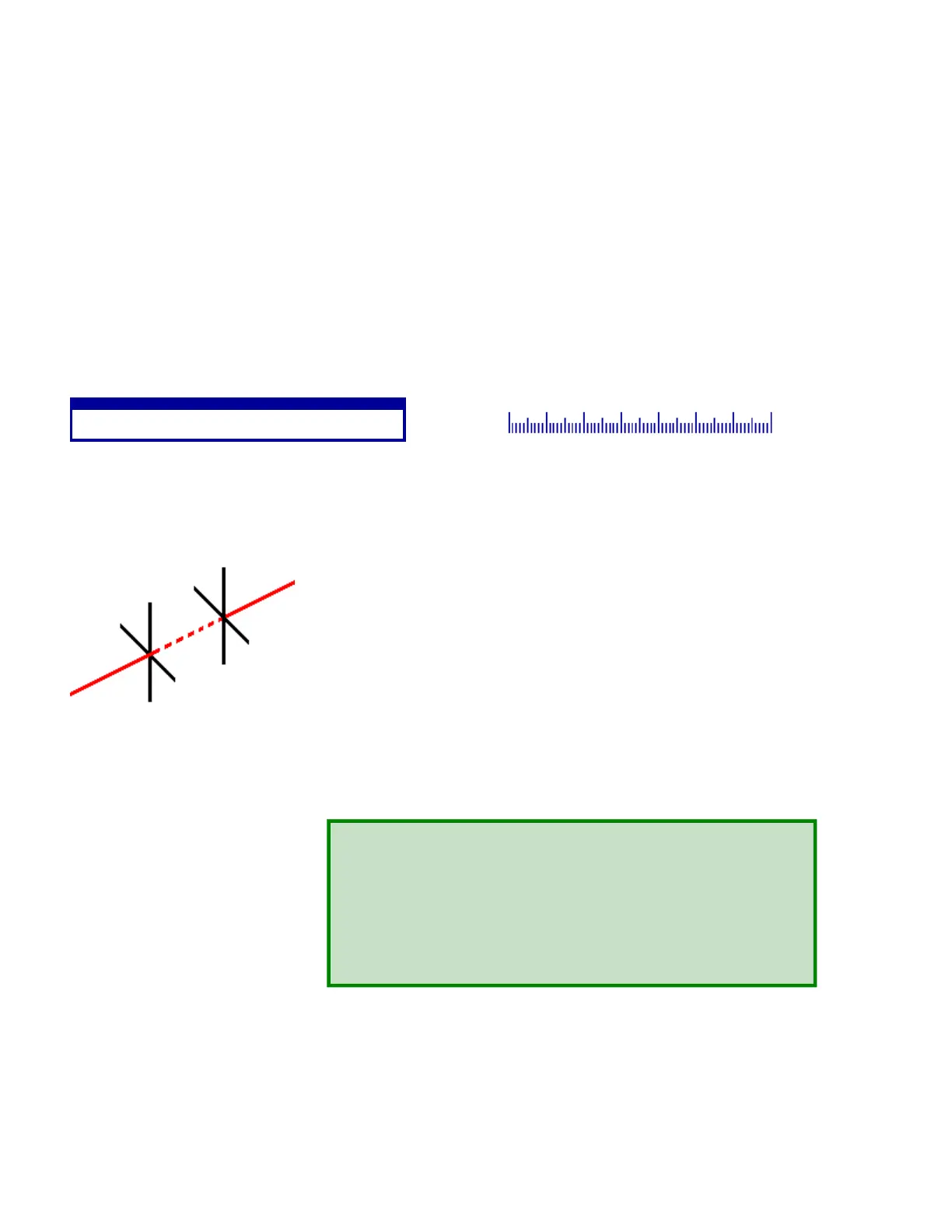
Above:Whentwotelescopes
arecollinear,theirlinesof
sightarenotonlyparallel
butalsoexistinexactlythe
samelineinspace.
Figure3.10


 To Next Page