51 Operation and Adjustment Manual
InChapter2ofthismanual,wediscussedpreciselev‐
eling(precisionplumbing)ofthetransit.Withalittle
thought,itbecomesobviousthattheprecision
plumbingproceduredoesnotdependonthefactthat
thecoincidencevialisinadjustmentornot.Thatis,
youcanpreciselyplumbthetransit
(bringthevertical
spindletrulytovertical)withthecoincidencevialin
anyoldpositionrelativetothetelescope,aslongas
theadjustmentofthevialdoesnotchangeduringthe
process.However,ifyouwantthetransit’stelescope
tobetrulylevelafterthatprocess,orifyou
simply
wanttobringthetelescopetoalevellineatanypoint,
itisnecessarytoadjustthevialsothatitsbubbleim‐
ageis“incoincidence”whenthetelescope’slineof
sightispreciselylevel.
1.Setuptwoscalesinaverticalorientation,about30
feetapart,atinstrumentheight,andonanominally
levelsightlinefromoneanother.Trytobringthe
scalesasclosetoverticalaspossiblewithoutmakinga
careeroutofit.(Amodel563scalelevelworksgreat
forthis.)
Tosuccessfullyadjustthevial,wemustfirstdetermine
theverticalseparationofthetworandomlyplaced
scales.Inotherwords,ifyoudrewalevellinebetween
thescales,thelinewouldnotintersectthescalesatthe
samepointunlessyouwereincredibly,amazingly
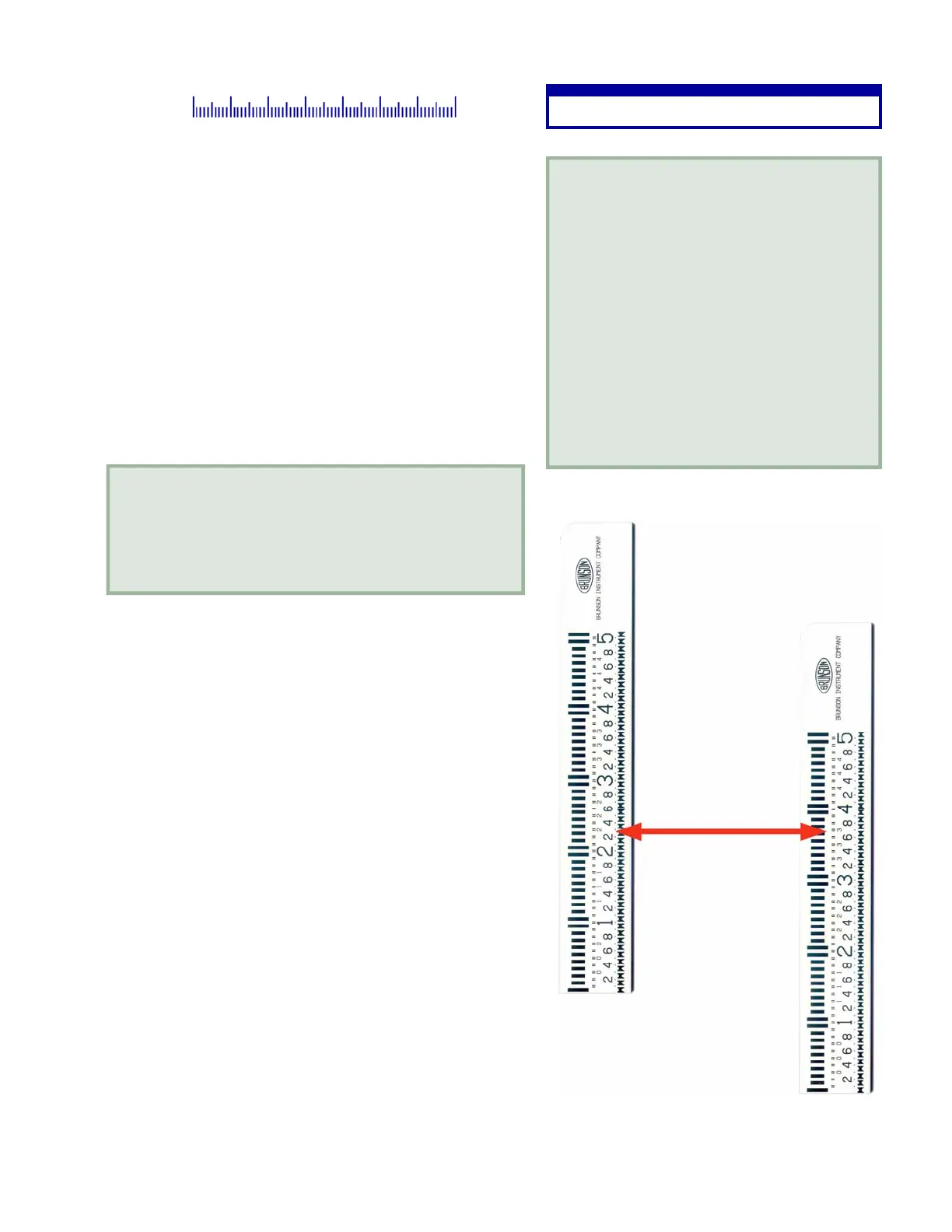
lucky.Forexample,alevellinemighthitonescale(call
itScaleA)
at2.283”andtheotherscale(ScaleB)at
3.697”.ThisisillustratedinFigure4.12.Ifweknew
theseintersectionpoints,wecouldcalculatethevertical
separationbetweenthescales:
3.697”‐2.283”=1.414”
WewouldthenknowthatScaleAis1.414”higherthan
ScaleB.Knowingthe
verticalseparationbetweenthe
twoscalesiscriticaltoourvialcalibrationprocess.But
howcanwedeterminewherealevelsightlinewould
intersectthetwoscales,whenalevelsightlineisex‐
actlywhatwedon’thave?Wecandoitwithaknowledgeofgeometry.
PegTest
Description:Determineifthecoinci‐
dencevialindicatesalinewhichis
paralleltothetelescope’slineof
sight.
Tolerance:±1arcsecond.
Affectedparameters:None.
Requiredequipment:
Opticalmicrometer,instrument
standandtwoscales.Aprecision
liftmakesthistesteasierbutisnot
mandatory.
Thistestisnothardtoperform,norisitcom‐
plicated—butitdoesrequiremorewordsto
describethatsomeoftheothertests!Once
we’refinishedwithourexplanation,wepro‐
videa“quickguide”attheendofthissection.
Figure4.12
ScaleA
ScaleB


 To Next Page