47 Operation and Adjustment Manual
justmenttotiltthetrun‐
nionaxisintheappro‐
priatedirection.Todo
this,wemakeanup‐
wardordownwardad‐
justmentonthesideof
thetransitwhichhas
theobjectivelensofthe
cross‐axistelescope.
Therearetwowaysto
accomplishthedesired
adjustment.Wefirsttry
themethodrequiring
theleasteffort.Ifa
moreaggressiveadjust‐
mentisrequired,we’ll
moveontothesecond
method.
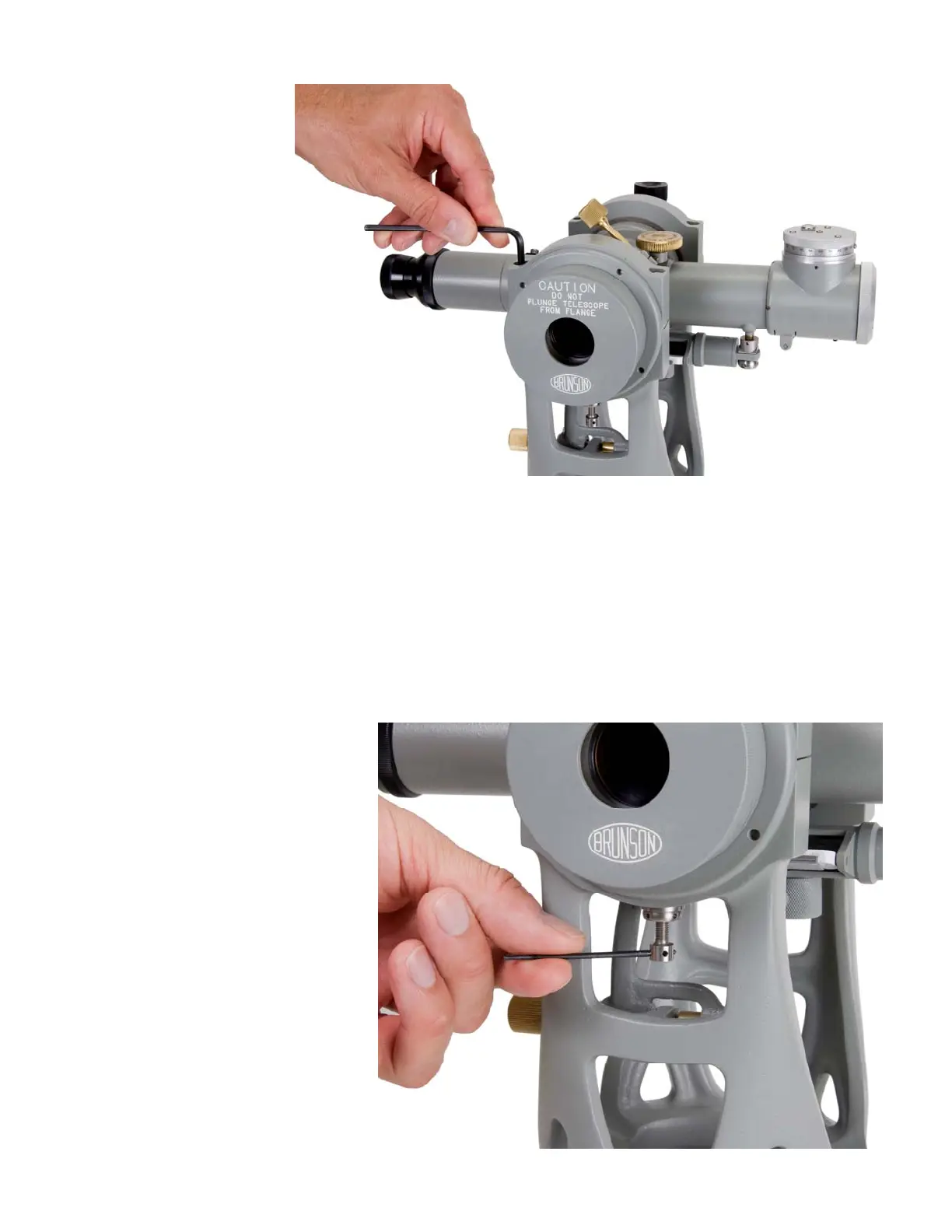
Thefirst,andeasiermethod,isasfollows.Tryslightlylooseningor
tighteningoneorbothofthesocketheadcapscrewsinthebearing
capabovetheobjectiveendofthecross‐axis(Figure4.10).Removeone
‐halfoftheapparenterrorinthismannerifpossible.Remember
thattheaxisboltsshouldnotbeoverlytightenednorshouldthey
beanythingresemblingloose.Theboltsshouldbefirmlyfinger/
handtight,notelbow/shouldertight.Whetheryouhavesuccessin
removingtheerrorbyusingonlytheseboltsdependsuponhow
tighttheboltsalreadyare,andhowfartheyneedtobemoved.
Ifthisprocedurecannotcompensatefortheerror,itwillbeneces‐
sarytoadjustthecapstan‐headed
boltlocatedunderthehorizontal
bearing(Figure4.11).
Boththecapstanboltandthe
bearingcappushonthehorizon‐
talbearingwhichiscapturedbe‐
tweenthem.Thecapstanbolthas
alocknutcinchedagainstthestan‐
dardsatthebottomofthebearing
housing.
Inordertoadjustthecapstanbolt,
slightlyloosen
thelocknut.Itis
alsonecessarytoslightlyloosen
thesocketheadcapscrewsinthe
bearingcapregardlessofwhether
youneedtomovethecapstanboltup
ordown.Thisisbecausethecom‐
pressiononthecapstanboltfrom
abovegenerallycreatestoomuch
frictionforthecapstan
boltto
Figure4.10
Figure4.11


 To Next Page