Need help?
Do you have a question about the BURNiT PM 23kW and is the answer not in the manual?
Installation must be performed by a manufacturer-authorized installer to ensure safety and compliance.
Comply with all applicable national and local standards for installation and use.
Manufacturer is not liable for damages from incorrect installation or misuse.
Only original parts should be used for servicing by authorized centers.
Regular maintenance is mandatory after specific pellet usage or annually.
Follow strict safety rules, including no operation by children and avoiding wet conditions.
Instructions for carefully unpacking the pellet stove and checking for damages or missing parts.
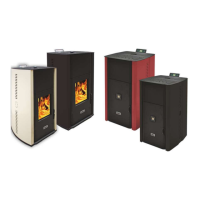
Details the design and operational features of the PM and PM-B pellet stoves, including water jacket benefits.
Lists detailed specifications such as dimensions, power, efficiency, and fuel requirements.
Provides instructions for physically mounting the pellet stove's controller unit.
Explains the functionality, inputs, outputs, and technical data of the IO23 controller.
Outlines essential rules for safe and correct installation of the pellet stove and exhaust system.
Details proper connection of the fresh air intake tube for stove functionality.
Specifies parameters and requirements for correct installation of the exhaust gas system.
Lists material, sealing, and temperature suitability requirements for the exhaust gas system.
Details the required specifications for tubes used in the exhaust gas system, including diameter and material.
Shows example diagrams illustrating different ways to install the exhaust gas system.
Specifies requirements for the rooftop exhaust pipe, including protection and clearance from obstacles.
Provides instructions for safe and correct connection of the pellet stove to the electrical power supply.
Details the pin assignments and connections for the pellet stove controller unit.
Provides guidance on the physical placement and installation of the controller mainboard within the stove.
Explains the automatic system test performed on controller components during production.
Steps to follow before the first ignition, including parameter setup via display or PC.
Crucial safety warnings regarding hot surfaces, children, and flammable materials during operation.
Details the approved pellet types, quality standards, and advantages of using wood pellets.
Describes the control panel display, its layout, and the meaning of displayed symbols.
Details the function of each control key and its behavior in various operating and programming modes.
Explains how to navigate user menu levels for setting clock, weekly timer, and language.
Details options for weekly programming, choosing language, and initial loading settings.
Guides on setting the clock, date, and configuring the chrono-thermostat functions.
Explains how to set up daily and weekly programming schedules for the thermostat.
Details setting up weekly programs and specific weekend programming options.
Covers language selection, season choice, Standby mode, Zoomer mode, and initial pellet loading.
Guides the user through the process of turning on the pellet stove and its initial functions.
Describes the ignition sequence and various operational modes the stove transitions through.
Covers reasons for start-up failure and the normal working state of the stove.
Provides instructions on how to set and adjust the desired room temperature using the controller.
Explains behavior when set temperatures are reached and how to use room thermostats.
Guides on how to set and adjust the desired water temperature for the heating circuit.
Details the conditions and process for activating the circulation pump based on water temperature.
Covers adjusting stove power levels and the automatic burner cleaning process.
Provides the procedure for safely switching off the pellet stove, including final cleaning.
Displays the stove status when switched off and the conditions required for restarting.
Describes the error message and steps for when pellets do not fall into the burner.
Explains the stove's response to short power outages and prolonged failures.
Lists various alarm types displayed on the screen and the actions taken by the stove.
Details specific alarm messages like "ALARM SOND", "ALARM HOT TEMP", "No Acc", and "ALARM NO FIRE".
Covers alarms related to auger pressure switch, auger operation, and fan failure.
Explains the "ALARM PRESS" message indicating issues with water pressure limits.
Instructions for cleaning the exhaust gas tube, focusing on tar removal and periodic checks.
Outlines the steps for cleaning the pellet stove, including safety precautions and service checks.
Covers cleaning the door glass, insulation rope, ashtray, and burner.
Details cleaning procedures for the pellet silo, pressure switch hose, and exhaust gas heat exchanger.
Covers inspection and cleaning of the fresh air system and exhaust gas system.
Presents the electrical schematic diagram of the pellet stove's main control board.
Information on contacting authorized installers/services for installation and start-up.
Explains the warranty period, required documentation, and limitations on coverage.
Describes access to the Modal Mode for authorized personnel and associated warnings.
Details various technical settings including installation data, channel data, checks, default settings, and memory.
Covers specific installer submenus for pellet supply, chimney type, technical data, and channel data.
Details functions for cancelling hours/alarms, memory counter, and setting exhaust gas sensor.
Explains the controller's memory structure and how to create personal data with SERAMI software.
Provides instructions for updating the controller card firmware using SERAMI software.
Lists detailed technical parameters for the PM/PM-B 15 kW and 23 kW models.
Presents diagrams illustrating the first start-up phase and working conditions of the pellet stove.
Lists the parameters used by the controller, including firmware and access codes.
 General
| Heat output | 23 kW |
|---|---|
| Fuel | Wood |
| Heating Area | Up to 200 m² |
| Weight | 180 kg |
| Flue Diameter | 150 mm |


 To Next Page