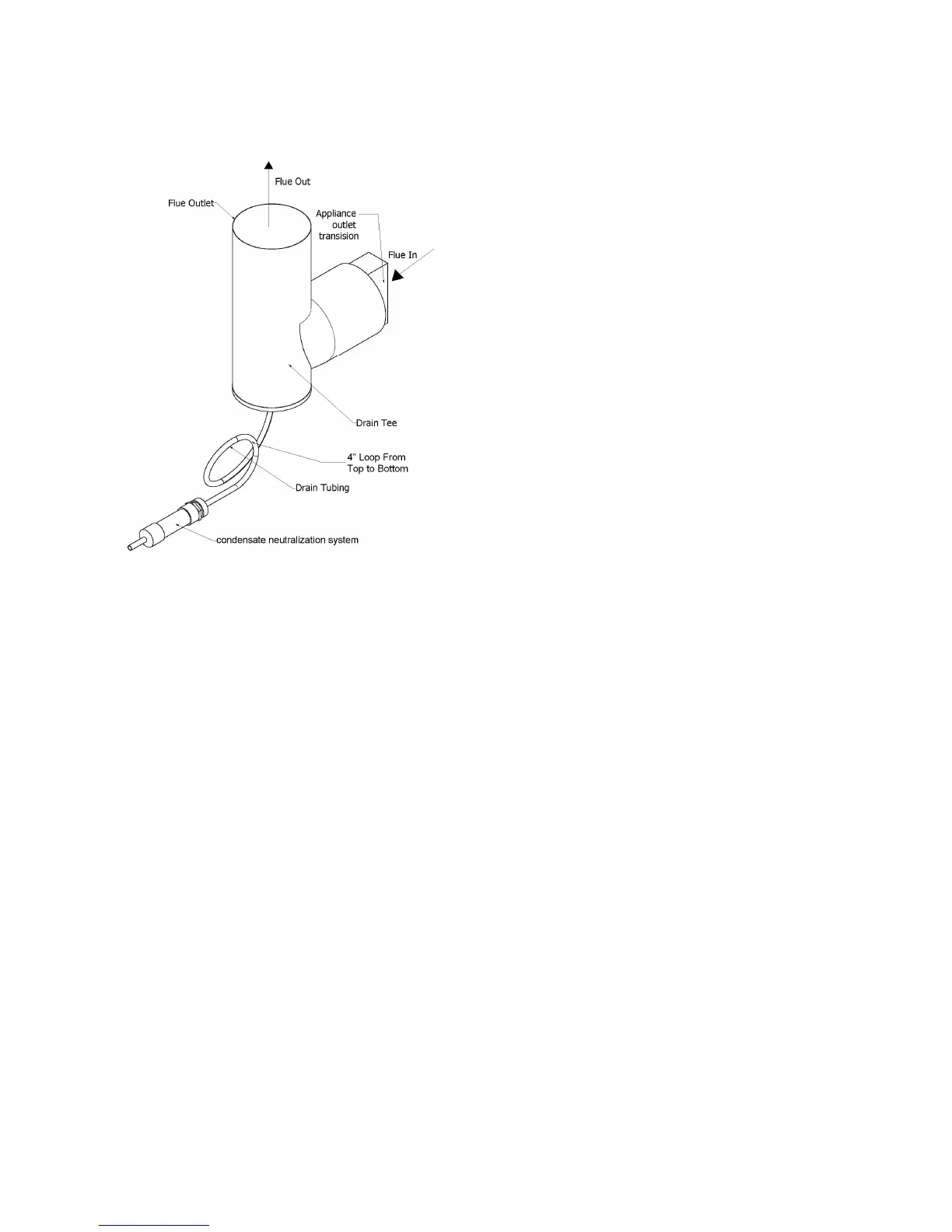
2.1.13 DRAIN TEE
Figure 7: Drain “T” and Neutralizer Cartridge Installation
A drain tee MUST be installed in the Condensing vent pipe to
collect and dispose of any condensate that may occur in the
vent system. The drain tee should be installed at the point
where the flue turns vertical for a roof top termination or as one
of the first fittings in a horizontal flue that will terminate on a
THRUWALL. Ensure that horizontal portions of the vent are
properly sloped to allow condensate to be evacuated at the
drain tee. Plastic drain tubing, sized per the vent
manufacturer’s instructions, shall be provided as a drain line
from the tee. The drain tubing must have a trap provided by a
4" (10cm)-diameter circular trap loop in the drain tubing. Prime
the trap loop by pouring a small quantity of water into the drain
hose before assembly to the vent. Secure the trap loop in
position with nylon ties. Use caution not to collapse or restrict
the condensate drain line with the nylon wire ties. The
condensate drain must be routed to the condensate
neutralization system or a suitable drain for disposal of
condensate that may occur in the vent system.
Ensure that the drain from the condensate tee is not exposed
to freezing temperature.
2.2 CONVENTIONAL VENTING (INDOOR)
INSTALLATIONS
• NON – CONDENSING
• The DynaFlame® non-condensing is a category I
appliance and is approved for venting into a common
standard chimney. On single appliance installations with
dedicated chimney if drafts are excessive (above negative
0.15 Inches W.C.), install a single acting barometric
damper directly past the appliance’s flue outlet. A
minimum draft of 0.05 Inches W.C is required for
operation. This damper will control excessive draft &
minimize standby losses.
• Multiple appliances may be vented into a conventional
chimney. The chimney must be lined. And a single acting
barometric damper must be provided for each appliance.
Vent diameters are to be increased over and above
those recommended in Table 5.
• The chimney must be protected from down drafts, rain
and debris by using a listed chimney cap.
• If the appliance is located in a room maintained at low
temperature and is being run for extended periods of
time at low fire it is likely that condensation will be
formed in the vent. Consideration must be given to
heating the room or providing a special venting
system similar to that used for condensing appliance
application
• CONDENSING
• The DynaFlame® condensing version is a category II
appliance and is approved for venting into a common
properly designed chimney. On single appliance
installations with dedicated chimney, if drafts are
excessive (above negative 0.15 Inches W.C.), we
recommend a single acting barometric damper.
• A qualified professional using a proven vent-sizing
program with input of accurate operating parameters
must properly do sizing of the venting system. In
applications where flue gas temperatures are lower
than can support a Category II with conventional
negative draft, it will be determined at the venting
design stage that a positive pressure will be
developed in the vent. It will then be necessary to
either provide separate vents as for Category IV,
pressurize the room or to provide an extractor at the
chimney outlet interlocked with the appliance
operating circuit in order to maintain a negative draft
in the chimney and allow common venting.
• Approval of the installation will be at the discretion of
authorities having jurisdiction.
• IN GENERAL
• The operation of exhaust fans, compressors, air
handling units etc. can rob air from the room, creating
a negative pressure condition leading to reversal of
the natural draft action of the venting system. Under
these circumstances an engineered air supply is
necessary.
• If the appliance is to be installed near a corrosive or
potentially corrosive air supply, the appliance must be
isolated from it and outside air should be supplied as
per code.
• Potentially corrosive atmospheres will result from
exposure to permanent wave solution, chlorinated
waxes and cleaners, chlorine, water softening
chemicals, carbon tetrachloride, halogen based
refrigerants, Freon cleaning solvents, hydrochloric
acid, cements and glues, masonry washing materials,
antistatic fabric softeners, dry cleaning solvents,
degreasing liquids, printing inks, paint removers, etc.
• The equipment room MUST be provided with properly
sized openings to assure adequate combustion air
and proper ventilation when the unit is installed with a
proper venting system.



 To Next Page