Celestar Manual
Celestial Photography
57
4.
Release the shutter using a cable release.
5.
Wait for the vibration caused by releasing the shutter to diminish. Also, wait for a moment of good
seeing.
6.
Remove the black card from in front of the telescope for the duration of the exposure (see
accompanying table).
7.
Replace the black card over the front of the telescope.
8.
Close the camera's shutter.
Advance the film and you are ready for your next exposure. Don't forget to take photos of varying
duration and keep accurate records of what you have done. Record the date, telescope, exposure duration,
eyepiece, f/ratio, film, and some comments on the seeing conditions.
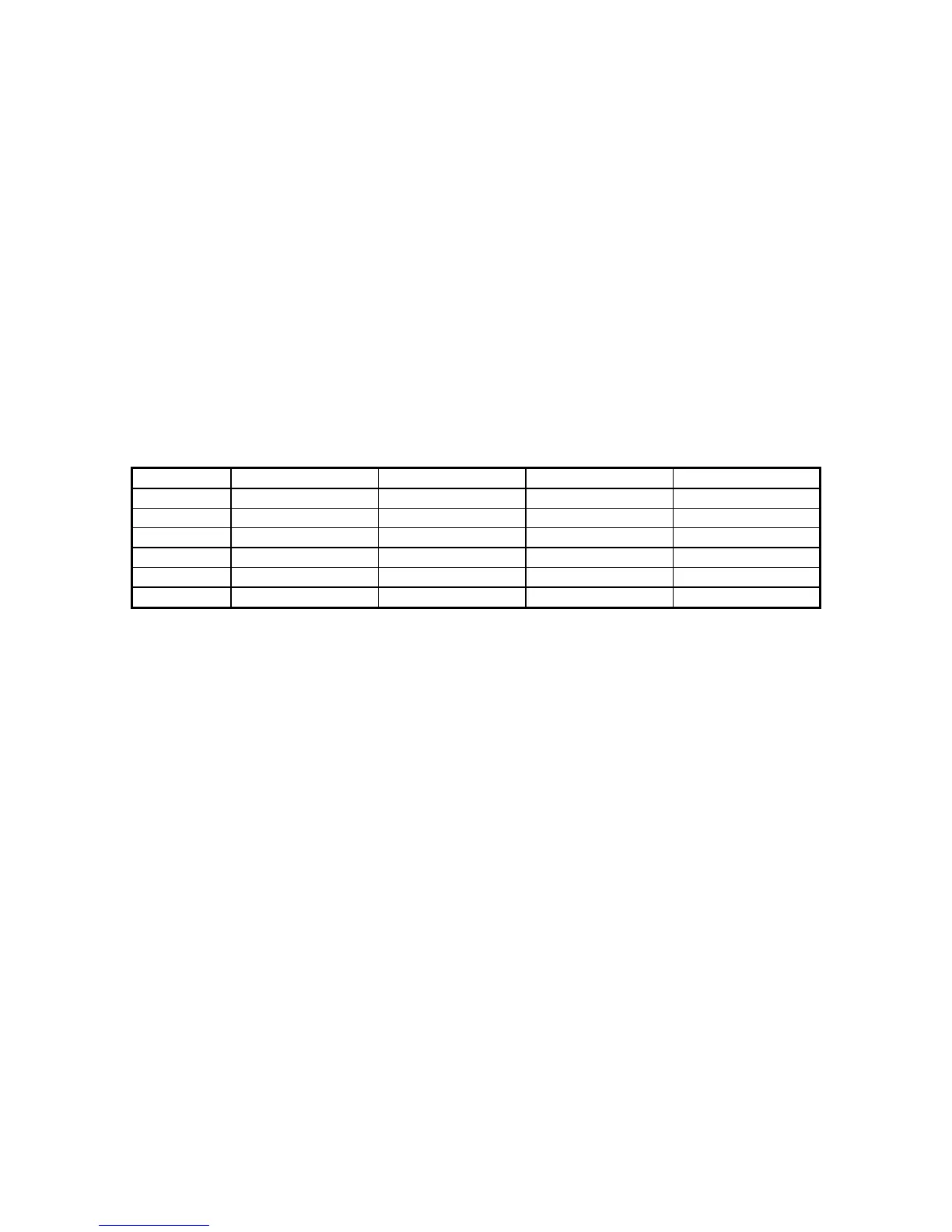
The following table lists exposures for eyepiece projection with a 10mm eyepiece. All exposure times are
listed in seconds or fractions of a second.
Planet ISO 50 ISO 100 ISO 200 ISO 400
Moon
4211/2
Mercury
16842
Venus
1/2 1/4 1/8 1/15
Mars
16842
Jupiter
8421
Saturn
16842
Table 8-2
The exposure times listed here should be used as a starting point. Always make exposures that are longer
and shorter than the recommended time. Also, take a few photos at each shutter speed. This will ensure
that you get a good photo. It is not uncommon to go through an entire roll of 36 exposures and have only
one good shot.
NOTE:
Don't expect to record more detail than you can see visually in the eyepiece at the time you are
photographing.
Once you have mastered the technique, experiment with different films, different focal length eyepieces,
and even different filters.
LONG EXPOSURE PRIME FOCUS PHOTOGRAPHY
This is the last form of celestial photography to be attempted after others have been mastered. It is
intended primarily for deep sky objects, that is objects outside our solar system which includes star
clusters, nebulae, and galaxies. While it may seem that high magnification is required for these objects,
just the opposite is true. Most of these objects cover large angular areas and fit nicely into the prime focus
field of your Celestar telescope. The brightness of these objects, however, requires long exposure times
and, as a result, is rather difficult.





 To Next Page