CHARBROIL.COMPage 53
GRILLING GUIDE – Getting Started
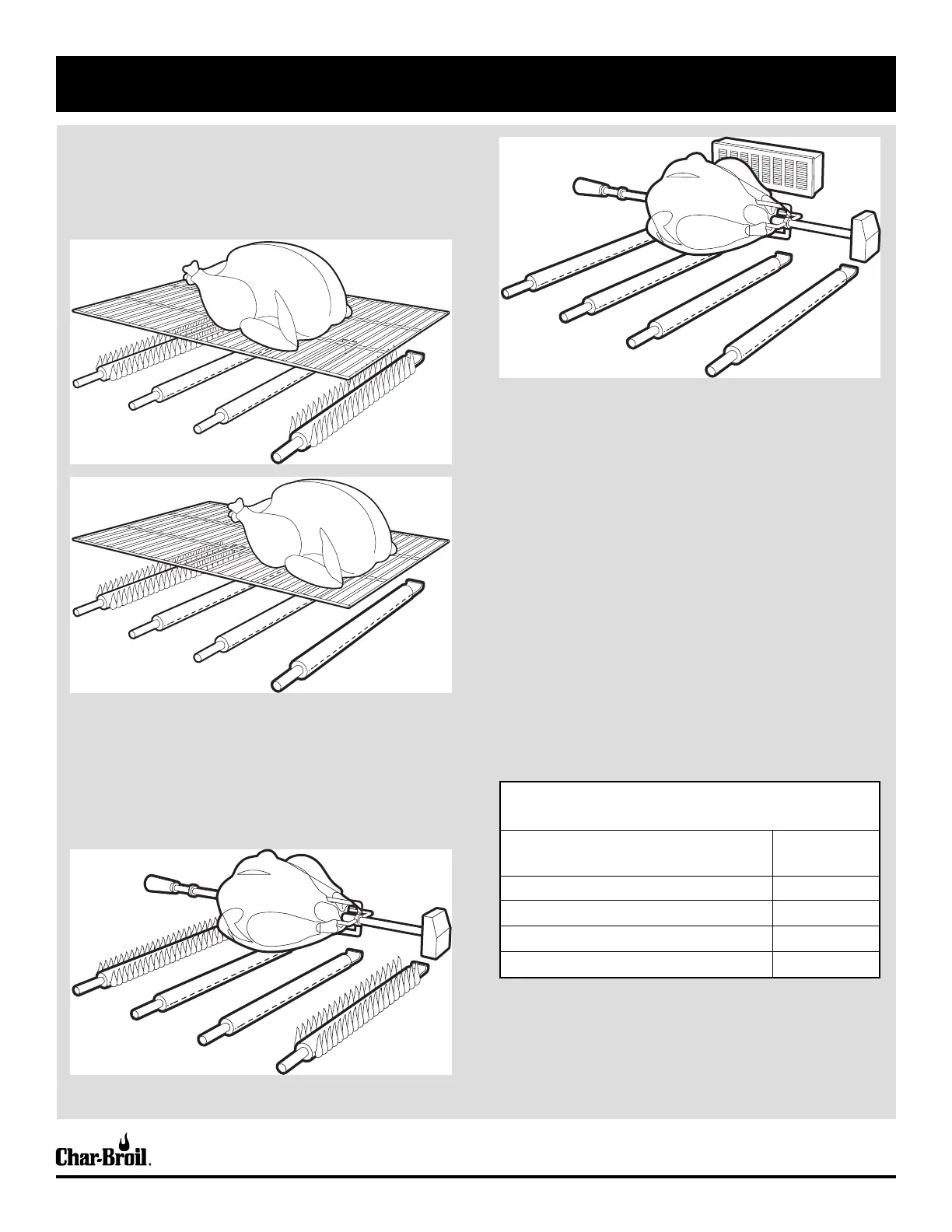
Indirect Cooking
Indirect cooking utilizes select burners to circulate heat throughout the grill, without direct
contact between the meat and the flame. The meat is placed over the burner that is ‘off’. This
method is generally used to slow cook large cuts of meat and poultry. A pan can be placed
underneath the meat to catch grease and food drippings, and helps minimize clean-up.
Rotisserie Cooking
Rotisserie cooking is best for ‘round’ meat, such as large roasts, whole poultry, and pork. It
generally requires an accessory motor and spit rod that allows the meat to be turned at a
constant speed. Rotisserie cooking is best done in front of a special rotisserie burner, or
utilizing an indirect cooking burner arrangement. A pan can be placed underneath the meat
to catch grease and food drippings, and helps minimize clean-up.
Food Safety
Food safety is a very important part of enjoying the outdoor cooking experience. To keep food
safe from harmful bacteria, follow these four basic steps:
Clean: Wash hands, utensils, and surfaces with hot soapy water before and after handling
raw meat.
Separate: Separate raw meats from ready-to-eat foods to avoid cross contamination. Use a
clean platter and utensils when removing cooked foods.
Cook: Cook meat and poultry thoroughly to kill bacteria. Use a thermometer to ensure proper
internal food temperatures.
Chill: Refrigerate prepared foods and leftovers promptly.
Cooking on your new grill is a hands-on experience, and it is recommended to remain outside
with your grill while cooking. Grilling can be affected by many external conditions. In cold
weather, you will need more heat to reach an ideal cooking temperature, and grilling may take
longer. The meat’s internal temperature and thickness can also affect cooking times. Cold
and thicker meats will take longer to cook.
Internal Meat Temperatures
Meat cooked on a grill often browns very fast on the outside. Therefore, use a meat
thermometer to ensure it has reached safe internal temperatures.
Please refer to the USDA for complete, up-to-date information. Our internal temperature
chart is based on USDA standards for meat doneness. Check it out at www.isitdoneyet.gov
USDA Recommended Safe Minimum
Internal Temperatures
Beef, Veal, Lamb, Steak, Roasts, & Whole Pork
(with a 3 minute rest time)
145° F
Fish 145° F
Beef, Veal, Lamb, and Pork - Ground 160° F
Egg Dishes 160° F
Turkey, Chicken & Duck Whole, Pieces & Ground 165° F



 To Next Page