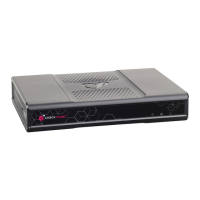
The Check Point Quantum Spark 1535 / 1555 Appliance is a security gateway designed to provide robust and up-to-date security solutions for businesses. It offers a comprehensive suite of internet security products and technical services, including educational, professional, and support services through authorized training centers and certified support partners. The appliance is designed for both locally and centrally managed deployments, offering flexibility in how security policies are administered.
Function Description:
The Quantum Spark 1535 / 1555 Appliance serves as an internet security product suite, providing advanced threat prevention and access control. It is designed to protect businesses from new and evolving attacks through continuous software updates and security enhancements. The appliance can be configured for the first time using a dedicated wizard, or through Zero Touch Cloud Service for automatic settings fetching, or via a USB drive for rapid deployment of configuration files or image installation.
Important Technical Specifications:
The appliance comes in both wired and WiFi models. The WiFi models include three RP-SMA type WiFi antennas.
- Connectivity:
- LAN ports 1-5, LAN 2/Sync (1 GbE)
- WAN port 1 (1 GbE)
- USB port 3.0 (Type-A) for software download
- Console port for serial console cable connection (baud rate: 115200)
- Power: AC to 12VDC desktop power adapter (40W for wired and WiFi models).
- LED Indicators (Front Panel):
- WiFi LED (WiFi models only): Off (WiFi off), Blue (WiFi on, normal operation), Red (WiFi error/alert).
- Management LED: Off (No management), Blinks red slowly (Zero Touch running), Blinks red rapidly (Successfully connected to Zero Touch Cloud Server, script saved, or reactivation), LED off (Zero Touch process completed, SMP activation not needed, or SMP mode off), Blinks blue slowly (Activation sleeping time), Blinks blue rapidly (Reactivation), Solid blue (SMP connected), Constant red (Gateway failed to connect to SMP).
- Internet LED: Off (No internet connection), Blinking Blue (Trying to connect), Blue (Connected), Blinking Red (Connection failure).
- Power LED (Status): Solid Blue (Normal operation), Blinking Blue (Boot in progress, installing firmware), Red (Error/Alert).
- Network LEDs (RJ45 WAN and LAN ports): Bi-color LED (Green/Amber) indicating link/activity and speed (10M, 100M, 1GbE).
- No link: LED1 Off, LED2 Off
- 1G link: LED1 ON, LED2 Off
- 1G Act: LED1 Blink, LED2 ON
- 100M link: LED1 ON, LED2 Off
- 100M Act: LED1 Blink, LED2 Off
- 10M link: LED1 ON, LED2 Off
- 10M Act: LED1 Blink, LED2 Off
- Physical Dimensions: Includes an anti-theft slot (Kensington and Sunbox TL-623M cable reference).
- Environmental Reliability:
- Operating Conditions: Vibrations and Shock Based on EN 300 019-2-3.
- Storage Conditions: Temperature: (-40)°C ~ 60°C, Humidity: 95%, non-condensed. Vibrations and Shock based on EN 300 019-2-1.
- Transportation Conditions: Temperature: (-40)°C ~ 85°C, Humidity: 95%, non-condensed. Vibrations and Shock based on EN 300 019-2-2.
- Certifications: Extensive list including EN 55032, EN IEC 61000, AS/NZS CISPR 32, FCC CFR Title 47 Part 15 Subpart B, ICES-003, VCCI-CISPR 32, EN 301 489, EN 300 328, EN 301893, EN 62311, AS/NZS 4268, RSS-247, ANSI C63.4, ANSI C63.10, IEEE C95.3, KDB Publication 789033, RSS-102, 47 Part 15 Subpart C/E, IEC 60950-1, EN 62368-1, CAN/CSA C22.2 No. 62368-1-14, UL 62368-1, DS/EN 62368-1, J62368-1, CEI EN 62368-1.
- Approved Antennas (WiFi models): Dipole Antenna (RP-SMA) with Max Gain of 2.22 dBi for 2414-2462 MHz and 4.29 dBi for 5180-5240, 5260-5320, 5500-5720, 5745-5825MHz, both with 50Ω impedance.
Usage Features:
- Initial Setup: The appliance can be wall-mounted. Initial setup involves connecting the power supply, network cables (LAN1 is preconfigured with 192.168.1.1), and optionally a console cable. The Power LED indicates boot status, turning solid blue when ready for login.
- First Time Configuration Wizard: Guides users through initial setup, including:
- Welcome Page: Introduces the appliance and allows fetching settings from Zero Touch Cloud.
- Authentication Details: Configures administrator name, password (with strength meter and complexity options), country selection (for wireless models, affecting wireless frequency and parameters).
- Appliance Date and Time Settings: Allows manual or NTP-based configuration of date, time, and time zone.
- Appliance Name: Sets a name and optional domain name for DNS resolving.
- Security Policy Management: Choice between "Central management" (managed by a remote Security Management Server) or "Local management" (managed via the appliance's WebUI).
- Security Management Server Connection (for centrally managed): Connects to the Security Management Server using a one-time password for secure communication, with options to send logs to the same address, a specific log server, or according to policy.
- Internet Connection: Supports various connection types like Static IP, DHCP, PPPoE, PPTP, L2TP, Cellular (for internal LTE modem), and Cellular Modem (external USB modem). DNS server settings can be configured.
- Local Network: Configures LAN ports as a switch, sets network name, IP address, subnet mask, DHCP server settings, and exclusion range for IP addresses.
- Wireless Network (for WiFi models): Configures SSID, password protection (recommended), and radio band (2.4GHz and 5GHz).
- Administrator Access: Defines sources from which administrators can access the appliance (LAN, Trusted wireless, VPN, Internet) and specifies allowed IP addresses.
- Appliance Registration: Connects to Check Point User Center to pull license information and activate the appliance. Supports offline activation via file import. Proxy details can be configured for Internet access.
- Software Blade Activation: Selects which Software Blades to activate on the appliance, including Firewall, Applications & URL Filtering, User Awareness, Remote Access, Site To Site VPN, Intrusion Prevention (IPS), Anti-Virus, Anti-Bot, Threat Emulation, and Anti-Spam. QoS can be activated from the WebUI later.
- Summary: Displays all configured settings and allows completion of the wizard.
- Zero Touch Cloud Service: Enables automatic fetching of settings from the cloud upon initial internet connection. This is ideal for rapid deployment and simplifies management.
- USB Drive Deployment: Allows rapid deployment of configuration files or image installation without the wizard, suitable for appliances with default settings or existing configurations. The USB drive must be formatted in FAT32.
Maintenance Features:
- Software Updates: Check Point recommends installing the most recent software release for functional improvements, stability fixes, security enhancements, and protection.
- Backup and Restore: System configuration can be backed up from the WebUI (Device > System Operations > Backup).
- Factory Default Reset: A "Factory default" button on the back panel allows restoring the appliance to its factory defaults by pressing it continuously for 12 seconds.
- Troubleshooting: LED indicators provide visual cues for various statuses, including boot progress, network connectivity, and management activity, aiding in troubleshooting.
- Support: Technical assistance is available 24/7 via phone (Americas: +1 972-444-6600, International: +972 3-611-5100). Users need to provide their MAC address when contacting support. Additional technical information is available on the Check Point Support Center.
- Safety Information: The manual includes important health and safety warnings, such as not blocking air vents, not opening the appliance (user-serviceable parts are not present), and proper handling of the power supply and lithium battery. It also provides information on radiation exposure and compliance with various regulatory bodies (FCC, IC, EU, Japan).
- Product Disposal: The appliance should not be disposed of with household waste but taken to a designated collection point for recycling of electrical and electronic equipment.

 Need help?
 General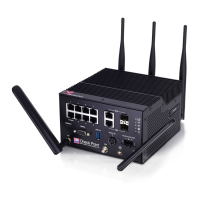


 To Next Page