Safety and Operations
Chris-Craft 2–25
Types of PFDs
There are five types of PFDs:
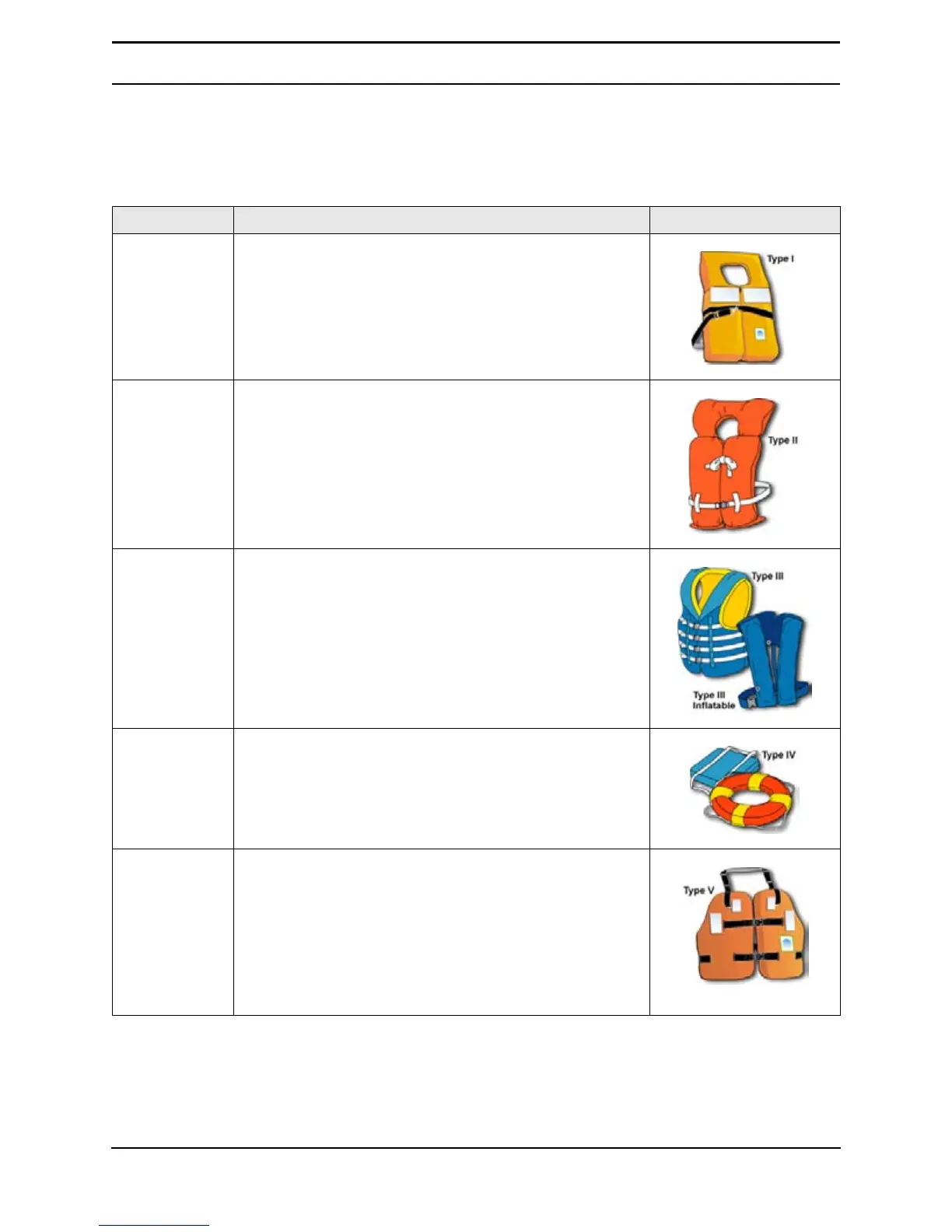
Table 2-2. Types of PFDs
Type Description Illustration
I
Offshore:
Provides most buoyancy. Designed for remote or rough waters where
rescue may take awhile. Keeps head out of water in face-up position.
Comes in two sizes: adult and child.
II
Near-Shore:
Intended for calm and inland waters where rescue may be quick. May
turn unconscious wearer face-up. Not as efficient as Type I.
III
Flotation Aids:
Vest or full-sleeved jacket style. Intended for calm waters. Not recom-
mended for rough waters as they may not keep individual face-up. Gen-
erally used for water sports. Most comfortable for continuous wear. Some
Type III’s are designed to inflate when you enter the water.
IV
Throwable Devices:
Cushion, horseshoe, or ring buoy style. Designed to be thrown to some-
one in the water. Not designed as a personal flotation device that can be
constantly worn. Should be attached to a polypropylene rope. For emer-
gency use only.
V
Special Use Device:
Designed for specific activities such as kayaking or water skiing. Variet-
ies include deck suits, work vests, board sailing vests, and hybrid types.
If counted as a minimum PFD requirement, it must be worn and used in
accordance with their label.
Hybrid Inflatable:
Least bulky of all PFD types. Has both foam and an inflatable chamber.
Performance equal to Type I, II, or III PFDs when inflated. To be accept-
able, hybrid PFDs must be worn when underway.



 To Next Page