Consumers Responsibility is to assure they understand the vehicle, its speed settings, braking, restraint, and ride character.
Customers should complete a test drive and receive training before taking final delivery. Dealer training should include safety
and operational training, tire maintenance and care, how to charge, use of the charge cord, long term storage, local regulations,
and so forth. Plus, you should be instructed to immediately report any malfunction to your dealer.
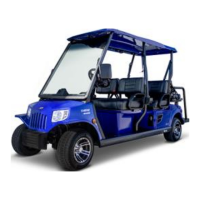
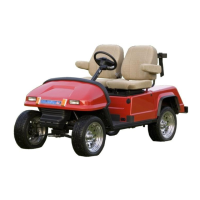
Tomberlin vehicles may look like a traditional golf car. However, they are engineered to perform more like an automobile.
For example, Tomberlin models offer two maximum speed settings; have automotive-type 3-point seat belts; automotive-type
pedals (i.e. accelerator and brake); and some have an automotive-type steering column. In addition, they have a firmer coil-
over-shock suspension—like an on‐road sports car—which provides superior handling and stability. Your dealer is prepared
to explain, demonstrate, and answer questions you may have.
Full-Servicing Authorized Dealer: Only Authorized Tomberlin Sales and Servicing Dealers are authorized to receive warranted
parts and labor to service the vehicle. Note: Generally, Tomberlin owners enjoy a better service experience utilizing a Full-
Servicing Authorized Dealer.
Authorized Service Centers: Authorized Service Centers are in areas where we do not have a Full-Servicing Authorized Dealer.
Tomberlin, upon pre-approval, may provide free parts to the Authorized Service Center (without labor reimbursement) for
covered parts as detailed herein under the following guidelines. A Tomberlin Service Center must complete a Parts Only Service
Center form and ship any part desired to be replaced due to a manufacturing defect to the address as specified with the Service
Center procedures. Other procedures must be in compliance—such as maintenance, proof of registration, and so forth. All
parts seeking to be replaced must be submitted while under an active warranty period as specified herein. All other terms and
conditions apply.
Servicing Business: In lieu of a Full-Servicing Authorized Dealer or Authorized Service Center, Tomberlin, upon pre-approval,
may provide free parts (without labor reimbursement) for covered parts as detailed herein under the following guidelines. A
servicing business must receive pre-approval and ship any part desired to be replaced due to a manufacturing defect to the
address as specified with the servicing business procedures. Other procedures must be in compliance—such as maintenance,
proof of registration, and so forth. All parts seeking to be replaced must be submitted while under an active warranty period
as specified herein. All other terms and conditions apply.
Tomberlin Parts: Any part determined solely by Tomberlin to be defective due to faulty workmanship may be repaired or
replaced at the sole option of Tomberlin with new, remanufactured, and/or certified replacement parts and will also be
warranted for the remaining balance of the vehicles warranty period as it relates to that particular component.
Maintenance Cost: All routine maintenance and care is at the expense of the owner and should be conducted only by authorized
Tomberlin Dealers. See routine maintenance and care instructions in the Owner’s Manual. You may also visit
www.tomberlin.net for additional current information on maintenance, proper care, and safe driving habits.
Owners Responsibility: The limited warranty period is dependent upon adherence to proper care and maintenance. As
such, it is the responsibility of the owner to operate and properly maintain their Tomberlin product by following the
guidelines, instructions, and recommended maintenance programs and schedules in the Owner’s Manual—including those
detailed in this document. Unfortunately, we have experienced many examples of improper care and maintenance—some of
which can result in component damage, fire, accidents, injury, and death. Examples include:
• Modifying or raising the center of gravity
• Installing the wrong size or brand of batteries
• Manipulating controllers for more speed or torque
• Installing the incorrect size tires, wheels, or lift kits
• Installing aftermarket light kits, trailer hitches, cargo beds, and other accessories
• Installing stereos and electronics that are spliced into the wrong wires
• Improper long-term storage or long periods of no use
• Using inappropriate extension cords to charge the vehicle



 To Next Page