47
NAV
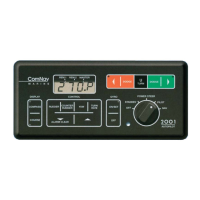
The next operating mode is NAV. If you
have a GPS, Loran or other navigation
computer interfaced to the autopilot,
program in a waypoint, tell the computer
to begin navigating towards the waypoint
from the vessel's present position, and
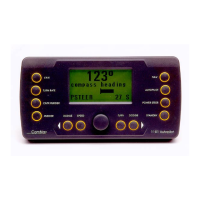
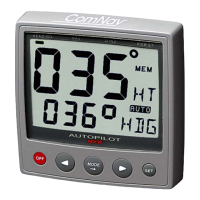
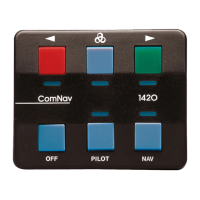
turn the autopilot master select switch to
NAV.
IF YOUR INTERFACE IS USING NMEA
0183 DATA FORMAT, (to see which type
of data the autopilot is using to navigate,
press the TURN key), the first thing that
should happen is that the course display
on the autopilot will begin to change
towards the Heading to the Waypoint as
indicated by the Nav Device.
The autopilot will then further alter its
course to keep the Cross Track Error as
indicated by the Nav Device to a
minimum. If you are in any doubt as to
whether things are working correctly,
WATCH THE CROSS TRACK ERROR.
To change the cross track error response
press TURN key followed by the green
ARROW key.
If it is being maintained at a low value (i.e.
less than 0.02 nautical miles), everything
is working.
If the vessel is wandering back and forth,
but there are no alarms on the autopilot or
Nav Device, the most common cause,
(particularly with Loran), is poor signal
quality. This may be attributed to either:
- poor or no grounding of the Loran,
- noisy alternators on the vessel, or,
- poor antenna location.
Refer to the Nav Device manual for signal
quality displays and ideas on making
improvements. If the Nav Device is set for
automatic waypoint sequencing, the
heading to steer will change when the
next waypoint is selected. The autopilot
will then turn the vessel to the new
course.
IF YOUR INTERFACE ONLY OUTPUTS
NMEA 0180 or 0182 FORMAT, consult
with the factory service personnel to
obtain special software. The 1001
autopilot software only supports NMEA
0183 format.
You can still use the DODGE keys to
avoid obstacles in the water. The only
difference is that after you release the
DODGE keys, the vessel will return to its
original track, rather than its original
course, unless you reset the point of
origin of the track on the Nav Device.
To prevent the autopilot from making
a course change at a bad time, press
and hold both DODGE keys to lock
the rudder at dead ahead. (i.e. if you
see an obstacle in the water that the
vessel will avoid if it DOESN'T make
any course changes)
HINTS
If the heading to steer can be in
degrees magnetic or degrees true,
select degrees magnetic and be sure
the variation is entered correctly.
Course changes during automatic
waypoint sequencing will be smoother
if the arrival circle is set to a small
value such as 0.05 nautical miles. This
usually will let the autopilot bring the
vessel directly onto the next track
when the course change is completed.


 To Next Page