Form I-RA/D 350/500, P/N 131090R12, Page 27
Inspecting and
Cleaning the
Heat Exchanger
Tubes,
Combustion
Chamber, and
Flue Pipe
Inspecting Model
RA/RAD 350
WARNING: Used oils may contain engine-wear metal
compounds and foreign materials. When burned, these
compounds are deposited within or exhausted from
this heater. Therefore, care should be taken when
using, cleaning and maintaining this equipment.
Whenever any cleaning, including the ue pipe and exhaust stack is
done, proper protective equipment, including gloves and a face mask or
respirator, must be worn.
WARNING: Turn off electric power before inspecting
or cleaning the unit. Allow unit to cool.
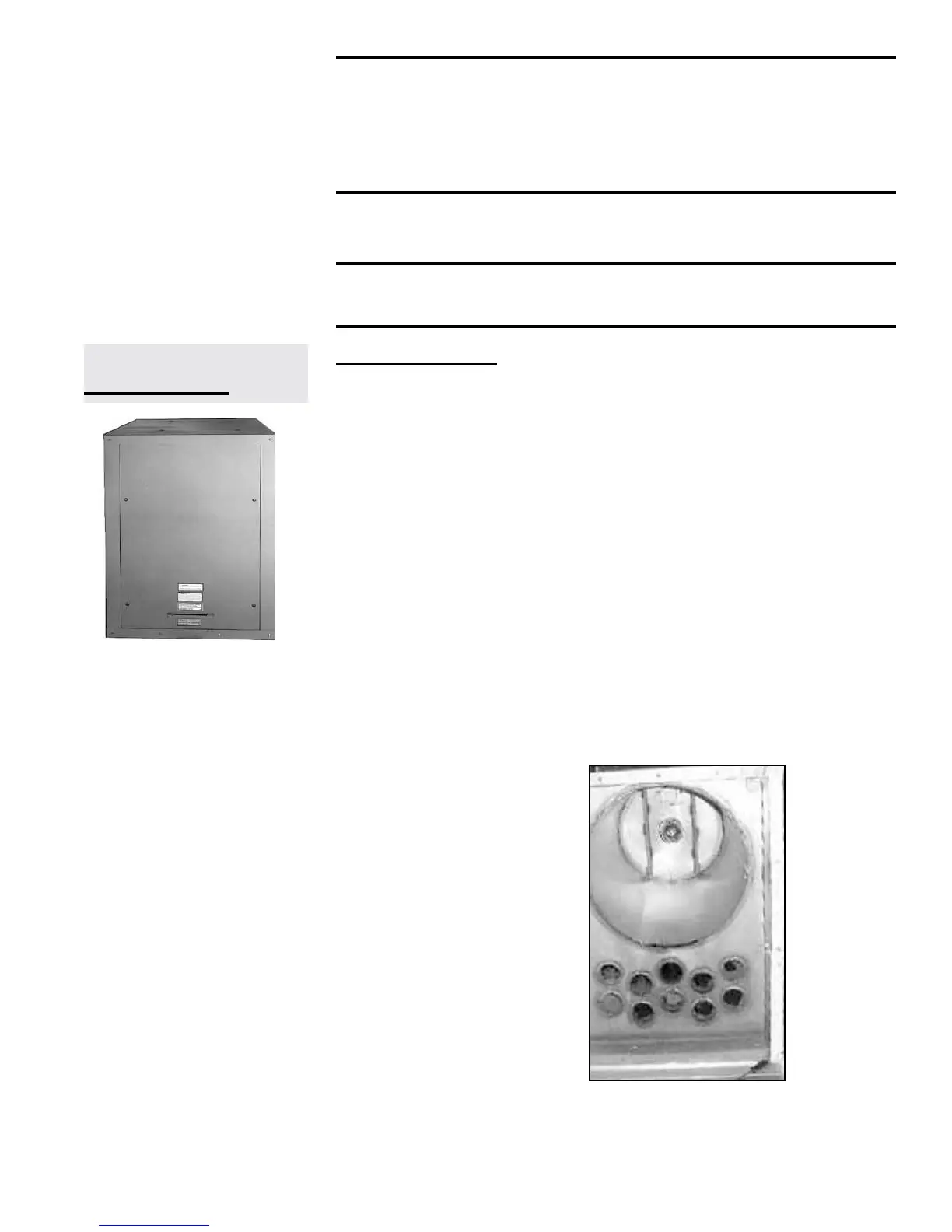
Model RA/RAD 350 - To determine need for cleaning, inspect the heat
exchanger tubes through the access door on the end of the heater op-
posite the burner.
• Turn the four outer door latches 1/4 turn.
• Remove the door panel by lifting upward and outward on the
door handle.
• Using a 1/2” wrench, remove the nuts and washers from the
inner hinged door (See NOTE in the margin). Open door.
• Shine a ashlight into the heat exchanger. As little as 1/16” ash
build-up on the internal tube surfaces can dramatically decrease
the thermal efciency of this heater. If the ash build-up is over
1/16”, leave the door open and proceed with the cleaning.
NOTE: You cannot adequately make this determination through the ame
observation door. The majority of the settlement of ash accumulates in
the heat exchanger tubes.
Combustion
Chamber
Inspect Heat
Exchanger
Tubes
Button hole type woven
ceramic gasket is used
between all mating
parts.
View of an RA/RAD 350 with Hinged Inner Door Open
Turning Box End
NOTE: Prior to 5/02, Size
350 had a two-piece door
with a cross support in the
middle. The door sections
are not hinged and must
be completely removed for
inspection and service.


 To Next Page