28
I
GB
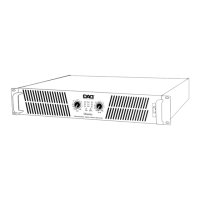
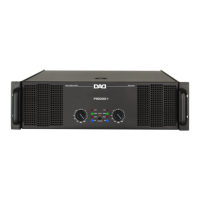
SX1000 SX1500 SX2000
BRIEF NOTES ON ACOUSTIC
Spreading sound into a room means to distribute
sound signals to a given audience and the results
depend on several environmental factors (room
shape, volume, etc...), the number of people present
and their precise location, the type of sound source
(live or recorded music or speech), and the level of
the background ambient noise.
Efficiency
Sound pressure (SPL) of a speaker depends on three
factors: eciency, dimensions and use in combination
with other speakers.
Eciency, the quantity of energy generated by the
amplier and transformed into sound, determines
the volume that can be obtainable by an amplier of
a given power rating. A 50W amplier combined with
highly ecient speakers may be able to produce a
higher volume than a 100W amplier combined with
less ecient speakers.
Impedance
One of the electrical features of a speaker is its
impedance (resistance opposite to the passage of
alternate current). Both resistance and impedance
are measured in Ohm; impedance varies at dierent
frequencies so dierent frequencies can be delivered
with dierent sound pressure levels. If a loudspeaker
has an higher impedance than the minimal
required to the amplier to work properly, it can
be used but this would result in a power reduction;
but loudspeakers with an impedance lower than
amplier’s minimum load, must not be connected. If
the systems adopted are more complex (e.g. several
speakers connected to the same amplier), you must
be sure that the overall speaker impedance value
corresponds to the amplier output impedance.
There are two possible connection systems: serial
or parallel mode. Connecting two speakers in series
means to connect the positive pole of the rst
speaker to the negative pole of the second one and
then to connect the two free poles to the amplier.
In this case the impedance values are summed up:
e.g. Two 8 Ohm speakers connected in parallel give a
16 Ohm load.
To connect two speakers in parallel mode, simply
interconnect the two speakers terminals of the
same sign. To obtain the total value, in this case a
calculation is required. Indicating R1 and R2 as the
two loudspeaker values, the following formula has
to be used: (R1 x R2) / (R1 + R2). E.g.: with two 8
Ohm speakers, we have that: (8x8)/(8+8) = 64/16 = 4
BREVI CENNI DI ACUSTICA
La diusione del suono in un ambiente ha lo scopo
di soddisfare l’ascolto da parte di un certo numero
di persone ed è legata a diversi fattori dipendenti
dall’ambiente stesso (forma della sala, volume, ecc.),
dal numero e dalla posizione degli ascoltatori, dalla
natura della sorgente sonora (esecuzioni musicali o
parlato, riprodotti da registrazione o dal vivo) e dal
livello di rumore presente nell’ambiente.
Efficienza
La pressione sonora di un diusore (SPL misurata
in dB) dipende da tre fattori: la sua ecienza, le sue
dimensioni ed il suo utilizzo in combinazione con
altri diusori. L’ecienza, cioè la quantità di energia
prodotta dall’amplicatore trasformata in suono,
determina il volume che si può ottenere da un
amplicatore di una data potenza. Diusori molto
ecienti, possono far sì che un amplicatore da 50W
produca maggior volume di uno da 100W usato con
diusori meno ecienti.
Impedenza
Una delle caratteristiche elettriche di un diusore
è l’impedenza ( la resistenza opposta alla corrente
alternata). Sia la resistenza che l’impedenza si
misurano in Ohm; l’impedenza varia al variare
della frequenza quindi ne consegue che le diverse
frequenze possono essere rese con un SPL diverso.
Un diusore con impedenza superiore a quella
minima di funzionamento dell’amplicatore può
essere utilizzata a scapito della potenza erogata,
mentre è bene evitare collegamenti con diusori
che hanno impedenza minore di quella minima di
lavoro dell’amplicatore di potenza. Usando sistemi
più complessi (ad esempio più speakers collegati allo
stesso nale) bisogna fare in modo che il valore totale
dell’impedenza degli altoparlanti sia corrispondente
a quella minima di funzionamento del amplicatore.
Possiamo avere due tipi di collegamento: in serie o in
parallelo. Collegare in serie due altoparlanti signica
unire un terminale positivo ed uno negativo dei due
e collegare all’amplicatore i rimanenti due terminali
rimasti scollegati. I loro valori si sommano: per
esempio, due altoparlanti da 8 Ohm in serie danno
16 Ohm.
Quando gli altoparlanti sono collegati in parallelo, i
terminali dello stesso segno sono uniti tra loro.
Per ottenere il valore totale bisogna utilizzare una
formula, indicando con R1 ed R2 i valori di due
altoparlanti, ed eseguire : (R1 x R2) / (R1 + R2). Con
due altoparlanti da 8 Ohm, per esempio, avremo:



 To Next Page