
 Need help?
Do you have a question about the Dahua Technology TiOC and is the answer not in the manual?
Details the items included in the camera package and installation requirements.
Provides a step-by-step visual guide for mounting the camera.
Covers recorder ports and the process for installing the hard drive.
Guides on initializing and setting up a standalone camera using the Config tool.
Details the initialization process for cameras when used with an NVR system.
Configuration steps for Intelligent Video System (IVS) and Face Mask Detection.
Guides on configuring IVS and Face Mask Detection for NVR-based systems.
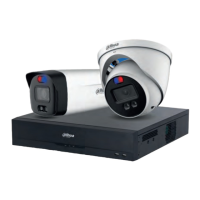
The TiOC (Three-in-One Camera) is an innovative surveillance solution that integrates 24/7 full-color monitoring, active deterrence, and AI capabilities into a single smart device. This comprehensive system is designed to streamline security operations, significantly reducing the time and financial costs typically associated with traditional surveillance setups for both distributors and installers.
The core functionality of the TiOC system revolves around its three primary integrated features:
24/7 Full-Color Monitoring: Unlike conventional cameras that switch to black and white in low-light conditions, TiOC cameras maintain full-color imaging around the clock. This capability is crucial for capturing vivid and detailed visual evidence, making it easier to identify subjects, vehicles, and other critical details regardless of the time of day or ambient light levels. The full-color feature enhances situational awareness and improves the accuracy of post-event analysis.
Active Deterrence: The TiOC system is equipped with active deterrence mechanisms designed to prevent incidents before they escalate. This includes built-in spotlights and sirens that can be triggered automatically upon detection of suspicious activity or manually by an operator. The visual and auditory warnings serve as a powerful deterrent, signaling to potential intruders that they have been detected and discouraging further illicit actions. This proactive approach to security helps to minimize losses and enhance overall safety.
AI Capabilities: At the heart of the TiOC system's intelligence are its advanced AI features. These include Intelligent Video System (IVS) functionalities such as tripwire and intrusion detection, which allow the camera to identify and respond to specific predefined events within a monitored area. Additionally, the system incorporates AI-powered features like Face Mask Detection, which can identify individuals not wearing face masks in designated areas, supporting public health protocols. The AI algorithms enable the camera to differentiate between relevant threats and false alarms, such as animals or swaying trees, thereby reducing unnecessary alerts and improving the efficiency of security personnel. The AI also supports smart plan configurations, allowing users to customize detection rules and responses based on specific security needs.
The TiOC system offers a user-friendly experience, whether deployed as a standalone camera-only system or integrated with an NVR (Network Video Recorder).
Flexible Deployment: The system supports two main deployment scenarios. For smaller-scale applications or specific monitoring points, a camera-only system can be set up, with direct access and configuration via a web browser. For more extensive surveillance needs, integration with an NVR system allows for centralized management, recording, and advanced analytics across multiple cameras.
Easy Initialisation and Configuration: The initial setup process is designed to be straightforward. Devices can be searched and initialized using a Config tool, allowing users to set passwords and configure network parameters. For NVR-based systems, the NVR guides users through basic setup information, including region, language, time, and password, before adding cameras.
Intuitive Interface: Both the camera's web interface and the NVR's interface are designed for ease of use. Users can log in via a web browser to view live camera feeds, access settings, and configure various functions. The interfaces provide clear navigation to key features such as event settings, smart plans, and alarm management.
Customizable Detection Rules: Users can define specific IVS rules, such as drawing tripwire lines or intrusion areas on the live view, to trigger alarms when these rules are violated. The AI capabilities allow for further refinement of these rules, enabling the system to focus on specific targets like humans or motor vehicles, thereby enhancing accuracy and reducing false positives.
Face Mask Detection: A specialized AI feature allows for the detection of individuals not wearing face masks. Users can enable this function, draw detection regions on the scene, and configure parameters to monitor compliance with mask-wearing policies.
Alarm Management: The system provides comprehensive alarm management, allowing users to review recorded alarms, filter them by type (e.g., IVS, Face Mask Detection), and access detailed event information. This helps in quickly identifying and responding to security incidents.
Remote Access: With proper network configuration, the TiOC system can be accessed remotely, allowing users to monitor live feeds, review recordings, and manage settings from anywhere with an internet connection.
The TiOC system incorporates features that simplify maintenance and ensure continuous operation.
Firmware Updates: The system's firmware can be updated, ensuring that the cameras and NVR benefit from the latest features, security patches, and performance improvements. While the manual notes that firmware versions may slightly differ from future versions, the core functions remain unaffected.
Hardware Installation: The installation process for the recorder includes clear steps for removing and replacing the case cover, installing the HDD, and connecting data and power cables. This modular design facilitates easy maintenance and component replacement if needed.
Network Configuration: The ability to modify IP addresses and other network parameters through the Config tool or NVR interface allows for flexible network management and troubleshooting, ensuring seamless communication between devices.
System Status Monitoring: The Config tool and NVR provide status indicators for connected devices, showing whether they are initialized or uninitialized, and displaying their IP addresses and other relevant information. This helps in quickly identifying and resolving connectivity or configuration issues.
Bandwidth Management: For NVR systems, the interface displays remaining bandwidth, which is crucial for managing network resources and ensuring optimal performance, especially when multiple cameras are streaming high-resolution video.
Detailed Logging: The system likely maintains logs of events and activities, which can be invaluable for troubleshooting, auditing, and understanding system behavior over time.
In summary, the TiOC solution is designed to be a robust, intelligent, and user-friendly surveillance system that offers advanced monitoring, proactive deterrence, and smart AI capabilities, all while simplifying installation and maintenance for a wide range of security applications.
 General
| Image Sensor | 1/2.8" CMOS |
|---|---|
| Smart Illumination | Yes |
| Built-in Mic | Yes |
| Built-in Speaker | Yes |
| IP Rating | IP67 |
| Focal Length | 2.8mm |
| IR Distance | 30m |
| Warm Light Distance | 30m |
| Video Compression | H.265/H.264 |
| Audio Compression | G.711/G.726/AAC |
| Alarm I/O | 1 in/1 out |
| Ethernet | 10/100Mbps |
| Power Supply | DC12V/ PoE |
| Smart Features | Perimeter Protection |
| Operating Temperature | +60°C |
| Storage | Micro SD card (up to 256GB) |

 To Next Page