EasyManua.ls Logo

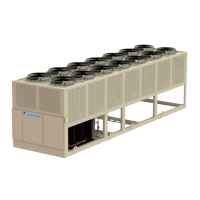
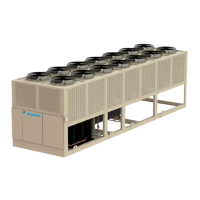
Daikin AGZ030E - User Manual

Daikin AGZ030E
112 pages
Print Icon
To Next Page IconTo Next Page
Loading...
Installation, Operation,
and Maintenance Manual
Trailblazer
Air-Cooled Scroll Chillers
Model AGZ, E Vintage
30 to 240 Tons (100 to 840 kW)
HFC-410A Refrigerant
50/60 Hz
IOM 1206-7
Group: Chiller
Part Number: IOM1206-7
Date: July 2016

Questions and Answers

  • A
    Amber HarrisAug 15, 2025
    What causes motor overload relays or circuit breakers to open in my Daikin AGZ030E?
    • A
      Ashley CollinsAug 15, 2025
      If motor overload relays or circuit breakers are opening in your Daikin Chiller, it could be due to a voltage imbalance or voltage being out of range, requiring correction of the power supply. Defective or grounded wiring in the motor can also cause this, necessitating compressor replacement. Loose power wiring or burnt contactors are other potential causes; check all connections and tighten them, replacing contactors if needed. High condenser temperature can also trigger this issue; refer to corrective steps for High Discharge Pressure.
  • B
    Bradley CummingsAug 22, 2025
    Why is my Daikin AGZ030E's compressor noisy or vibrating?
    • J
      Jennifer MossAug 22, 2025
      A noisy or vibrating Daikin Chiller compressor can stem from several issues. It could be due to low lift or an inverted start, which may require control adjustments or condenser fan VFDs. Another cause might be the compressor running in reverse; check the unit and compressor for correct phasing. Improper piping or support on the suction or discharge lines can also lead to noise and vibration, necessitating relocation, addition, or removal of hangers. Worn compressor isolator bushings can be a source of the problem, requiring replacement. In more severe cases, the compressor may have a mechanical failure, which would also require replacement.
  • A
    apriljohnsonAug 26, 2025
    What causes high discharge pressure in my Daikin Chiller?
    • J
      jeffreycalhounAug 26, 2025
      High discharge pressure in your Daikin Chiller can result from several factors. Noncondensables in the system may be the cause; extract them using approved procedures or replace the charge. The circuit might be overcharged with refrigerant, requiring you to remove the excess and check liquid subcooling. Ensure the optional discharge shutoff valve is open. Incorrect condenser fan control wiring or a non-running fan can also lead to high pressure; correct the wiring or check the electrical circuit and fan motor, respectively. A dirty condenser coil or air recirculation could also be responsible; clean the coil or correct the recirculation issue.
  • B
    Barbara CampbellSep 1, 2025
    What to do if my Daikin AGZ030E compressor will not stage up?
    • M
      Michael JacksonSep 1, 2025
      If your Daikin Chiller compressor isn't staging up, it could be due to a defective capacity control, which would need replacement. Another possibility is a faulty sensor or wiring, also requiring replacement. Finally, the stages might not be set correctly for the application; adjust the controller settings accordingly.
  • C
    christiancrystalSep 4, 2025
    Why are the compressor staging intervals too short on my Daikin Chiller?
    • A
      Ashley FowlerSep 4, 2025
      Short compressor staging intervals on your Daikin Chiller can be attributed to several factors. The control band may not be set properly, necessitating an adjustment of the controller settings for the application. A faulty water temperature sensor could be the cause, requiring replacement. Insufficient water flow can also lead to this issue; correct the flow. Other potential causes include rapid temperature or flow swings (stabilize the load), oversized equipment (evaluate equipment selection), the chiller being enabled with no load (evaluate BAS sequence and settings), or light loads (evaluate the need for HGBP or thermal inertia).
  • K
    Katherine DavisSep 12, 2025
    What causes the compressor thermal protection switch to open on my Daikin AGZ030E?
    • O
      orrbrianSep 12, 2025
      The compressor thermal protection switch opening on your Daikin Chiller can be caused by several factors. It could be due to operating beyond design conditions, requiring correction to stay within allowable limits. A discharge valve not being open can also trigger this; ensure the valve is open. Short cycling can lead to this issue; stabilize the load or correct control settings for the application. Voltage range issues or imbalance can be responsible; check and correct the voltage. High superheat can also cause the switch to open; adjust to correct superheat. In some cases, compressor mechanical failure may be the cause, necessitating compressor replacement.
  • C
    christophertaylorNov 17, 2025
    What to do if my Daikin Chiller compressor will not run?
    • D
      danielloveNov 18, 2025
      If your Daikin Chiller compressor isn't running, there are several potential causes. First, ensure that the main or compressor disconnect switch is closed. Check for blown fuses or open circuit breakers, examining electrical circuits and motor windings for shorts or grounds. Also, check for loose or corroded connections, replacing fuses or resetting breakers after correcting any faults. Thermal overloads may have tripped; these are auto-resetting, so check voltages, cycle times, and mechanical operations, allowing time for the reset. A defective contactor or coil could also be the issue, requiring replacement. The system might be shut down by equipment protection devices; determine the cause and correct it before restarting. The unit may not require cooling, so wait until it calls for it. ...
  • J
    James RodgersNov 27, 2025
    How to fix low suction pressure in a Daikin AGZ030E?
    • E
      elizabethperezNov 27, 2025
      Low suction pressure in a Daikin Chiller can arise from various causes. Rapid load swings might be the culprit, requiring load stabilization. A lack of refrigerant could be the issue; check for leaks, repair them, and add refrigerant, also check the liquid sight glass. A fouled liquid line filter drier can cause this; check the pressure drop across it and replace if needed. An expansion valve malfunction may also be responsible; repair or replace it and adjust for proper superheat. Low condensing temperature can contribute; check the means for regulating condenser temperature. Other potential causes include compressors not staging properly (see corrective steps - Compressor Staging Intervals Too Low), insufficient water flow (correct the flow), excess or wrong oil used (recover or change t...

Summary

Installation and Application Information

Installation and Application Information (Continued)

Operating and Standby Limits

Details the maximum and minimum ambient and fluid temperatures for unit operation and standby.

Chilled Water Piping

Covers requirements for field-installed water piping, including strainers and flow switches.

Water Flow Limitations

Explains constant and variable evaporator flow limitations and their impact.

High Ambient Operation

Addresses requirements for unit operation in high ambient temperatures.

Condenser Coil Options and Coating Considerations

Describes condenser coil materials, coatings, and their suitability for environments.

Evaporator Freeze Protection

Details methods and components for protecting the evaporator from freeze-up.

Refrigerant Schematics

Refrigerant Schematics (Continued)

Electrical Data (Continued)

Typical Field Wiring Diagram (Single-Point Connection)

Illustrates the typical field wiring diagram for single-point power connections.

Typical Field Wiring Diagram (Multi-Point Connection)

Depicts the typical field wiring diagram for multi-point power connections.

Single Point Electrical Data Tables

Provides electrical data for single-point connections, including ratings and lug ranges.

Single Point Electrical Data Tables (Continued)

Lists single-point electrical data for models 120E through 240E.

Multiple Point Electrical Data Tables

Provides electrical data for multiple-point connections for models 030E through 110E.

Multiple Point Electrical Data Tables (Continued)

Lists multiple-point electrical data for models 120E through 240E.

Unit Controller Operation

Unit Controller Operation (Continued)

Controller Inputs and Outputs

Lists and describes analog and digital inputs and outputs for controllers and modules.

Set Points

Explains that unit-level set points are adjustable and details their default values and ranges.

Set Points (Continued)

Details set points for scheduling, sensor offsets, and BAS inputs.

Dynamic Set Point Ranges

Provides dynamic set point ranges for cooling LWT, freeze protection, and ambient lockout.

Circuit Level Set Points

Describes set points applicable to individual refrigerant circuits for mode, compressor, and fan control.

Sequence of Operation

Cool Mode

Details the sequence of operations for the chiller in Cool Mode from start to shutdown.

Sequence of Operation (Continued)

Cool Mode (Continued)

Further details the Cool Mode sequence, including managing unit capacity and circuit shutdowns.

Ice Mode

Outlines the sequence of operations for the chiller when running in Ice Mode.

Ice Mode (Continued)

Further details the Ice Mode sequence, managing capacity and initiating shutdown.

Circuit Sequence of Operation

Explains the operational sequence for individual refrigerant circuits.

Unit Functions

Unit Functions (Continued)

Freeze Protection

Explains conditions for activating evaporator pump for freeze protection.

Unit Capacity Control

Details how unit capacity is controlled, including compressor staging and delays.

Circuit Functions

Circuit Control Logic

Explains conditions for circuit enabling and compressor availability.

Circuit Functions (Continued)

Compressor Control

Details how compressors should run only in run or pumpdown states.

EXV Control and Superheat Target

Explains EXV control states and how the suction superheat target is selected.

Alarms

Alarms (Continued)

Circuit Fault Alarms

Lists circuit fault alarms, including pressure and sensor faults.

Using the Controller

Using the Controller (Continued)

Optional Low Ambient Fan VFD

Optional Low Ambient Fan VFD Overview

Explains the function of the VFD fan control for low ambient operation.

Optional Low Ambient Fan VFD (Continued)

Startup and Shutdown Procedures

Pre Startup

Covers pre-startup checks for mechanical, piping, and electrical systems.

Startup

Provides steps for starting the chiller, including controller familiarization and setpoint configuration.

Startup and Shutdown Procedures (Continued)

Unit Maintenance

Unit Maintenance (Continued)

Planned Maintenance Schedule

Provides a schedule for weekly, monthly, and annual maintenance tasks.

Refrigerant Charging

Details the procedure for recharging the unit with R-410A refrigerant.

Troubleshooting Chart

Compressor Will Not Run

Lists possible causes and corrective steps for a compressor that will not run.

Compressor Noisy Or Vibrating

Provides possible causes and corrective actions for a noisy or vibrating compressor.

High Discharge Pressure

Lists potential causes and corrective steps for high discharge pressure issues.

Low Suction Pressure

Details possible causes and corrective steps for low suction pressure problems.

Troubleshooting Chart (Continued)

Compressor Will Not Stage Up

Lists possible causes and corrective steps for compressors failing to stage up.

Compressor Oil Level Issues

Provides possible causes and corrective steps for incorrect compressor oil levels.

Motor Overload Relays or Circuit Breakers Open

Lists possible causes and corrective steps for motor overload relays or circuit breakers opening.

Compressor Thermal Protection Switch Open

Details possible causes and corrective actions for the compressor thermal protection switch opening.

Warranty Registration Form (Scroll)

Warranty Registration Form (Scroll) (Continued)

Limited Product Warranty

Daikin AGZ030E Specifications

General IconGeneral
BrandDaikin
ModelAGZ030E
CategoryChiller
LanguageEnglish

Related product manuals