SERVICING
33
NOTE: The Flushing Method using R-11 refrigerant is no
longer approved by Daikin Brand Heating-Cooling.
S-120 REFRIGERANT PIPING
The piping of a refrigeration system is very important in relation
to system capacity, proper oil return to compressor, pumping
rate of compressor and cooling performance of the evaporator.
repaint or treat with a rust preventative. The recommended lo-
indoor unit. The liquid line must be insulated if more than 50
feet of liquid line will pass through an area that may reach tem-
peratures of 30° of higher than ambient in cooling mode.
FVC oils maintain a consistent viscosity over a large tempera-
ture range which aids in the oil return to the compressor; how-
ever, there will be some installations which require oil return
traps. These installations should be avoided whenever possi-
ble, as adding oil traps to the refrigerant lines also increases
the opportunity for debris and moisture to be introduced into
the system. Avoid long running traps in horizontal suction line.
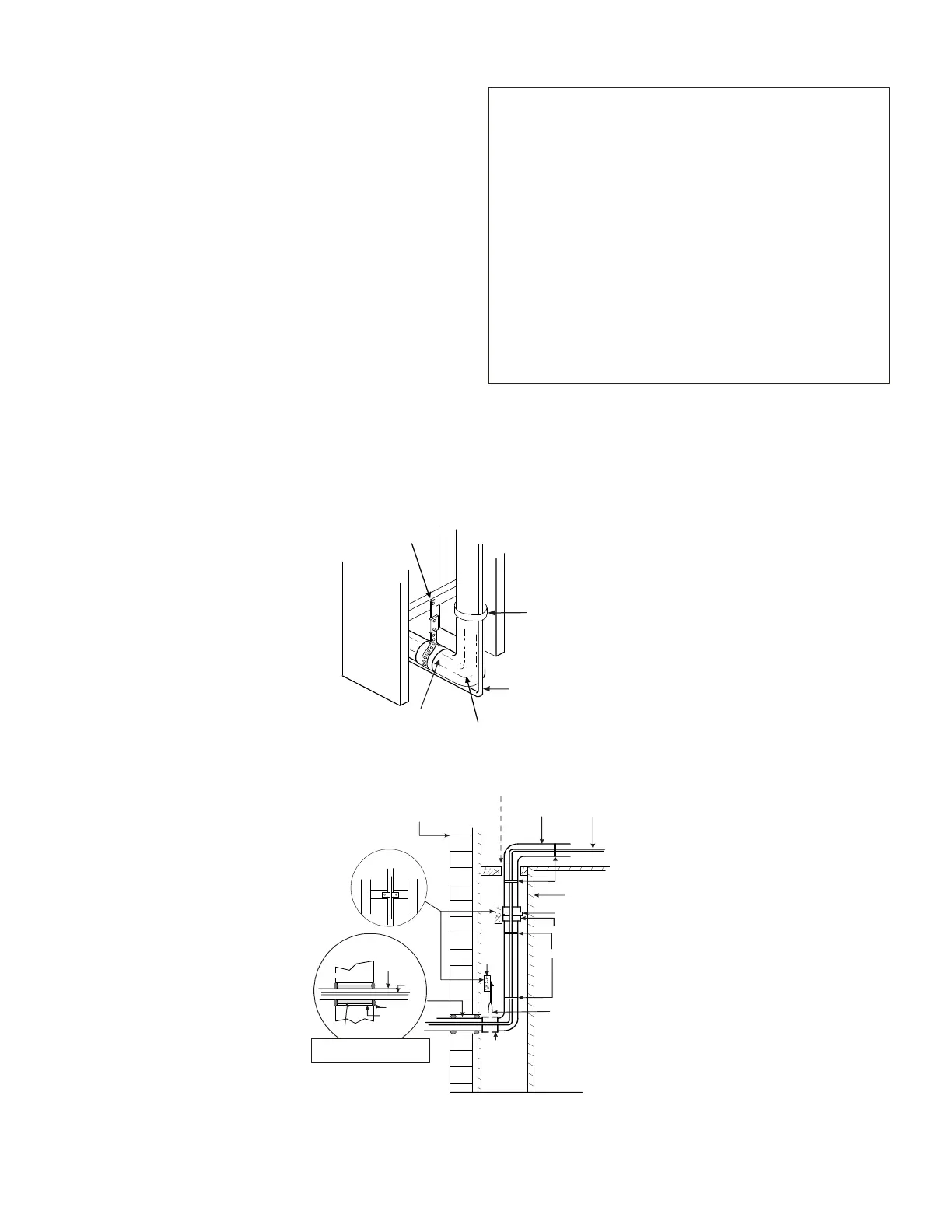
Liquid Line
Suction Line
Wrapped in Armaflex
®
Metal
Sleeve
Hanger
Wall
Stud
Liquid Line
Strapped to
Suction Line
Figure 1-1.
Installa�on of Refrigera�on Piping From Ver�cal to Horizontal
Outside Wall
Inside Wall
Liquid Line
Suction Line
IMPORTAN
- Refrigerant lines must not touch wall.
Strap
Sleeve
Strap
Sleeve
Wire Tie
Wire Tie
PVC Pipe
Caulk
Outside Wall
rmaflex
Wrapped
Suction Line
®
Liquid
Line
Wood Block
Between Studs
I
MPORTANT:
Refrigerant lines must NOT
come into contact with structure.
Fiberglass Insulation
Wood
Block
Figure 1-2. Installa�on of Refrigerant Piping (Ver�cal)
New construcon shown
NOTE: If line set is installed on the exterior of an outside wall, similar installa�on prac�ces are to be used.
IMPORTANT
To avoid overhea�ng the service valve, TXV, sensor, or filter
drier while brazing, wrap the component with a wet rag, or
use a thermal heat trap compound. Be sure to follow the
manufacturer’s instruc�on when using the heat trap
compound. Note: Remove Schrader valves from service
valves before brazing tubes to the valves. Use a brazing alloy
of 2% minimum silver content. Do not use flux.
Torch heat require
d to braze tubes of various sizes is
propor�onal to the size of the tube. Tubes of smaller size
require less heat to bring the tube to brazing temperature
before adding brazing alloy. Applying too much heat to any
tube can melt the tube. Service personnel must use the
appropriate heat level for the size of the tube being brazed.


 To Next Page