8
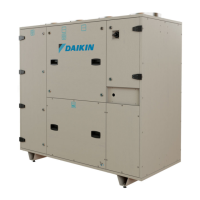
Modular T units are produced in a standard version which includes an aluminium counter-current heat
exchanger, ePM1 50% (F7) class lter in supply and ePM10 75% (M5) class lter in return, 50 mm double
skin panel with insulation in mineral wool.
The accessories can be purchased separately as an option and installed on site.
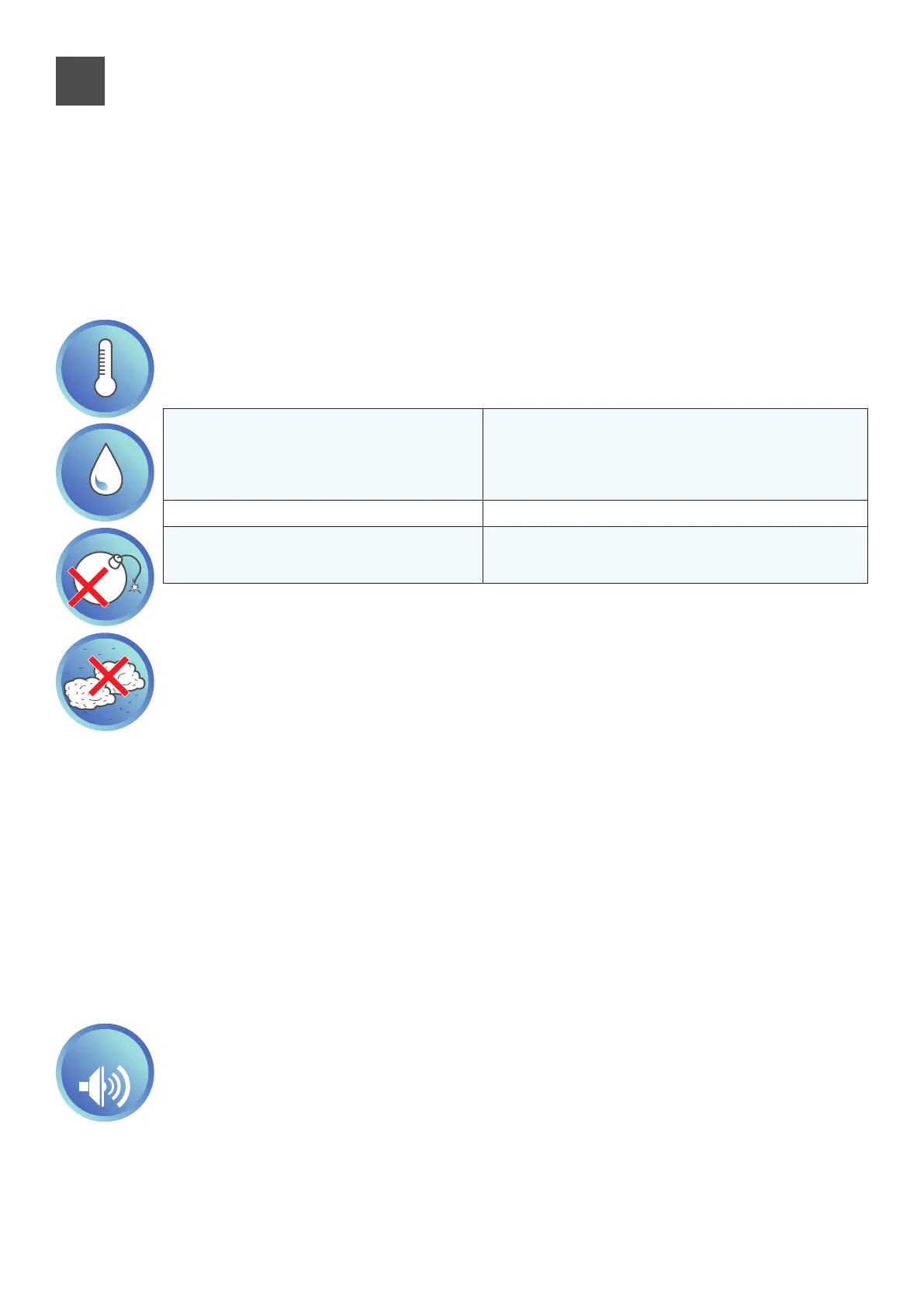
Environmental conditions
Modular T heat recovery units are designed to be positioned on the oor, indoors.
The unit cannot operate in environments containing explosive material and with
a high concentration of dust.
Outside air temperature
without heating coil:
• from -5°C to 46°C
with heating coil:
• from -25°C to 46°C
Operating environment temperature from -5°C to 46°C
Temperature of the environment with the unit o
(e.g., storage, transport, etc.)
from -40°C to 60°C
Thanks to its modularity, each unit is able to adapt to dierent needs in terms of air ow
and thermodynamic treatments.
Environmental contamination
Depending on the installation operating environment, specic regulations must be followed and all the
necessary precautions must be taken to avoid environmental issues (a system that operates in a hospital
or chemical environment can have problems dierent from those in other sectors, even from the point of
view of disposal of consumable parts, lters, etc.).
It is mandatory for the buyer to inform and train workers regarding proper procedures.
Noise
> 80 dB(A)
The units have been designed and manufactured in such a way as to produce sound emis-
sions below the threshold of
80 dB(A). It should be noted that every environment has its own
acoustic characteristics that can greatly aect the pressure values perceived during operation,
therefore it is necessary to consider the noise level data provided as a point of reference, while
it is up to the buyer to carry out the specic phonometric surveys on the installation site and
in the real conditions the unit will be used.
Unit characteristics
2



 To Next Page