EasyManua.ls Logo

DaytonAudio Reference Series - User Manual

Default Icon
6 pages
Print Icon
To Next Page IconTo Next Page
Loading...
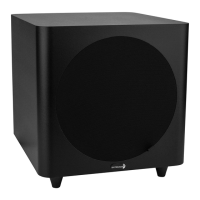
Passive Reference 8" Mini Subwoofer Kit
Thank you for purchasing the Passive Dayton Audio Reference 8" mini subwoofer kit. The
enclosure for this speaker kit was precision cut using CNC machinery for a tight fit to
make it easy to finish. With a little time and patience, your finished product will provide
years of enjoyment. Please follow these instructions for the best possible results.
Suggested tools and consumables:
Drill Rag or paper towels
Screwdriver Solder
Wood clamps (you can never have too many of these) Wire stripper/crimper
Sanding block and/or electric finishing sander #8 Wood Screws
Wood glue Polyurethane glue (Gorilla Glue)
Package contents:
First, empty the contents of the package and review parts to ensure everything has been
included and is in good condition. If any parts are missing or damaged, please contact our
customer service department at 1-800-338-0531.
Driver:
A) Dayton Audio RSS210HO-4 8" Reference Series HO Subwoofer 4 Ohm
Question and Answer IconNeed help?

Do you have a question about the DaytonAudio Reference Series and is the answer not in the manual?

Summary

Enclosure Components and Assembly

Enclosure Components

Lists the various parts of the subwoofer enclosure kit for identification.

Dry Fit and Preparation

Perform a dry fit to familiarize with parts and ensure proper cuts before gluing.

Surface Preparation

Ensure all enclosure parts are clean and free of dust and debris for optimal adhesion.

Attach First Panels

Apply glue to joining surfaces and attach the back panel with one top/bottom panel.

Attach Side and Brace

Glue a side panel and the brace to the existing assembly for structural integrity.

Attach Remaining Panels

Glue the second side panel and the second top/bottom panel to complete the enclosure box.

Install Baffle

Apply glue and attach the baffle with the driver cutout to the enclosure assembly.

Clamping and Glue Curing

Apply clamps to all edges, ensure flush fit, and allow glue to dry completely.

Finishing and Sanding

Fill any open seams with wood filler and sand all surfaces smooth for finishing.

Final Assembly and Setup

Install Power Terminals

Locate and install your preferred power terminals and internal wiring for the subwoofer.

Connect Speaker Wires

Connect the speaker wires to the appropriate terminals on the Dayton Audio subwoofer driver.

Mount the Driver

Carefully set the subwoofer driver into the enclosure cutout and secure it with fasteners.

Overview

The provided document is a manual for assembling a Passive Dayton Audio Reference 8" Mini Subwoofer Kit. This kit allows users to build a compact subwoofer enclosure designed for the Dayton Audio RSS210HO-4 8" Reference Series HO Subwoofer. The enclosure components are precision-cut using CNC machinery to ensure a tight fit and ease of assembly, aiming to provide years of enjoyment from the finished product.

Function Description:

The primary function of this kit is to provide all the necessary components (excluding power terminals and internal wiring) for constructing a passive subwoofer enclosure. A passive subwoofer requires an external amplifier to power it, as it does not have a built-in amplifier. The enclosure is designed to house the specified 8-inch subwoofer driver, optimizing its acoustic performance. The assembly process involves gluing together various MDF (Medium-Density Fiberboard) panels to form a sealed or ported enclosure (the specific type isn't explicitly stated but implied by the panel arrangement). Once assembled, the subwoofer can be integrated into an audio system to reproduce low-frequency sounds, enhancing the overall audio experience.

Important Technical Specifications:

  • Subwoofer Driver: Dayton Audio RSS210HO-4 8" Reference Series HO Subwoofer (4 Ohm impedance). This is a high-output (HO) driver, suggesting it's designed for powerful bass reproduction.
  • Enclosure Material: The panels are made from a material suitable for speaker enclosures, likely MDF, given the common use of this material in DIY speaker kits for its acoustic properties and ease of machining.
  • Precision Cut: The enclosure parts are precision-cut using CNC machinery, ensuring accurate dimensions and a tight fit for easier assembly and better acoustic performance.
  • Components Included:
    • Dayton Audio RSS210HO-4 8" Reference Series HO Subwoofer (A)
    • Baffle (B)
    • 2 x Side Panels (C)
    • Back Panel (D)
    • 2 x Top/Bottom Panels (E)
    • Brace (F)
    • #8 Wood Screws
  • Components Not Included (User-Supplied):
    • Power terminals (Spring terminals, binding posts, speakON connector, etc.)
    • Internal wiring
    • Tools and consumables (Drill, Screwdriver, Wood clamps, Sanding block/electric finishing sander, Wood glue, Rag or paper towels, Solder, Wire stripper/crimper, Polyurethane glue/Gorilla Glue, Wood filler/sawdust and wood glue mixture).

Usage Features:

The kit is designed for DIY enthusiasts and provides a hands-on experience in building a subwoofer.

  • Assembly Process: The manual outlines a step-by-step gluing process for the enclosure panels.
    1. Dry Fit: Users are instructed to perform a dry fit of all enclosure components before gluing to familiarize themselves with the parts and ensure proper cuts.
    2. Surface Preparation: Ensure all parts are free of dust and debris before assembly.
    3. Gluing Sequence: The panels are assembled in a specific order:
      • Back Panel (D) laid flat, rabbeted side up.
      • Back Panel (D) and one Top/Bottom Panel (E) are glued.
      • One Side Panel (C) is glued to the back and top/bottom panel assembly.
      • The Brace (F) is slid into place and glued to the back, top/bottom, and side panel assembly.
      • The other Side Panel (C) is glued to the assembly.
      • The other Top/Bottom Panel (E) is glued to the assembly.
      • The Baffle (B) is glued to the enclosure assembly.
    4. Clamping: Ample pressure and clamps are crucial to ensure glue spreads evenly and joints are tight. The manual suggests 6 clamps are typically sufficient for an enclosure of this size.
    5. Glue Squeeze-Out: Expect some glue squeeze-out, which is normal and indicates proper glue application.
    6. Drying: Allow the glue to dry according to the manufacturer's recommendations.
  • Driver Installation: After the enclosure is complete, the Dayton Audio RSS210HO-4 driver is carefully set into the cutout and secured using the provided #8 wood screws or the user's fastener of choice.
  • Wiring: Users need to install their preferred power terminals and internal wiring, then connect the speaker wires to the subwoofer driver.
  • Customization: The final finish of the enclosure (paint, veneer, etc.) is left to the user's preference, allowing for personalization.

Maintenance Features:

The manual primarily focuses on the assembly process and does not detail ongoing maintenance for the finished subwoofer. However, general maintenance for a passive subwoofer would include:

  • Cleaning: Periodically cleaning the exterior of the enclosure and the driver cone to prevent dust buildup.
  • Connection Checks: Ensuring all wiring connections (to the amplifier, power terminals, and driver) remain secure over time to prevent signal loss or intermittent performance.
  • Environmental Control: Protecting the subwoofer from extreme temperatures, humidity, and direct sunlight to prolong its lifespan and maintain the integrity of the enclosure and driver.
  • Enclosure Integrity: Regularly inspecting the enclosure for any signs of wear, damage, or loosening joints, especially if exposed to vibrations or movement. Any open seams or damage can be repaired with wood filler or glue.

The kit emphasizes a rewarding DIY experience, resulting in a high-quality passive subwoofer suitable for various audio setups.

DaytonAudio Reference Series Specifications

General IconGeneral
BrandDaytonAudio
ModelReference Series
CategorySubwoofer
LanguageEnglish

Related product manuals