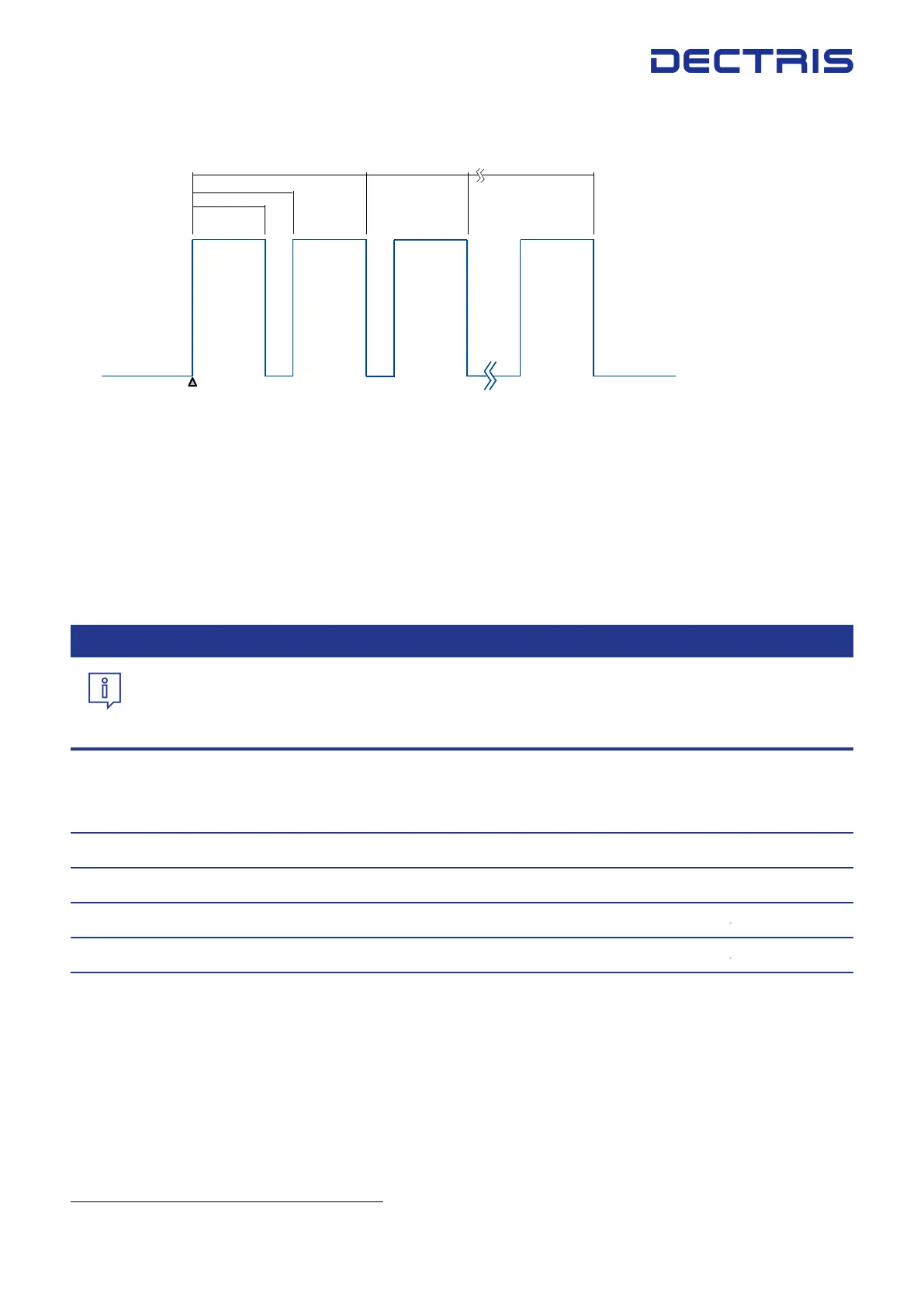
Figure 9.1: Series of exposures, dened by frame_time, count_time and nimages, triggered by a software trigger.
9.3. INTE – Internal (Software) Enable
In the trigger_mode ’inte’ a single image or series of images with varying exposure times can be started by is-
suing a number ntrigger of trigger commands. Unlike the trigger_mode ’ints’, the ’inte’ trigger commands take
an (optional) argument containing the count_time for the subsequent frame. In all enable modes the detector
conguration parameter nimages is implied to be 1. The number of frames in a series therefore is solely based
on the value of the parameter ntrigger.
Information #10
The congured count_time and frame_time should be close to the count time and frame time
of the shortest expected exposure in the congured series. The set count_time will be used
to calculate internal auto-summation conguration values (section 3.2.3). In most situations a
reasonable estimate of these values is sucient.
Example detector conguration for an internally enabled exposure series:
detector | cong | trigger_mode {”value”: ”inte”}
detector | cong | nimages {”value”: 1}
detector | cong | ntrigger {”value”: 3}
detector | cong | frame_time {”value”: 1.0} ( see 10)
detector | cong | count_time {”value”: 0.7} ( see 10)
The detector starts the rst exposure after a trigger command has been received and processed
2
. All subse-
quent frames have to be triggered by individual trigger commands with an (optional) argument containing the
count_time of the triggered frame. The detector stays armed until ntrigger are issued or the detector is dis-
armed. Figure 9.2 depicts an internally enabled exposure series dened by count_time (payload of the trigger
command) and ntrigger. Table 9.3 summarises the commands issued to record the same series.
2
As the trigger command is sent over an TCP/IP connection the exact latency of the start of the exposure is hard to predict.
DECTRIS EIGER
®
2 User Manual v1.8.2 21 | 36


 To Next Page