What to do if my Delta UPS is overloaded?
- AAllison JonesAug 3, 2025
If your Delta UPS is overloaded, it means the current load exceeds its capacity. To resolve this, remove some unnecessary devices to ensure the total load capacity is below 95%.
What to do if my Delta UPS is overloaded?
If your Delta UPS is overloaded, it means the current load exceeds its capacity. To resolve this, remove some unnecessary devices to ensure the total load capacity is below 95%.
How to fix OVER TEMPERATURE on Delta Ultron GES203HH33A035 UPS?
If your Delta UPS displays an 'OVER TEMPERATURE' warning, it means the internal temperature is too high. Try the following: * Ensure the UPS is in a well-ventilated area. * Reduce the number of connected devices to decrease the load. * Check if the fans are functioning correctly.
What to do if Delta UPS shows PFC AMBIENT OVER TEMP. FAIL?
If your Delta UPS shows a 'PFC AMBIENT OVER TEMP. FAIL' error, the UPS temperature is too high. You can: 1. Move the UPS to a well-ventilated location. 2. Decrease the amount of connected loads. 3. Verify that the fans are running normally.
What to do if Delta Ultron GES203HH33A035 shows BATTERY LOW SHUTDOWN?
If the Delta UPS displays 'BATTERY LOW SHUTDOWN', it indicates that the battery voltage is low. To resolve this, charge the batteries.
What to do if Delta UPS shows DC BUS HIGH SHUTDOWN?
If your Delta UPS displays a 'DC BUS HIGH SHUTDOWN' error, this indicates that there may be abnormalities with the output or internal faults within the UPS. In this case, contact service personnel for assistance.
What to do if Delta Ultron GES203HH33A035 UPS shows DC BUS LOW SHUTDOWN?
If your Delta UPS displays a 'DC BUS LOW SHUTDOWN' error, this indicates that there may be abnormalities with the output or internal faults within the UPS. In this case, contact service personnel for assistance.
Guidelines for safe placement of the UPS unit, emphasizing ventilation and environmental conditions.
Crucial safety instructions for connecting the UPS to power sources and ensuring proper grounding.
Safety precautions and guidelines for operating the UPS with electronic equipment and avoiding hazards.
Proper procedures for storing the UPS unit before installation and after usage to maintain its condition.
Explanation of symbols used in the manual and on the UPS interface for user understanding.
Lists the safety and electromagnetic compatibility (EMC) standards the product meets.
Overview of the HPH Integrated Battery Series UPS, its technology, and available power levels.
Steps to verify the UPS and its accessories upon delivery to ensure completeness and integrity.
Detailed explanation of the UPS's advanced functions, technologies, and operational features.
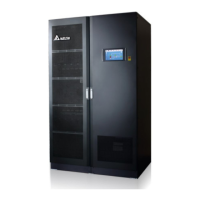
Visual representation and physical dimensions of the UPS unit.
Identification of components and features on the UPS front panel.
Details of the UPS interior, including battery fuse holders, accessible via the front door.
Explanation of the UPS control panel elements, buttons, and LED indicators.
Identification and description of all connections, ports, and switches on the UPS rear panel.
Description of the UPS operation when supplied by the inverter from AC input.
Explanation of UPS operation when input voltage is within the normal range.
Details of the energy-saving ECO operation mode for improved efficiency.
How the UPS operates when running on battery power during an outage.
UPS operation where the load is supplied directly by utility power.
UPS operation where the output frequency is manually set to 50Hz or 60Hz.
Interface for installing SNMP or Relay I/O/ModBus cards for network monitoring.
Slot for various mini cards enabling network, USB, or dry contact communication.
Ports used for connecting multiple UPS units for parallel operation and load sharing.
DIP switches used to configure parallel operation settings for multiple UPS units.
Serial port for computer communication, status monitoring, and UPS control.
Programmable output contacts for notifying external systems of UPS events.
Input contacts for receiving external signals, such as generator status.
Remote Emergency Power Off port for immediate shutdown of the UPS.
Port for connecting and monitoring an external charger box.
Essential safety precautions and recommendations before installing and wiring the UPS.
Requirements for the physical location, including space, cleanliness, and environmental conditions.
Guidelines for safely moving and handling the UPS unit to prevent damage.
Methods and detailed steps for physically installing the UPS unit on the ground.
Specific safety guidelines and checks required before performing electrical wiring.
Procedures for modifying the UPS to accept single or dual AC power inputs.
Detailed wiring procedures for connecting a single UPS unit to power sources.
Wiring procedures for connecting multiple UPS units to operate in parallel.
Safety guidelines and procedures for connecting external battery cabinets to the UPS.
Steps required to connect the UPS to the main AC power supply and external batteries.
Procedure for starting up the UPS unit using the ON key.
Procedure for safely shutting down the UPS unit via the OFF and DOWN keys.
Overview of the UPS LCD menu structure and navigation paths.
Display information for UPS units operating in parallel mode, including ID and status.
Accessing measurement and maintenance functions from the main menu.
Viewing UPS operating parameters like voltage, current, load, and battery status.
Accessing system information, logs, and settings for maintenance purposes.
Description of various optional accessories available for enhancing UPS functionality.
Procedures for cleaning the UPS unit and performing regular inspections.
Guidelines for maintaining UPS batteries to ensure optimal lifespan and performance.
Checks and actions for ensuring proper fan operation and airflow.
Solutions for common alarm messages displayed on the UPS LCD.
Solutions for less frequent alarm messages, faults, and abnormal conditions.
Detailed technical data for UPS models including power, input, output, and efficiency.
Information on communication interfaces, dimensions, weight, and environmental ratings.
Details of the product warranty, including coverage, exclusions, and service information.
Guidelines for safe placement of the UPS unit, emphasizing ventilation and environmental conditions.
Crucial safety instructions for connecting the UPS to power sources and ensuring proper grounding.
Safety precautions and guidelines for operating the UPS with electronic equipment and avoiding hazards.
Proper procedures for storing the UPS unit before installation and after usage to maintain its condition.
Explanation of symbols used in the manual and on the UPS interface for user understanding.
Lists the safety and electromagnetic compatibility (EMC) standards the product meets.
Overview of the HPH Integrated Battery Series UPS, its technology, and available power levels.
Steps to verify the UPS and its accessories upon delivery to ensure completeness and integrity.
Detailed explanation of the UPS's advanced functions, technologies, and operational features.
Visual representation and physical dimensions of the UPS unit.
Identification of components and features on the UPS front panel.
Details of the UPS interior, including battery fuse holders, accessible via the front door.
Explanation of the UPS control panel elements, buttons, and LED indicators.
Identification and description of all connections, ports, and switches on the UPS rear panel.
Description of the UPS operation when supplied by the inverter from AC input.
Explanation of UPS operation when input voltage is within the normal range.
Details of the energy-saving ECO operation mode for improved efficiency.
How the UPS operates when running on battery power during an outage.
UPS operation where the load is supplied directly by utility power.
UPS operation where the output frequency is manually set to 50Hz or 60Hz.
Interface for installing SNMP or Relay I/O/ModBus cards for network monitoring.
Slot for various mini cards enabling network, USB, or dry contact communication.
Ports used for connecting multiple UPS units for parallel operation and load sharing.
DIP switches used to configure parallel operation settings for multiple UPS units.
Serial port for computer communication, status monitoring, and UPS control.
Programmable output contacts for notifying external systems of UPS events.
Input contacts for receiving external signals, such as generator status.
Remote Emergency Power Off port for immediate shutdown of the UPS.
Port for connecting and monitoring an external charger box.
Essential safety precautions and recommendations before installing and wiring the UPS.
Requirements for the physical location, including space, cleanliness, and environmental conditions.
Guidelines for safely moving and handling the UPS unit to prevent damage.
Methods and detailed steps for physically installing the UPS unit on the ground.
Specific safety guidelines and checks required before performing electrical wiring.
Procedures for modifying the UPS to accept single or dual AC power inputs.
Detailed wiring procedures for connecting a single UPS unit to power sources.
Wiring procedures for connecting multiple UPS units to operate in parallel.
Safety guidelines and procedures for connecting external battery cabinets to the UPS.
Steps required to connect the UPS to the main AC power supply and external batteries.
Procedure for starting up the UPS unit using the ON key.
Procedure for safely shutting down the UPS unit via the OFF and DOWN keys.
Overview of the UPS LCD menu structure and navigation paths.
Display information for UPS units operating in parallel mode, including ID and status.
Accessing measurement and maintenance functions from the main menu.
Viewing UPS operating parameters like voltage, current, load, and battery status.
Accessing system information, logs, and settings for maintenance purposes.
Description of various optional accessories available for enhancing UPS functionality.
Procedures for cleaning the UPS unit and performing regular inspections.
Guidelines for maintaining UPS batteries to ensure optimal lifespan and performance.
Checks and actions for ensuring proper fan operation and airflow.
Solutions for common alarm messages displayed on the UPS LCD.
Solutions for less frequent alarm messages, faults, and abnormal conditions.
Detailed technical data for UPS models including power, input, output, and efficiency.
Information on communication interfaces, dimensions, weight, and environmental ratings.
Details of the product warranty, including coverage, exclusions, and service information.
| Category | UPS |
|---|---|
| Brand | Delta |
| Model | Ultron GES203HH33A035 |
| Frequency | 50/60 Hz |
| Input Voltage | 380/400/415 VAC |
| Output Voltage | 380/400/415 VAC |
| Battery Type | Lead-acid |
| Battery Backup Time | Depends on load |
| Transfer Time | 0 ms |
| Efficiency | Up to 96% |
| Communication Interface | RS232, USB, SNMP |
| Operating Temperature | 0 to 40 °C |
| Humidity | 0 to 95% (non-condensing) |