Rev 07/04/2015
8
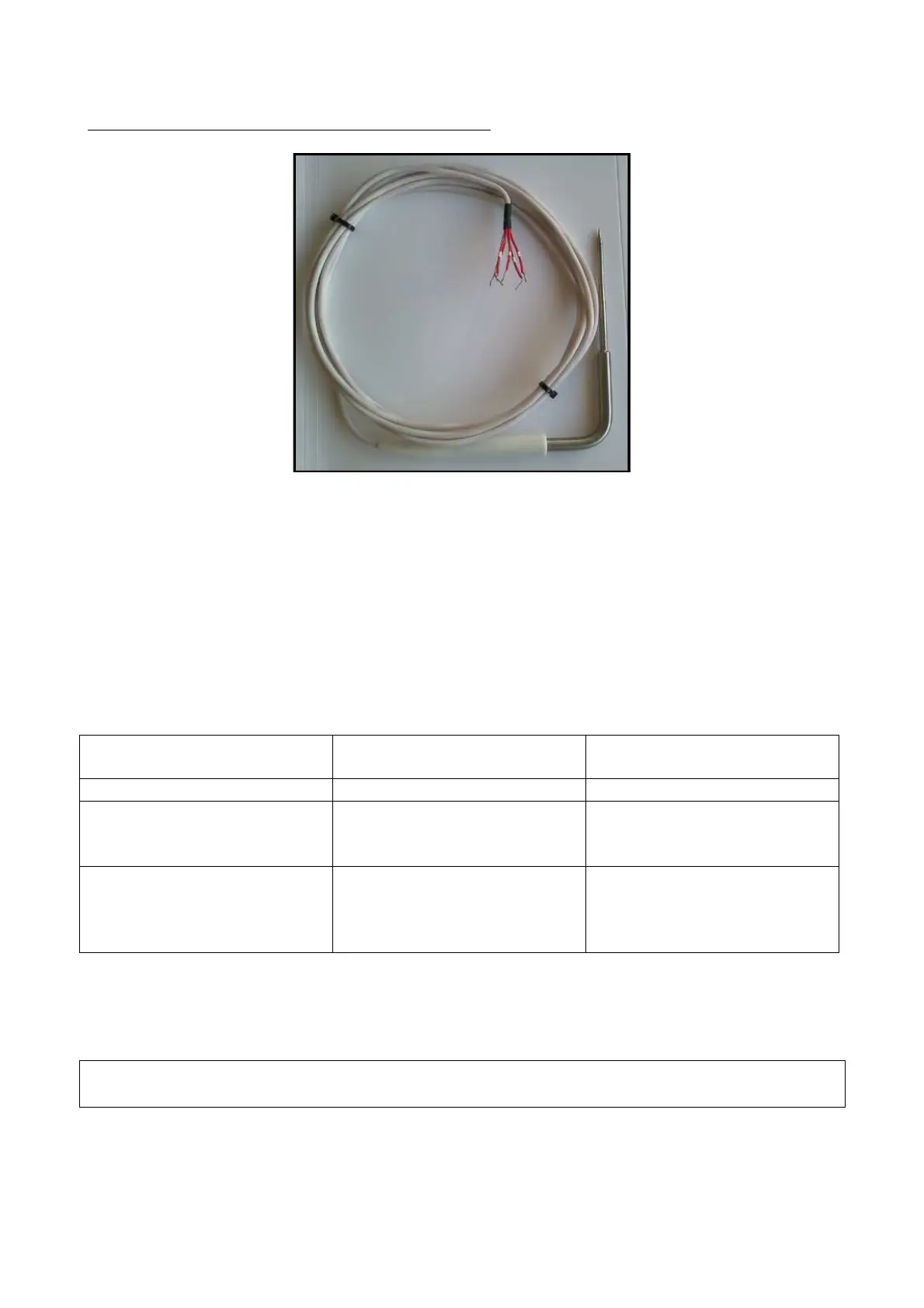
Pt1000 NEEDLE PROBE TYPES (MULTICORE)
3.1.1. Checking the Probes
When a Probe alarm occurs, it means there is something wrong with the sensor reading.
The problem may be in either the sensor wires or the sensor itself. Probe alarms Er0, Er1,
and Er3 (or error messages as per Touch Screen alarm list at 2.1.) are commonly due to
an interrupted (open) circuit in the wires.
The cause may also be a short to the chassis or the two leads shorting together.
To find the cause of the alarm, disconnect the indicated probe and check the resistance
between the two wires (or between any of the 5 wires of a multiprobe type).
If the Ohm reading is 0 Probe circuit is shorted
between the two wires
Replace the probe
Ohm reading is infinity, ∞ Probe is open Replace the probe
Reading matches the
resistance chart at a known
temperature
Probe is good Another problem is the
cause
Reading is not 0 or ∞ and
does
not match the resistance
chart
Probe is out of range Replace the probe
If none of these choices is the case:
Ohm out each wire to the chassis. If the reading is 0 or anything less than ∞, the probe is
shorted to the chassis and must be replaced.
NOTE: A spare probe can be used in place of the suspected one. If the alarm
continues, the problem is something other than the probe.
Other causes to the Probe Alarms may be searched in the probe to board terminal
connection. Check for rust, water, humidity, loosen/lost connections on the probe terminal
block.



 To Next Page