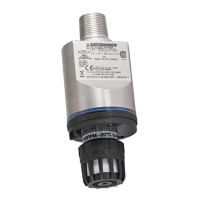
Need help?
Do you have a question about the Det-Tronics PointWatch Eclipse PIRECL and is the answer not in the manual?
Information on typical ambient CO2 levels and their implications.
Describes how the infrared gas detection mechanism works.
Describes the standard 4-20 mA current loop output.
Details the optional relay outputs for alarm and fault signals.
Explains the data logging feature for events and history.
Describes compatibility with third-party modules.
Details input voltage, power consumption, and temperature range.
Specifies gas detection range, options, and programming methods.
Describes alarm relay types, rating, and defaults.
Details fault relay and optional Modbus output.
Covers calibration, response time, accuracy, and self-diagnostics.
Details ingress protection, housing material, wiring, and safety classification.
Describes optics protection and the HART communication port.
Points to appendices for detailed certification information.
Specifies physical dimensions and shipping weight.
Details the product's warranty period.
Critical warnings on wiring, hazardous areas, and service.
Covers wiring practices and selecting optimal mounting spots.
Details mounting bolt needs and surface support.
Recommends orientation for performance and visibility.
Explains the purpose and importance of the port cover.
Guides on selecting an adequate power supply.
Recommends cable type, shielding, and conduit installation.
Details voltage drop, wire sizing, and maximum length calculations.
Explains optional relay contacts and settings changes.
Covers cable termination, stripping, shields, and grounding.
Recommends PIRTB for remote calibration and provides a warning.
Describes the function of the internal magnetic switch.
Details the optional HART communication port and its requirements.
Warns against opening covers in explosive atmospheres.
Explains the LED indicators for status, alarms, and faults.
Describes baffle function, removal, and cleaning advice.
Explains the hour meter, event logs, and calibration logs.
Describes the PIRTB for remote calibration and its benefits.
Lists guidelines for optimal remote calibration setup.
States default settings and describes operating modes.
Details the linear current loop output and calculation formula.
Lists the three available fault signaling modes.
Explains Eclipse and User Defined fault signaling practices.
Discusses PIR9400 mode compatibility and limitations.
Overview of startup readiness and safety checks.
Essential checklist for electrical connections and power verification.
Essential checklist for physical installation and sealing.
Essential checklist for site suitability and calibration readiness.
Explains calibration capabilities and the two main options.
Details the two-step normal calibration process.
Describes the one-step zero calibration process.
Important advice on gas type, conditions, and equipment.
Lists the various methods to start calibration.
Step-by-step guide for calibration using magnetic switch.
Explains time-out conditions and how to abort calibration.
Defines conditions for completing the return to normal mode.
Explains time-out conditions and how to abort calibration.
Instructions for periodic inspection and baffle cleaning.
Procedures for cleaning optical surfaces and maintaining O-rings.
Reminds to install protective caps and covers.
How to identify faults using the 4-20 mA output.
Information on replacement parts and returning the device for repair.
Refers to model matrix, lists calibration equipment and spare parts.
Provides contact details for technical support.
Identifies model series and thread type options.
Specifies output configurations and weather baffle options.
Lists international approval types and explosion classifications.
Details CSA certification and conditions for use.
Clarifies approval scope for connected apparatus and software.
Details ATEX certification and conditions for use.
Specifies HART port electrical parameters.
Lists general safety conditions for ATEX installations.
Lists safety conditions specific to the HART port.
Product warning about explosive atmospheres and temperature limits.
Requirements for certified cable entry devices and conduit plugs.
Describes terminal compartment design and shielded cable needs.
Lists relevant EN standards and CE directive compliance.
Details IECEx certification and conditions for use.
Specifies HART port electrical parameters.
Lists general safety conditions for IECEx installations.
Lists safety conditions specific to the HART port.
Lists relevant IEC standards for the device.
Warning about applying hazardous location ratings.
Details INMETRO certification and conditions for use.
Notes requirements for cable entry and cover fastening.
Outlines HART communication for monitoring and setup.
Guides on connecting the HART Handheld Communicator.
Notes on analog output termination, loop resistance, and generic mode.
Steps to check for the Eclipse DDL in the communicator.
Displays the menu trees for HART communication.
Describes the main menu options: Device Variables, Diagnostics, Device Setup.
Describes connection points for the HART Communicator.
Notes minimum loop resistance for HART communication.
Lists common HART commands for setup, diagnostics, and service.
Lists parameters typically verified after HART setup.
Describes the initial menu and navigation options.
Overview of Device Variables, Diagnostics, and Device Setup submenus.
Lists updated process variables and their values.
Offers device and HART identification information.
Shows detector status information.
Allows performing various device tests.
Initiates calibration routine and sets preferences.
Shows extensive historical information about the unit.
Lists types of historical data available.
Submenus for max and min temperature history.
Submenus for calibration log and event log details.
Basic device setup parameters.
Detailed setup parameters including sensor and gas info.
Controls device parameter write protection.
Configures gas alarms, fault outputs, and HART output.
Configures communication port settings (Modbus, ASCII).
Lists stored device parameters and information.
Explains the Modbus interface with a system master.
Details typical RS-485/Modbus wiring architecture.
Describes the RS-485 interface and output drivers.
Lists supported Modbus function codes.
Defines memory structure and access types.
Holds factory-determined values for the Eclipse.
Lists configurable device parameters and their addresses.
Explains the memory area for status information.
Lists status information items and their addresses.
Bits indicating the device's operating mode.
Status for minimum temperature readings.
Bits indicating the device's operating mode.
Bits indicating active faults.
Area for initiating device actions via command words.
Lists control words and their addresses.
Lists command descriptions and their corresponding bits.
Area for storing fault and calibration logs.
Lists event log entries and addresses.
Codes for baud rate and parity settings.
Code for gas type selection.
Codes for calibration gas type and method.
Codes for analog fault signaling and calibration steps.
Codes for alarm latch configuration.
Codes for event log entries and calibration logs.
Describes ASCII protocol configuration and use.
Details the product's warranty terms and conditions.
Warns against user repair and voids warranty.
Provides a control drawing for system integration with CSA certification.
Emphasizes reading and following live maintenance procedures.
States that CSA certified drawing has no modifications allowed.
Clarifies approval scope for connected apparatus.
 General
| Brand | Det-Tronics |
|---|---|
| Model | PointWatch Eclipse PIRECL |
| Category | Gas Detectors |
| Language | English |

 To Next Page