OPERATOR’S MANUAL with Maintenance Information
Safety Rules
5
machine.
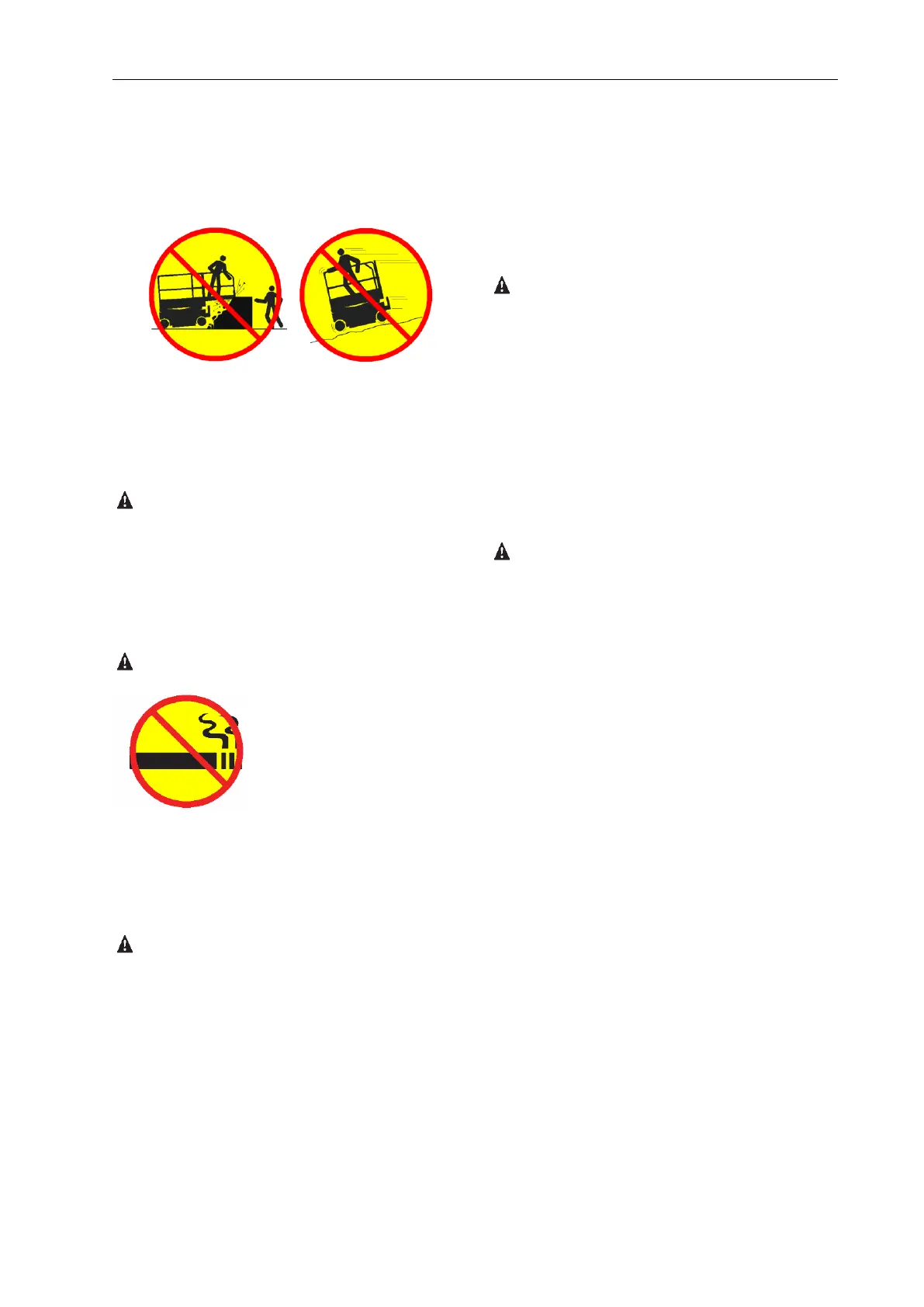
Do not lower the platform unless the area below
is clear of personnel and obstructions.
Limit travel speed according to the condition of
the ground surface, congestion, slope, location
of personnel, and any other factors which may
cause collision.
Component Damage Hazards
Do not use any battery or charger greater than
24V.
Do not use the machine as a ground for
welding.
Explosion and Fire Hazards
Do not operate the machine in hazardous
locations or locations where potentially
flammable or explosive gases or particles may
be present.
Damaged Machine Hazards
Do not use a damaged or malfunctioning
machine.
Conduct a thorough pre-operation inspection of
the machine and test all functions before each
work shift. Immediately tag and remove from
service a damaged or malfunctioning machine.
Be sure all maintenance has been performed as
specified in this manual and the appropriate
DINGLI service manual.
Be sure all decals are in place and legible.
Be sure the operator’s, safety and
responsibilities manuals are complete, legible
and in the storage container located in the
platform.
Crushing Hazards
Keep hands and limbs out of scissors.
Use common sense and planning when
operating the machine with the controller from
the ground. Maintain safe distances between
the operator, the machine and fixed objects.
Maintain a firm grasp on the platform rail when
removing the rail pins. Do not allow the platform
guard rails to fall.
Bodily Injury Hazard
Do not operate the machine with a hydraulic oil
or air leak. An air leak or hydraulic leak can
penetrate and/or burn skin.
Improper contact with components under any
cover will cause serious injury. Only trained
maintenance personnel should access
compartments. Access by the operator is only
advised when performing a pre-operation
inspection. All compartments must remain
closed and secured during operation.
.


 To Next Page