EasyManua.ls Logo

Dometic A&E Systems 8500 - User Manual

Dometic A&E Systems 8500
9 pages
Print Icon
To Next Page IconTo Next Page
Loading...
1
USAUSA
USAUSA
USA
SERVICE OFFICE
The Dometic Corp.
509 So. Poplar St.
LaGrange, IN 46761
219-463-4858
CANADACANADA
CANADACANADA
CANADA
Dometic Dist.
866 Langs Dr.
Cambridge, Ontario
CANADA N3H 2N7
519-653-4390
For Service CenterFor Service Center
For Service Center
Assistance Call:Assistance Call:
Assistance Call:
800-544-4881
Form No. 3107243.002 9/96
©1996 The Dometic Corp.
LaGrange, IN 46761
INSTINST
INSTINST
INST
ALLAALLA
ALLAALLA
ALLA
TIONTION
TIONTION
TION
INSTR INSTR
INSTR INSTR
INSTR
UCTIONSUCTIONS
UCTIONSUCTIONS
UCTIONS
8500 & 90008500 & 9000
8500 & 90008500 & 9000
8500 & 9000
MODELSMODELS
MODELSMODELS
MODELS
FF
FF
F
abric Roller abric Roller
abric Roller
TT
TT
T
ube Assembube Assemb
ube Assemb
ll
ll
l
yy
yy
y
withwith
withwith
with
Recessed UniverRecessed Univer
Recessed Univer
sal Harsal Har
sal Harsal Har
sal Har
dd
dd
d
wareware
wareware
ware
8500 & 90008500 & 9000
8500 & 90008500 & 9000
8500 & 9000
®

Other manuals for Dometic A&E Systems 8500

Question and Answer IconNeed help?

Do you have a question about the Dometic A&E Systems 8500 and is the answer not in the manual?

Summary

INSTALLATION INSTRUCTIONS

Recess Specifications

Details required recess dimensions, structure, and alignment for awning installation.

Mount Awning Above Entry Door

Instructions for installing the door roller and edge guard for awning clearance.

Mount Arms to Top Castings

Securely attaches the awning arms to the top castings using specified hardware.

Install Bottom Mounting Brackets

Attaches bottom brackets to the angled mounting plate and vehicle using screws.

Install Top Mounting Brackets

Aligns and secures top brackets in the recess using pre-drilled holes and screws.

Install Stop Plugs

Installs stop plugs on the adjustable arm for proper awning function and clearance.

Release Pre-Set Tension

Removes the cotter pin from the Safe-T-Lock™ end to release factory pre-set torsion.

OPERATING INSTRUCTIONS

Caution: Weather Damage

Warns to close the awning during heavy rain, wind, or when unattended to prevent damage.

Open Awning: Loosen Knobs and Disengage Latch

Loosens adjustment knobs and disengages travel latch tabs to prepare for opening.

When to Get More Help

Advises on securing hardware for travel and contacting a technician for malfunctions.

Overview

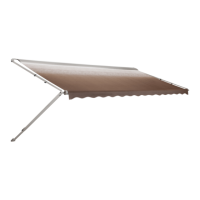
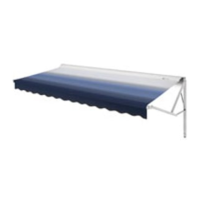
This document provides comprehensive installation and operating instructions for the A&E Systems 8500 & 9000 Fabric Roller Tube Assembly with Recessed Universal Hardware. These awnings are designed for recreational vehicles, including motorhomes, mini-motorhomes, 5th wheels, and travel trailers with both straight and curved sides. The system is engineered to integrate seamlessly into a special pocket built into the side of the vehicle, providing a clean and streamlined appearance.

Function Description

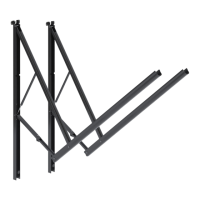
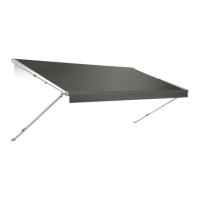
The A&E Systems 8500 & 9000 awning serves as an extendable shade solution for recreational vehicles. It consists of a fabric roller tube assembly and recessed universal hardware, which includes support arms, mounting brackets, and a tensioning system. The primary function is to provide protection from sun and light rain, enhancing comfort and usability of the outdoor space adjacent to the vehicle. The awning extends and retracts, offering flexibility in managing outdoor conditions.

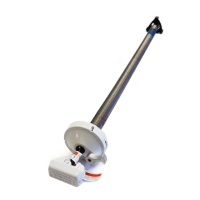
The core of the system is the fabric roller tube assembly, which stores the awning fabric when retracted and deploys it when extended. This assembly is supported by two main arms that attach to the vehicle's side. The recessed hardware design means that much of the support structure is integrated into a pocket within the vehicle's sidewall, contributing to a sleek aesthetic when the awning is closed.

A key feature is the Safe-T-Lock™ system, which is part of the tensioning mechanism. This system ensures that the awning remains securely rolled up during travel and provides proper tension when deployed. The installation process involves carefully mounting the arms to top castings, securing bottom mounting brackets, and aligning the entire assembly within the vehicle's recess. Once installed, the awning can be easily extended and retracted using a pull strap and a lock lever.

The awning is designed to be robust, with components like hex head cap screws, lock washers, and nylon insert lock nuts ensuring secure attachment. The installation also emphasizes sealing all bolt and screw locations with clear silicone to prevent water entry, protecting the vehicle's structure.

For vehicles with entry doors, a door roller or door edge-guard must be installed above the door handle or on the screen door. This prevents the sharp corner of the door from contacting and potentially damaging the underside of the awning fabric when the door is swung open while the awning is extended low. This detail highlights the thoughtful design considerations for user convenience and product longevity.

The system also supports optional accessories such as the A&E Optima Tension Rafter and the A&E Automatic Center Support. These accessories, purchased separately, can be used to provide additional stability and support to the awning, particularly in windy conditions or for extended use. The tension rafter helps maintain fabric tautness, while the center support prevents sagging over long spans.

Usage Features

Operating the A&E Systems 8500 & 9000 awning is designed to be straightforward, involving a series of steps for both opening and closing.

Opening the Awning:

  1. Loosen Adjustment Knob and Disengage Travel Latch: Begin by loosening the black adjustment knob located behind each main arm. Simultaneously, push the travel latch tab toward the center of the arm to disengage it. This releases the arm from its secured travel position.
  2. Release Lock Lever: Pull the lock lever to release the awning from its fully retracted state. This action allows the roller tube to begin unrolling.
  3. Pull Awning Out: Hook a pull rod into the loop of the pull strap. Gently pull the awning all the way out until it is fully extended.
  4. Slide Rafters Up: Once extended, slide the rafters up and insert them into the casting on the main arms. This provides structural support to the fabric.
  5. Remove Fabric Slack: Pull down and out on the sliding rafter to remove any slack from the fabric. Then, tighten the black adjustment knob to secure the rafter in place. Repeat this process for both sides.
  6. Position Pull Strap: Slide the pull strap to the right end of the roller tube and wrap it around the main arm. This keeps the strap tidy and out of the way.
  7. Optional Carport Position: For a carport configuration, press the release lever at the bottom end of one main arm and pull the arm assembly outward to a vertical position. Reposition the foot and drive stakes through it into the ground for added stability.
  8. Adjust Arm Height: Rotate the lock spring to the "UNLOCK" position. Pull up on the lift handle to raise the arm assembly to the desired height. Swing the handle in to allow the lock button to snap into one of the holes. Finally, rotate the lock spring back to the "LOCK" position to secure the arm height. Repeat for the other side.
  9. Water Run-off Adjustment: Lower the end furthest from the door to create a slight slope, allowing water to flow off the awning fabric, preventing pooling.

Closing the Awning:

  1. Remove Stakes and Reposition Foot: If stakes were used, pull them from the ground. Return the foot to its original position, swing the arm toward the vehicle, and snap the patio foot into the bracket. Repeat for the other side.
  2. Release Lock Button and Lower Arm: Rotate the lock spring to the "UNLOCK" position and raise the lock handle to release the lock button. Lower the main arm to the stop plug. Swing the handle in to engage the lock button in a hole. Rotate the lock spring back to the "LOCK" position. Repeat for the other side.
  3. Loosen Adjustment Knob and Slide Rafter Arm Down: Loosen the black adjustment knob, lift the slider catch, and slide the rafter arm down to the bottom of the main arm. Leave the black adjustment knob loose. Repeat for the other side.
  4. Retract Awning: Grasp the pull strap, pull it toward you, and flip the locking lever to the "ROLL UP" position. This initiates the retraction of the awning.
  5. Control Retraction Speed: Slide the pull strap to the center of the awning. Using the strap to control the speed, allow the awning to return slowly to the vehicle side. It's important to wind the strap diagonally to prevent a bulge in the fabric as it rolls up.
  6. Secure for Travel: Tighten the black adjustment knob, squeeze the rafter into the arms to engage the latch. Repeat for the other side. The awning is now ready for travel. Ensure the Safe-T-Lock™ is in the roll-up position and engage the travel latches.

Important Safety Note: A crucial warning is provided regarding weather conditions. Whenever heavy or prolonged rain or wind is anticipated, or if the awning will be left unattended, it is imperative to close the awning. Damage resulting from weather is explicitly not covered by warranty, underscoring the importance of responsible operation.

Maintenance Features

Proper maintenance is essential to ensure the longevity and optimal performance of the A&E Systems 8500 & 9000 awning. The manual provides several helpful hints for awning care:

  1. Lubrication: At the beginning of each season and as needed, apply silicone spray lubricant to the awning's moving parts. This helps ensure smooth operation of the mechanisms and prevents wear.
  2. Drying Wet Awning: If the awning is rolled up while wet, it should be rolled out as soon as conditions allow and left to dry completely before being rolled up again. This practice is crucial for preventing mildew growth and rotting of the fabric.
  3. Cleaning: Mildew does not form on the fabric itself but on accumulated dust, dirt, and grime. Therefore, the vinyl fabric should be periodically cleaned with mild soap and water to prevent mildew buildup and maintain its appearance.
  4. Entry Door Clearance: Always ensure that the awning is extended high enough before opening the entry door. This prevents the door from striking the awning fabric or hardware, which could cause damage.
  5. "Travel Line" Note: The manual notes that a slight "travel line" may appear where the door roller contacts the awning fabric. This is considered normal and does not affect the integrity of the awning, indicating that minor cosmetic marks in this area are not a cause for concern.

Troubleshooting and Support:

The manual also includes guidance on when to seek further help:

  • Hardware Security: If the hardware does not lock to the coach when closing, ensure the foot is repositioned to the storage position and the arm is lowered fully onto the stop bolt.
  • Malfunctions: If any malfunctions occur that cannot be corrected by reviewing the manual, users are advised to contact a qualified Dometic service technician. This ensures that complex issues are addressed by professionals, preventing potential damage from improper repairs.

Overall, the A&E Systems 8500 & 9000 awning is a well-designed product for RVs, offering both functionality and aesthetic integration. Adhering to the detailed installation, operation, and maintenance instructions provided in the manual will ensure a safe, efficient, and long-lasting experience for users.

Dometic A&E Systems 8500 Specifications

General IconGeneral
OperationManual
MaterialVinyl
TypePatio Awning
Length8 feet
Mounting TypeWall-mounted
Warranty1-Year Limited

Related product manuals