OP001762Inspection, Maintenance and Adjustment
4-16
6. If oil level is above the "H" mark drain oil.
A. Shut down engine and wait for the hydraulic oil to
cool down.
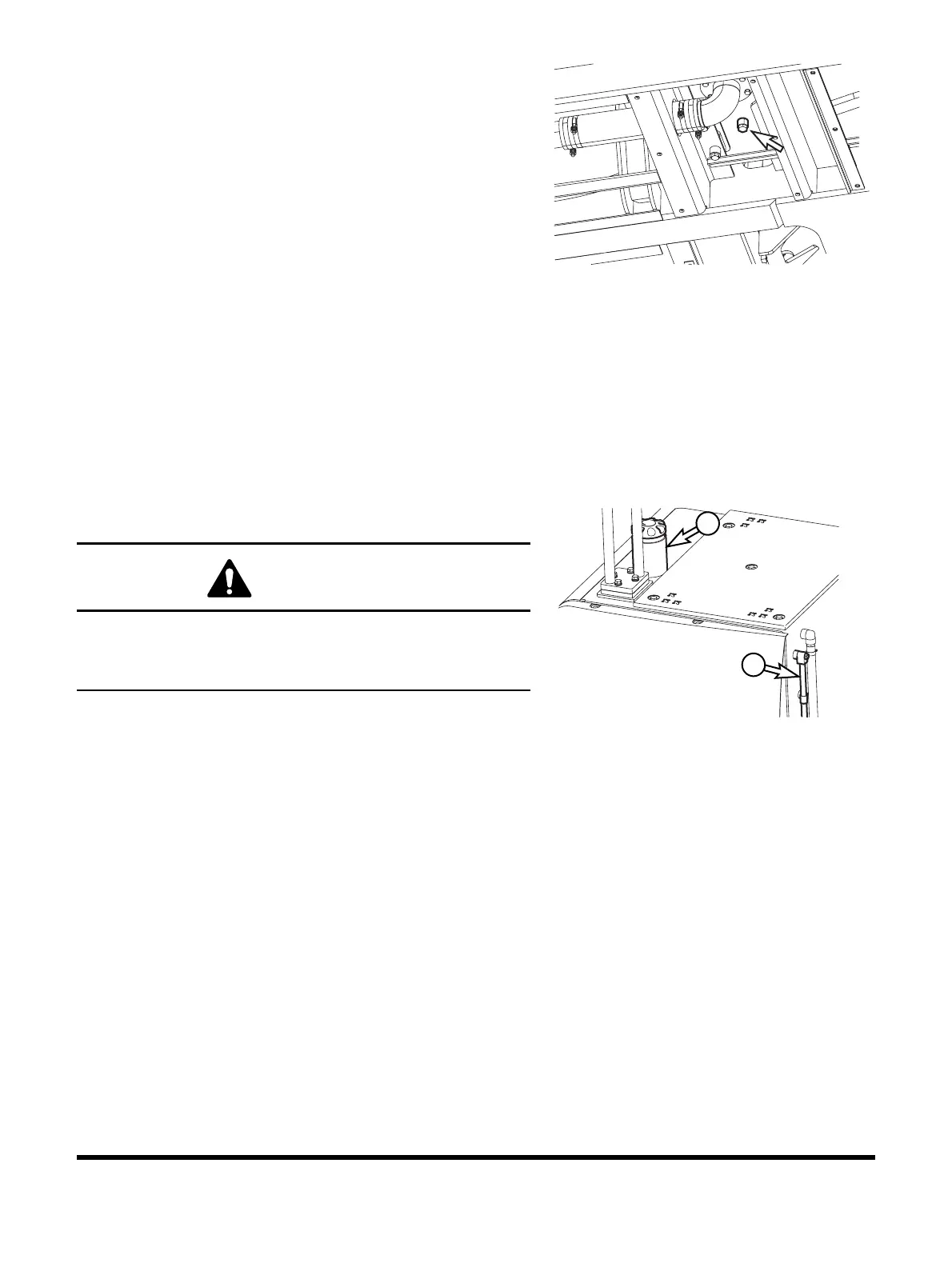
B. Drain the excess oil from drain plug (Figure 19) at the
bottom of the tank into a suitable container, using a
hose at the port (plug).
NOTE: Dispose of drained fluids according to local
regulations.
Check for Leaks in Hydraulic System
1. Perform a daily walk-around inspection to make sure that
hoses, piping, fittings, cylinders and hydraulic motors are
not showing any signs of leakage. If any is noted,
determine the source of the leak and repair.
Check Fuel Level
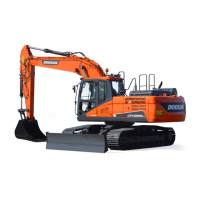
1. At end of each work day, fill fuel tank. Add fuel through fuel
fill tube (1,
Figure 20). When working at a temperature of
0°C (32°F) or higher, use ASTM No. 2-D or its equivalent.
At temperatures below 0°C (32°F) use ASTM No. 1-D or its
equivalent.
2. Make sure that fuel fill hose is grounded to the excavator
before fueling begins.
3. Check the amount of fuel in the tank by observing the fuel
tank sight gauge (2,
Figure 20).
NOTE:
See “Fluid Capacities” on page 4-8. for capacity.
4. The excavator may be equipped with the optional battery
operated fuel fill pump. The pump assembly is in the
hydraulic pump compartment. Put the suction hose of the
pump into the fuel resupply tank. Turn the switch in the
pump compartment "ON," and the fuel will be pumped into
the excavator fuel tank.
NOTE: See “Fuel Transfer Pump (Optional)” on
page 4-74, for further information.
5. Do not overfill the tank.
FG013200
Figure 19
Figure 20
FG000130
1
2
WARNING
Use extreme safety precautions while refueling to prevent
explosions or fire.
Immediately clean up any split fuel.


 To Next Page